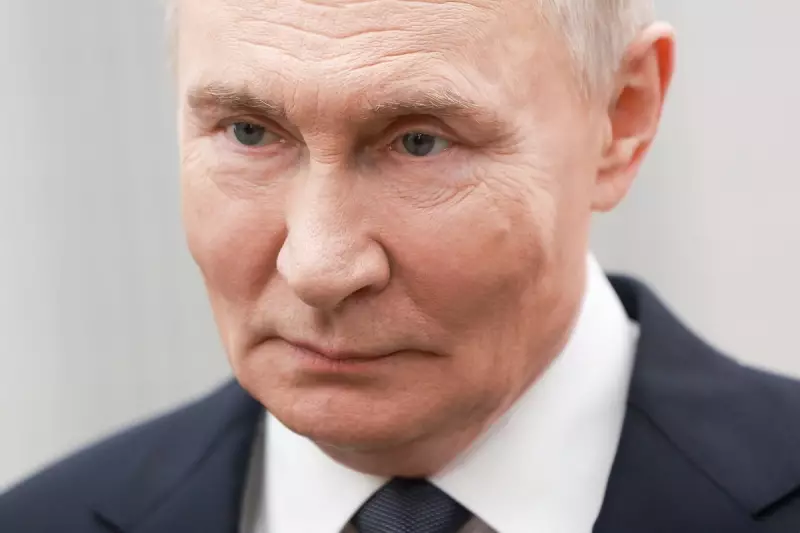
Russian President Vladimir Putin has issued a stark ultimatum to Ukraine, declaring that Moscow intends to seize full control of the Donbas region through military force unless Ukrainian troops withdraw. The demand, which Kyiv has flatly rejected, signals a dangerous escalation in the ongoing conflict.
An Ultimatum from the Kremlin
In an interview with India Today published on Thursday, 4th December 2025, Putin stated unequivocally that Russia would take the entire eastern Ukrainian region. "Either we liberate these territories by force of arms, or Ukrainian troops leave these territories," he said, according to footage broadcast on Russian state television. The declaration comes ahead of a planned visit by the Russian leader to New Delhi.
This threat follows Russia's full-scale invasion of Ukraine in February 2022, which dramatically intensified an eight-year war between Ukrainian forces and Russian-backed separatists in the Donbas. The region comprises the Donetsk and Luhansk oblasts.

The Stakes on the Ground
Ukraine has consistently vowed never to cede territory that Moscow has failed to secure through military action. President Volodymyr Zelensky has previously argued that Russia should not be rewarded for starting the war.
The current territorial picture is complex. Russia presently controls approximately 19.2% of Ukraine's internationally recognised territory. This includes Crimea, annexed in 2014, all of the Luhansk region, and over 80% of Donetsk. It also holds about 75% of both Kherson and Zaporizhzhia regions, along with small parts of Kharkiv, Sumy, Mykolaiv, and Dnipropetrovsk.
Critically, about 5,000 square kilometres of the Donetsk region remains under Ukrainian control, representing the immediate objective of Putin's latest threat.
Diplomatic Manoeuvres and Sham Referenda
Parallel to the military threats, diplomatic channels remain active. Putin received US envoys Steve Witkoff and Jared Kushner in the Kremlin on Tuesday, 2nd December. He stated that Russia had accepted some American proposals regarding Ukraine and that talks should continue, calling the meeting "very useful."
These discussions have reportedly touched on the outline of a potential peace deal, where Russia has repeatedly insisted on control over the whole of Donbas and informal US recognition of Moscow's authority there.
This claim to sovereignty stems from 2022, when Russia declared the Ukrainian regions of Luhansk, Donetsk, Kherson, and Zaporizhzhia to be part of Russia following so-called referenda. The West and Kyiv universally dismissed these votes as a sham, and the vast majority of countries continue to recognise the regions, along with Crimea, as integral parts of Ukraine.
Putin linked the recent talks to past discussions, noting they were based on proposals he and former US President Donald Trump had explored in Alaska in August.
The Kremlin's latest ultimatum, combined with ongoing but inconclusive diplomacy, underscores the grim reality that a peaceful resolution to the war remains elusive. The threat of renewed, focused military aggression in the Donbas now hangs heavily over the conflict, challenging Ukraine's resolve and testing the international community's response.