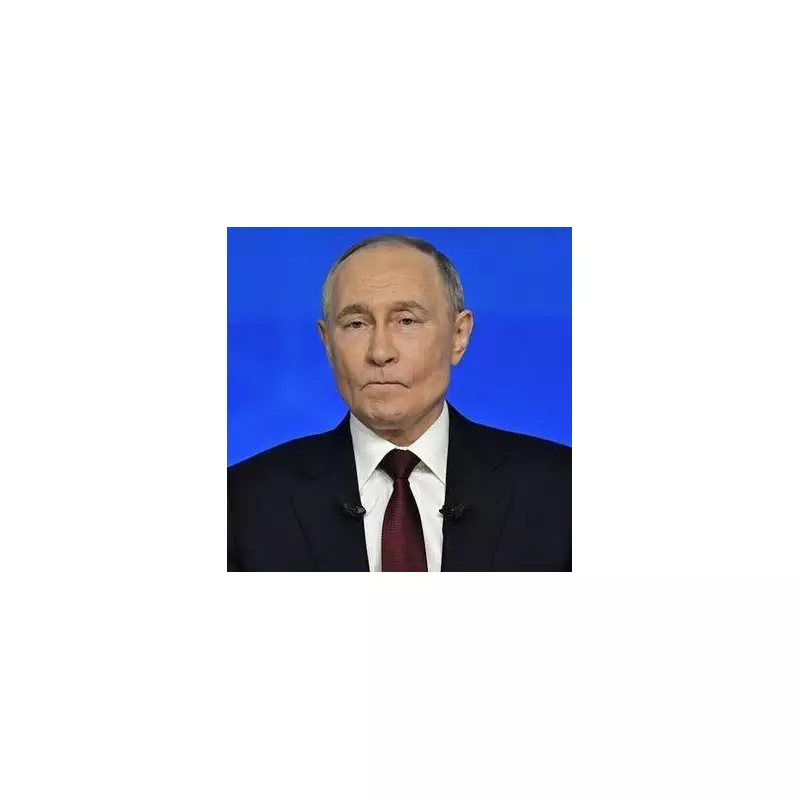
A significant pledge by Western allies to deploy troops to Ukrainian soil has reportedly left Russian President Vladimir Putin uncertain of his next move, according to a former Russian prime minister.
A Declaration That 'Changed the Game'
Mikhail Kasyanov, who served as Russia's premier from 2000 to 2004, stated that the agreement reached in Paris on Tuesday, 6th January 2026, has fundamentally altered the dynamics of the conflict. He told Times Radio that the formation of a 'coalition of the willing', led by the UK and France, to establish military hubs in Ukraine following a peace deal has "changed the approach, changed the game".
Kasyanov explained that the coalition's critical move was to separate the issue of long-term security guarantees for Ukraine from other negotiation points. This decision, he argued, was designed to satisfy demands from US President Donald Trump's administration rather than those of the Kremlin.

Transatlantic Unity and Putin's Dilemma
The former Russian leader highlighted that the presence of Donald Trump's envoy, Steve Witkoff, at the Paris talks was pivotal. Witkoff's confirmation of US backing for the agreements demonstrated a reconfirmed transatlantic unity, providing a powerful "backstop" for the European initiative.
"And troops on the ground, that is an important thing," Kasyanov said. "Right now, just Putin has nothing to say. He doesn't know what to do now, how to react." He suggested that for Putin to reject the proposed framework would mean rejecting President Trump's approach, placing the Russian leader in a difficult strategic bind.
The joint declaration, signed by Prime Minister Keir Starmer, French President Emmanuel Macron, and Ukrainian President Volodymyr Zelensky, commits Britain to building protected facilities for weapons and equipment in Ukraine. The plan allows for British and French military personnel to be stationed in the country after a ceasefire is established.
Furious Russian Reaction and Broader Security Blueprint
The Western pledge triggered an angry response from Moscow. Dmitry Rogozin, a senior Putin ally and former deputy premier, branded Starmer "illiterate and a fool" and implied that such a move would open the UK to Russian missile strikes.
Meanwhile, the broader peace blueprint unveiled in Paris includes several key elements:
- A multinational force for Ukraine led by European nations.
- US-led ceasefire monitoring and long-term support for the Ukrainian army.
- A commitment from the US, via envoy Witkoff, to deter Russian attacks and defend Ukraine if peace terms are violated.
Prime Minister Starmer emphasised the importance of the unified stance, stating, "It's important we're starting the year like this - European and American allies, side by side with President Zelensky, standing for peace." He acknowledged, however, that "the hardest yards are still ahead."
Kasyanov concluded that the consolidation shown in Paris proves Ukraine will continue to enjoy full European support underpinned by the US, applying significant new pressure on Vladimir Putin to "change his attitude".