A landmark public inquiry has determined that Russian President Vladimir Putin personally authorised the "astonishingly reckless" novichok nerve agent attack in Salisbury, intended as a brazen display of Russian power. The report holds Putin "morally responsible" for the death of British citizen Dawn Sturgess, an innocent victim poisoned by the discarded chemical weapon months later.
The Attack and Its Authorisation
The inquiry, led by retired Supreme Court judge Lord Hughes, concluded that the attempted assassination of former Russian spy Sergei Skripal in March 2018 "must have been authorised at the highest level, by President Putin". Agents from Russia's GRU military intelligence agency smeared the military-grade nerve agent on Mr Skripal's door handle in Wiltshire, also harming his daughter Yulia and police officer Nick Bailey.
Lord Hughes stated the attack demonstrated "considerable determination" and was engineered to stand as a "public demonstration of Russian power". The report dismissed the notion it was mere revenge, arguing it was a calculated statement that Russia would act decisively for its own interests, fully expecting the action to be attributed to the Kremlin.

A Tragic Second Victim
Four months after the initial attack, in July 2018, 44-year-old Dawn Sturgess died after coming into contact with the novichok, which had been disposed of in a discarded Nina Ricci perfume bottle in Amesbury. The inquiry found she was an "innocent victim of cruel and cynical acts of others". Medical evidence presented to the inquiry indicated no treatment could have saved her life once she was exposed.
The incident led to 87 people being admitted to Accident and Emergency as a precaution. The inquiry heard that the Skripals first fell ill on 4 March 2018 after eating at a Zizzi restaurant in Salisbury.
Political Fallout and Family Concerns
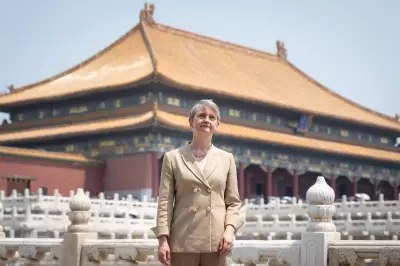
In response to the report's publication, Foreign Secretary Yvette Cooper warned that Putin and his agents represent "an active threat to Britain's citizens, our security and our prosperity". The UK government has sanctioned the GRU in its entirety and taken action against 11 individuals linked to state-sponsored hostile activity. The Russian ambassador was summoned to the Foreign Office.
Former Prime Minister Theresa May linked the 2018 attack to the wider pattern of Russian aggression, stating, "Four years later, Putin invaded Ukraine, and we are under constant threat from Russian espionage." Labour leader Sir Keir Starmer called the findings a "grave reminder of the Kremlin's disregard for innocent lives".
However, the family of Dawn Sturgess expressed "real concern" over the lack of recommendations in the £8.3m inquiry's report. In a statement, they said it left them with unanswered questions and failed to publicly outline how such risks would be prevented in future, noting that "adequate risk assessment of Skripal was not done".
The inquiry itself concluded it would not have been reasonable to provide Mr Skripal with a completely new identity, as the risk of assassination on UK soil was not judged to be at a high level prior to the attack.