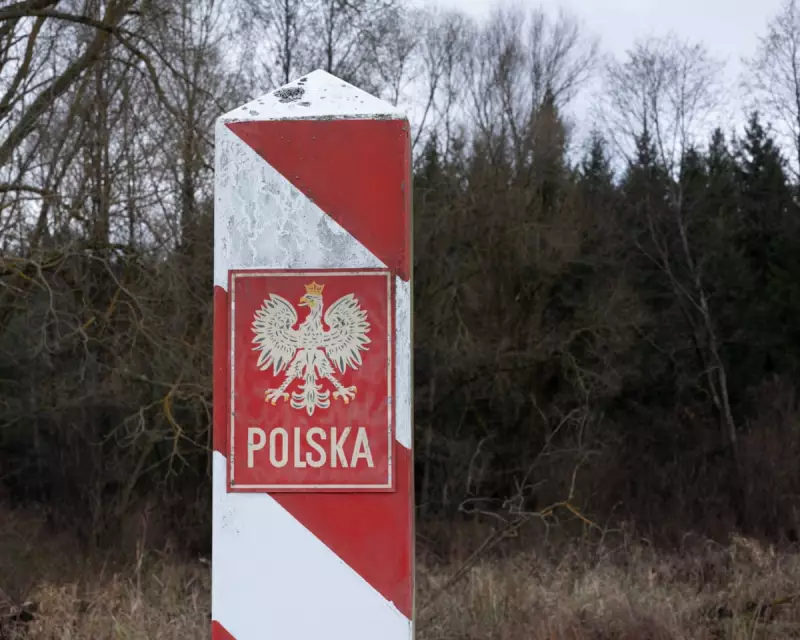
Poland has announced an ambitious plan to construct a comprehensive, multi-layered anti-drone defence system along its eastern frontier, with a budget exceeding €2 billion (£1.75 billion). The project, described as a fortified "wall," is a direct response to heightened security threats, including a significant incursion of suspected Russian drones into Polish airspace earlier this year.
A Two-Year Timeline for a New Defence Shield
In an exclusive interview, Poland's Deputy Defence Minister, Cezary Tomczyk, revealed that the first elements of the new system could be operational within roughly six months. He stated that the full integrated defence network is scheduled for completion within 24 months. This new infrastructure will be seamlessly connected to an older line of protection built a decade ago, creating a more robust barrier.
Tomczyk detailed that the system will employ a tiered approach, incorporating various technologies to counter aerial threats. These will range from drone-jamming systems and missiles to cannon and multi-barrel machine guns. He noted that some components, like the heavy machine guns, are intended for use strictly in extreme or wartime conditions due to the inherent risks of deploying them in peacetime.

Responding to Provocation and Preparing for the Future
The urgency for this project was underscored in September, when more than a dozen unmanned aerial vehicles, believed to be Russian, violated Polish airspace. The incident forced the temporary closure of airports, scrambled fighter jets, and resulted in property damage from falling debris as the drones were engaged. Foreign Minister Radosław Sikorski characterised the event as a Russian probe, an attempt "to test us without starting a war."
This fortification effort is part of a broader national strategy known as the Eastern Shield, which also includes extensive land-based fortifications along Poland's borders with Belarus and the Russian exclave of Kaliningrad. Tomczyk explained that as part of this initiative, special logistics hubs will be established in every eastern border municipality. These hubs will stockpile equipment designed to rapidly seal the border, deployable within hours if needed.
While acknowledging that no anti-drone system can be entirely foolproof against a massive, sustained assault like that faced by Ukraine, Tomczyk emphasised that Poland and other Eastern European nations are compelled to upgrade their defences in the face of a transformed threat landscape.
Funding and the Stakes for European Security
The colossal €2bn+ project will be primarily financed through European funds under the SAFE (Security Action for Europe) defence loan programme, supplemented by contributions from the Polish state budget. This investment aligns with Poland's dramatic increase in defence spending, which now stands at 4.7% of its GDP—one of the highest rates in the European Union.
Tomczyk framed the expenditure as a necessary precaution. He posed a stark choice: increase defence spending modestly now or face the prospect of it skyrocketing to wartime levels later, drawing a parallel to Ukraine, which is currently devoting around 40% of its GDP to its defence against Russia.
The deputy minister warned that while conventional war in Europe may be held at bay as long as Ukraine continues to resist, the continent must brace for increased provocations and acts of sabotage. He pointed to a rising number of sabotage and arson cases within Poland, which authorities attribute to Russian intelligence, as evidence of this hybrid threat. Ultimately, Tomczyk argued that a Russian victory in Ukraine would inevitably redirect the Kremlin's expansionist ambitions towards other parts of Europe, making current investments in defence not just prudent but essential for continental security.