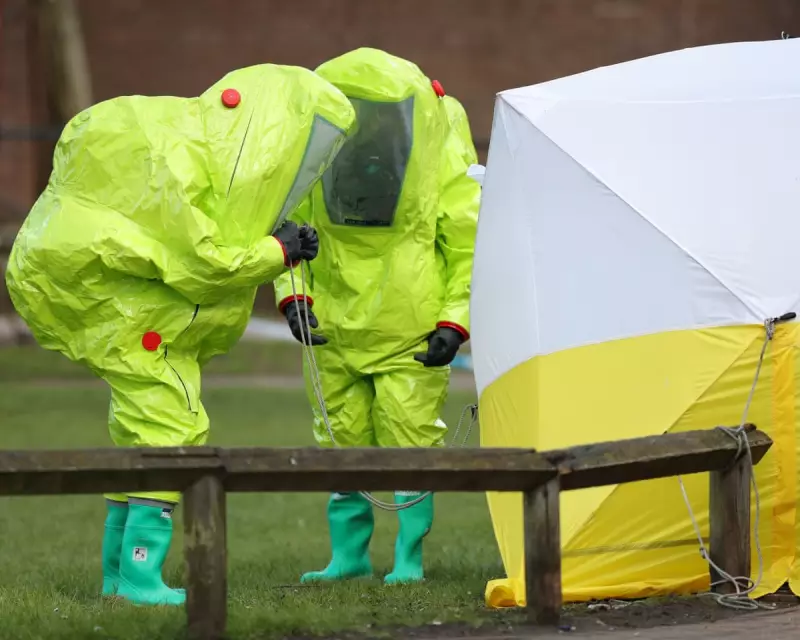
A new parliamentary report has cast a stark light on the 2018 Novichok poisonings in Salisbury, raising profound questions about the adequacy of the UK's response and the enduring threat posed by the Russian state. The investigation, conducted by the Intelligence and Security Committee (ISC), scrutinises the events that left three people critically injured and one dead, marking one of the most brazen chemical weapons attacks on British soil since the Second World War.
Unanswered Questions and Intelligence Failures
The ISC report, published on Wednesday, does not pull its punches. It highlights significant gaps in the UK's preparedness for an attack using a military-grade nerve agent like Novichok. Crucially, the committee found that while intelligence agencies had warned about the growing threat from Russia, there was a "failure to translate this high-level awareness into practical steps to protect against the threat." This meant that when former Russian double agent Sergei Skripal and his daughter Yulia were found unconscious on a park bench on 4 March 2018, the local emergency and medical services were confronting a scenario for which they were not fully equipped.
The report delves into the chaotic aftermath, noting the immense challenge faced by the NHS and Public Health England. It questions whether the initial public health advice was sufficiently robust, given the extreme toxicity of the substance. Furthermore, the ISC raises the alarming possibility that the official narrative of a single, failed attack may be incomplete. The poisoning of Dawn Sturgess and Charlie Rowley in Amesbury months later, which proved fatal for Dawn, suggests that a second batch of the nerve agent may have been present in the UK, potentially from a separate container discarded by the assassins.

The Kremlin's Fingerprints and the UK's Countermeasures
On the central question of Russian state responsibility, the ISC report is unequivocal. It concludes that the operation was "almost certainly" approved at a senior level of the Russian state. The use of a weapon that is known to have been developed under a clandestine Russian programme left little room for plausible denial. The report details the identification of the two main suspects, Russian military intelligence officers using the aliases Alexander Petrov and Ruslan Boshirov, and their movements through London and Salisbury.
In response to the attack, the then-Prime Minister Theresa May announced a suite of diplomatic and economic measures. These included the expulsion of 23 Russian diplomats identified as undeclared intelligence officers—the largest single expulsion in over 30 years. The report assesses these measures but questions their long-term efficacy as a deterrent. It points out that while the expulsions disrupted Russian intelligence operations temporarily, the network has likely been rebuilt. The ISC calls for a more coherent and long-term strategy to counter the full spectrum of hostile state activity, which includes cyber-attacks, disinformation, and illicit finance, alongside traditional espionage.
Legacy and Ongoing Vulnerabilities
The Salisbury attack has left a deep and lasting scar. Beyond the tragic human cost, it exposed critical vulnerabilities in the UK's national security architecture. The report makes several key recommendations for the future, including:
- Enhanced training and equipment for emergency services to recognise and respond to chemical weapons attacks.
- A more integrated government strategy for countering state threats, ensuring intelligence warnings are acted upon.
- Greater resilience against disinformation campaigns that seek to muddy the waters and confuse the public.
Ultimately, the ISC's findings serve as a sobering reminder of the nature of modern conflict. The attack on Salisbury was not an act of war in the traditional sense, but a calculated act of state-sponsored terrorism designed to intimidate and destabilise. The report concludes that while the UK's "robust and direct" attribution of blame to Russia was correct and necessary, the fundamental challenge of deterring such audacious acts in the future remains unresolved. The ghosts of Novichok in Wiltshire continue to demand answers and a more secure defence.