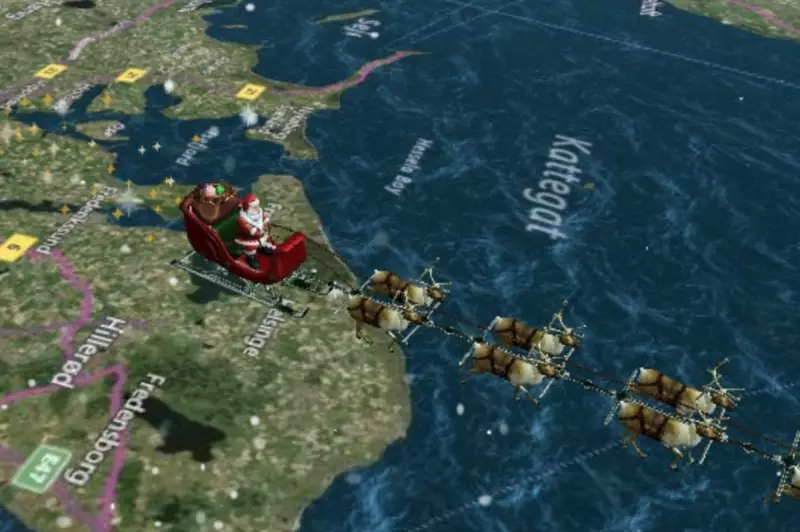
Each Christmas Eve, a question echoes in homes across the globe: where is Santa Claus? For seven decades, an unlikely source has provided the answer: the North American Aerospace Defense Command, or NORAD. This military organisation, born from the tensions of the Cold War, has transformed its serious mission of monitoring North American airspace into a beloved festive tradition, bringing joy to millions by tracking Saint Nick's worldwide gift-giving journey.
The Modern Operation: A Global Festive Mission
This year, the magic is more accessible than ever. On Christmas Eve, over 1,000 dedicated volunteers will man the special 1-877-HI-NORAD hotline from 4am to midnight Mountain Standard Time. They stand ready to answer calls from excited children and curious adults. For the first time, those outside North America can also participate by placing calls directly through the programme's website, which offers real-time updates on Santa's progress in nine languages, including English and Japanese.
The heart of the operation is a festively decorated hangar at Peterson Space Force Base in Colorado Springs, which received approximately 380,000 calls in 2024. The interactions are often charming and heartfelt. Colonel Kelly Frushour, a NORAD spokesperson, shared a story from last year about a young girl worried Santa was heading for the International Space Station, where astronauts were reportedly stranded. "Thankfully, by the time the call was over, Santa Claus had moved on," Frushour said, reassuring the child he was not trapped in space.

Despite the festive fun, NORAD employs its serious, year-round technology for the task. Colonel Frushour explains that tracking begins at the international date line over the Pacific Ocean. The advanced system uses a combination of radar, satellites, and jets. Notably, Rudolph's glowing red nose emits a heat signature similar to a missile, making it easily detectable by NORAD's sophisticated satellites.
Heartwarming Calls and a 70-Year Legacy
The hotline fosters unique connections. Michelle Martin, a NORAD staffer and Marine veteran, recounted the story of Henry, a man with special needs who calls faithfully every year. One year, Henry earnestly asked if the jet pilot escorting Santa could leave a note confirming he was safely in bed. Martin gently explained that Santa travels "faster than starlight," and the pilot could only wave as he passed by.
This cherished global tradition has remarkably humble—and accidental—origins. It began in 1955 with a wrong number. NORAD's predecessor, the Continental Air Defense Command (CONAD), was on high alert for potential nuclear threats from the Soviet Union. A child, attempting to call Santa after seeing a Sears advertisement in a Colorado Springs newspaper, mistakenly dialled the combat operations centre.
The commander on duty, Air Force Colonel Harry Shoup, chose not to disappoint the caller. In a 1999 interview, he vividly recalled telling the child, "Ho, ho, ho, I am Santa," much to his crew's bewilderment. He then instructed his staff to play along and begin tracking Saint Nick's mythical journey. By 23 December 1955, The Associated Press was reporting that CONAD was officially tracking Santa's progress.
From Granite Bunker to Festive Phenomenon
CONAD later evolved into NORAD, which once operated from the hardened Cheyenne Mountain complex, a network of tunnels blasted into granite designed to withstand a nuclear attack. The contrast between its original, grave purpose and its current role in spreading Christmas cheer could not be more stark.
While some details of the first call are debated—The Atlantic magazine in 2015 questioned the narrative of a "flood of calls" to a secret line—the essence of the story remains. Colonel Shoup's decision to embrace the error sparked a public relations triumph that has endured for 70 years.

From a simple misdial in the tense Cold War era to a worldwide festive institution, NORAD's Santa tracking service exemplifies how even the most serious organisations can wholeheartedly embrace the spirit of Christmas. It continues to deliver immense joy and enduring magic to millions, proving that sometimes, the best traditions begin with a little mistake and a lot of heart.