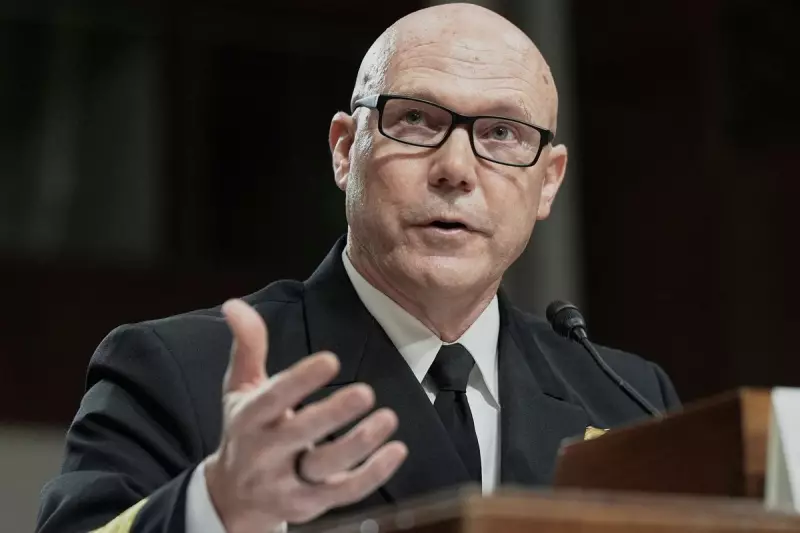
A highly decorated US Navy admiral is preparing to face questioning from Congress as serious concerns mount over a controversial military operation in the Caribbean. Admiral Frank "Mitch" Bradley, a veteran Navy SEAL officer described by peers as the "gold standard," will testify about a deadly September strike on a suspected drug-running vessel.
The Controversial 'Double Tap' Strike
The incident at the heart of the inquiry occurred on 2 September 2025. A US drone strike targeted an alleged "drug boat" in international waters near Venezuela, killing 11 people. President Donald Trump shared aerial footage of the explosion on his Truth Social platform the same day, claiming those killed were members of the Venezuelan gang Tren de Aragua transporting narcotics to the US.
However, reports later revealed a deeply troubling detail. According to officials cited by The Washington Post, two men survived the initial blast and were seen clinging to the wreckage. A second command was then given, launching another missile that killed the survivors in the water—an action critics describe as a 'double tap' strike.

This sequence of events has sparked a fierce political and legal debate. The Pentagon's own Law of War Manual states that individuals who are "wounded, sick, or shipwrecked" must be "respected and protected." Some military law experts suggest the second strike could potentially amount to a war crime.
A Distinguished Career Under the Spotlight
Now thrust into the centre of this blame game is Admiral Frank "Mitch" Bradley. His military record is exemplary. A physics graduate from the US Naval Academy, he became a Navy SEAL officer in 1992. He served with distinction in elite units, including the Naval Special Warfare Development Group, commonly known as SEAL Team 6, where he commanded an assault unit.
Bradley was among the first deployed to Afghanistan after the 9/11 attacks. After further academic study, he rose through the ranks and was appointed commander of US Special Operations Command in October 2025, overseeing the nation's most elite military units.
One senior officer told CNN, "He is a leader of courage, integrity, professionalism and unmatched skill... He's the gold standard not just for the Navy and Naval Special Warfare – but for the military profession of arms." This reputation makes his forthcoming congressional testimony all the more significant.
Political Fallout and the Blame Game
The White House has stated that Admiral Bradley, as the on-scene commander, ordered the second strike. This framing appears to shift responsibility away from Defence Secretary Pete Hegseth, who has faced direct accusations of war crimes. A Washington Post report claimed Hegseth gave an order to "kill everybody," which he vehemently denied as "fabricated, inflammatory and derogatory."
President Trump told reporters he "wouldn't have wanted" the second strike, while also relaying Hegseth's denial. Hegseth has publicly given Bradley his "100 per cent support," calling him an American hero. Meanwhile, a Pentagon source told The Telegraph they were "disgusted" that Hegseth was trying to shirk responsibility and using Bradley as a scapegoat, asserting that the admiral would have known the second strike was illegal.
Hegseth maintains that all airstrikes in the anti-narcotics campaign are lawful, approved by military lawyers, and intended as "lethal, kinetic strikes" to destroy boats and kill "narco-terrorists." Since the initial September strike, more than a dozen further US operations have killed over 80 people, intensifying scrutiny on the legal and ethical boundaries of this campaign.
Admiral Bradley's testimony before Congress will be a pivotal moment, as lawmakers from both parties seek answers. It places a soldier celebrated for his integrity at the centre of a fierce political storm, testing the chain of command and the rules of engagement in America's shadowy drug war.