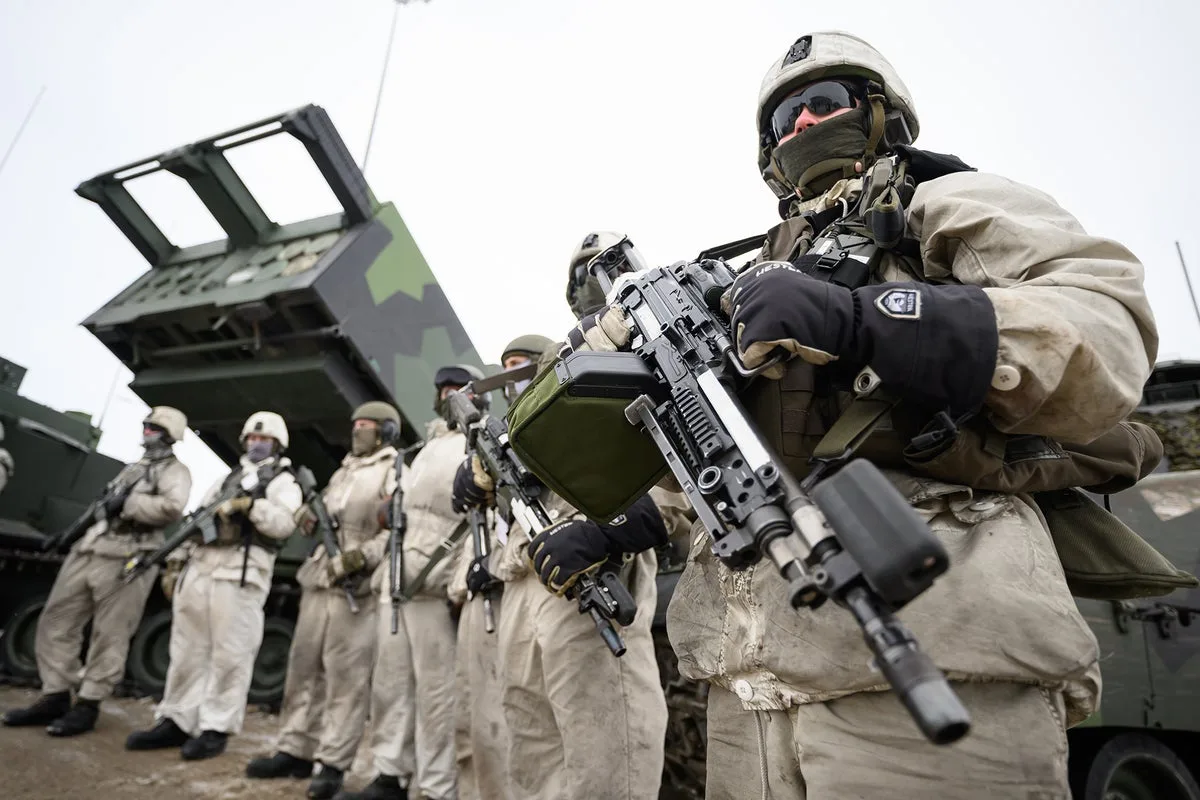
NATO is poised to adopt a significantly more assertive stance in response to Russia's escalating campaign of cyber attacks, sabotage, and drone incursions, a strategic shift that has provoked immediate fury from Moscow. The alliance's most senior military commander has declared that merely reacting to threats from Vladimir Putin's regime is no longer effective, suggesting that pre-emptive action may be necessary to deter future aggression.
From Reactive to Proactive: A Strategic Rethink
In a candid interview with the Financial Times, Admiral Giuseppe Cavo Dragone, NATO's Supreme Allied Commander Transformation, outlined the pressing need for a new approach. He stated that the alliance is actively studying how to move beyond a passive posture, particularly in the cyber domain. 'We are studying everything... On cyber, we are kind of reactive. Being more aggressive or being proactive instead of reactive is something that we are thinking about,' Dragone revealed.
This marks a potential sea change for NATO, which has historically avoided offensive cyber operations and direct confrontation despite a series of provocations. These include sabotage of undersea cables in the Baltic Sea, debilitating cyber hacks, and repeated violations of allied airspace. Dragone suggested that actions once considered too bold for the defensive alliance could soon be on the table, framing a 'pre-emptive strike' as a potential 'defensive action'.
He acknowledged the complex challenges, asking: 'Being more aggressive compared with the aggressivity of our counterpart could be an option. [The issues are] legal framework, jurisdictional framework, who is going to do this?' This admission highlights the difficult position Western democracies face, bound by ethical and legal constraints that do not hinder the Kremlin.
Moscow's Fury and Eastern Europe's Impatience
The Russian Foreign Ministry swiftly condemned Dragone's remarks, branding them an 'extremely irresponsible step' that signals NATO's readiness to escalate tensions further. Spokesperson Maria Zakharova accused the alliance of deliberately undermining efforts to resolve the Ukrainian crisis, warning that 'people making such statements must be aware of the ensuing risks and possible consequences, including for the alliance members themselves'.
Conversely, NATO's Eastern European members, who bear the brunt of Russian hybrid warfare, have long demanded a more robust response. A Baltic diplomat emphasised the unsustainable cost of a passive stance, warning that reactivity simply invites Russia to 'keep trying, keep hurting us'. They argued that hybrid warfare is asymmetric, costing Russia little while inflicting significant damage on NATO allies, necessitating more inventive counter-strategies.
Recent incidents underscore the urgency. In late November, Polish authorities confirmed an act of sabotage and a second highly likely sabotage incident on a key railway line linking Warsaw to the Ukrainian border, with officials suspecting foreign intelligence services. Prime Minister Donald Tusk vowed to catch the perpetrators 'regardless of who their backers are', heavily hinting at Russian involvement.
Legal Grey Zones and the Challenge of Defence
NATO's defensive efforts are often hamstrung by legal ambiguities. A stark example occurred in Finland, where the crew of a Russian-linked 'shadow fleet' ship suspected of cutting critical underwater cables walked free because the attack took place in international waters. When asked if this effectively gives Russia free rein offshore, Finland's Foreign Minister Elina Valtonen responded frankly: 'Yes, and that's a problem'.
Admiral Dragone pointed to the expanded Baltic Sentry mission as evidence that a determined show of force can curb Russian mischief, noting that since its inception, related incidents have ceased. However, he stressed the inherent difficulty: 'The alliance and its members have 'much more limits than our counterpart because of ethics, because of law, because of jurisdiction. It is an issue. I don't want to say it's a loser position, but it is a harder position than our counterpart's.'
This tension between robust defence and legal restraint defines the current dilemma. While some, like Valtonen, advocate for calm deliberation and trust in NATO's existing 'robust playbook', defence chiefs privately believe pressure will only intensify as Russia seeks new ways to strike NATO territory without triggering a full-scale military response. The debate over adopting a more aggressive, proactive posture is now firmly at the heart of the alliance's future security planning.




