
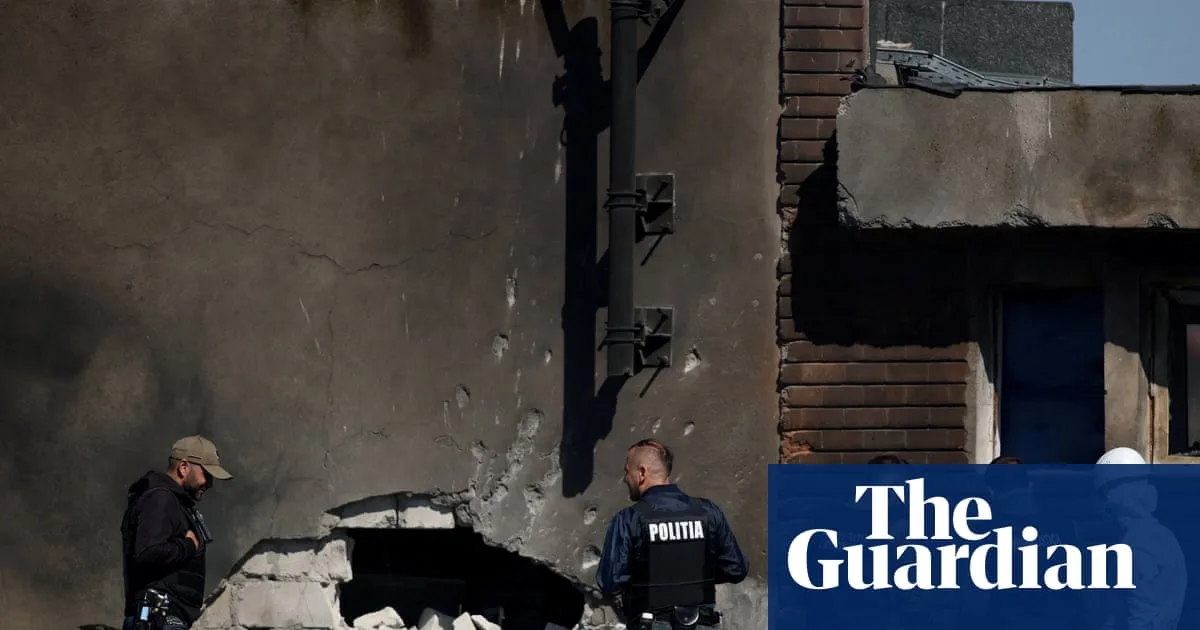
Nato secretary general Mark Rutte has declared the alliance is “ready to defend every inch” of its territory after a Russian drone struck an apartment building in Romania, a Nato member state, during an overnight attack on neighbouring Ukraine. The incident in Galați injured two people and prompted swift condemnation.
“Russia’s reckless behaviour is a danger to us all,” Rutte wrote on social media after speaking with Romanian president Nicuşor Dan. Romania’s supreme council of national defence held an emergency meeting, and the foreign ministry summoned Russia’s ambassador. Rutte affirmed Nato’s commitment to defending allied territory.
In other developments, Sweden announced it will donate 16 Gripen fighter jets to Ukraine by next year, with Ukraine set to purchase an initial 20 of the latest model. Ukrainian president Volodymyr Zelenskyy visited an airbase near Stockholm to mark the announcement.
Meanwhile, Israeli prime minister Benjamin Netanyahu said he has ordered the army to seize control of 70% of the Gaza Strip, threatening the fragile ceasefire. Under the US-brokered deal, Israel had controlled 53% of the territory. Israeli forces have advanced westward, and backed militias have been emptying areas along the ceasefire line.
In the United States, an anti-crime taskforce ordered by Donald Trump in Memphis has been accused by the American Civil Liberties Union of targeting community observers with intimidation, including surveillance and false arrest. The ACLU has filed a lawsuit against state and federal officials.




