On a quiet Sunday afternoon in the historic cathedral city of Salisbury, an event unfolded that would shock the nation and trigger an international crisis. This is the detailed, minute-by-minute account of the Novichok nerve agent attack on former Russian double agent Sergei Skripal and his daughter, Yulia.
The Fateful Day: March 4, 2018
The day began ordinarily for the Skripals. Sergei Skripal, a 66-year-old former colonel in Russian military intelligence who had been exchanged in a spy swap in 2010, was living a quiet life in Wiltshire. His daughter, Yulia, 33, was visiting from Moscow. At 1:30 pm, they left Sergei's home on Christie Miller Road and drove his red BMW 320D into the city centre.
They parked on the ground floor of the Old George Mall car park just before 2:00 pm. Unbeknownst to them, they were already in grave danger. Counter-terrorism detectives would later theorise that the lethal Novichok agent had likely been applied to the exterior door handle of Sergei's home or his car earlier that day.
By 3:25 pm, father and daughter were seen on CCTV entering the Bishop's Mill pub. They stayed for approximately 40 minutes before moving next door to Zizzi restaurant on Castle Street at 4:15 pm. It was here that the first devastating symptoms of the military-grade nerve agent began to take hold.
By 5:30 pm, the Skripals had paid their bill but were visibly disoriented. CCTV captured them leaving the restaurant and walking erratically towards The Maltings, a nearby shopping and dining area. Within minutes, both had collapsed on a public bench. At 6:20 pm, a doctor and a nurse who happened to be passing by rushed to aid the unconscious pair, initially suspecting a drug overdose or fentanyl exposure.
Emergency Response and a City in Lockdown
Wiltshire Police officers and paramedics from the South Western Ambulance Service arrived swiftly. Recognising the severity of the situation, the Skripals were rushed to Salisbury District Hospital. Detective Sergeant Nick Bailey was one of the first responders who entered Sergei Skripal's house later that evening. He too would become critically ill from Novichok exposure, highlighting the extreme persistence and toxicity of the substance.
The following day, March 5, counter-terrorism police were formally called in. The Defence Science and Technology Laboratory (DSTL) at Porton Down, located just miles from the scene, began analysing samples. By Wednesday, March 7, scientists confirmed the unthinkable: the Skripals had been poisoned with a Novichok nerve agent, a type developed by the Soviet Union during the Cold War.
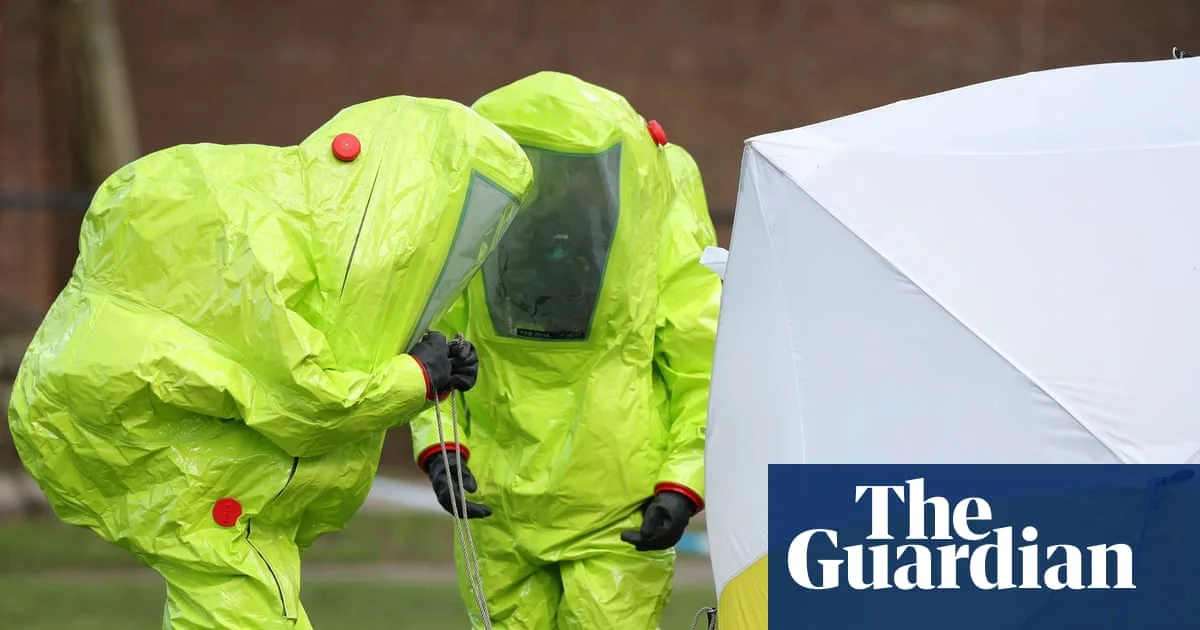
The city centre was transformed into a major crime scene. The bench where the Skripals collapsed was removed, along with sections of pavement. Zizzi and The Bishop's Mill pub were sealed off. The police cordon expanded to include the car park and Sergei Skripal's home. Decontamination efforts, involving specialists in hazardous materials suits, became a chillingly familiar sight.
Tragic Repercussions and a Second Poisoning
The crisis deepened months later in the nearby town of Amesbury. On June 30, 2018, Dawn Sturgess, 44, and her partner Charlie Rowley, 45, fell ill. It was later determined they had encountered a discarded perfume bottle, believed to be the container used to transport the Novichok. Tragically, Dawn Sturgess died on July 8, 2018, becoming the only fatality from the attack. Charlie Rowley was seriously ill but survived.
The investigation, led by the Counter Terrorism Policing Network, painstakingly pieced together the evidence. They identified two Russian nationals, using the aliases Alexander Petrov and Ruslan Boshirov, who had travelled to the UK from Moscow. CCTV showed them in Salisbury on the day of the attack. The UK government accused the Russian state of orchestrating the assassination attempt, an allegation Moscow has repeatedly and vehemently denied.
The Salisbury poisonings had profound and lasting consequences. The UK and its allies expelled over 150 Russian diplomats in an unprecedented coordinated action. Security protocols for dealing with chemical threats were overhauled. The events cast a long shadow over UK-Russia relations, marking one of the most serious confrontations since the Cold War.
Sergei and Yulia Skripal were discharged from hospital after weeks of critical care. They were taken to a secure secret location for their protection and have since been granted new identities. The city of Salisbury, meanwhile, has worked tirelessly to recover, but the memory of those tense days in March 2018 remains indelibly etched in its history.




