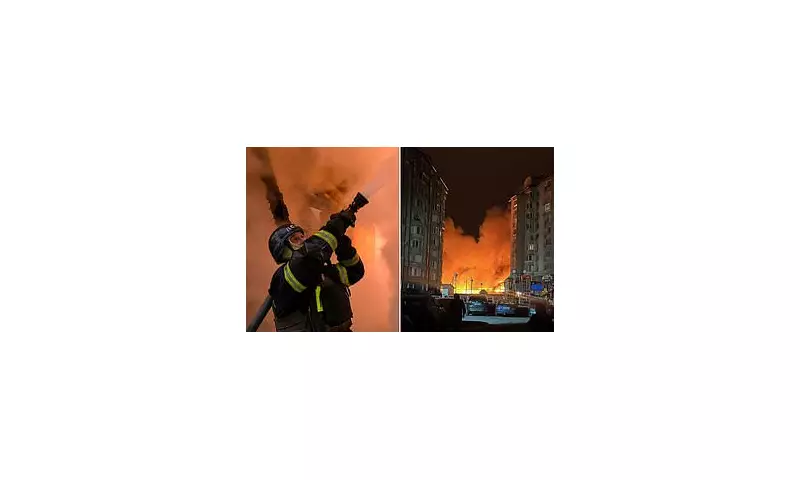
NATO member states were forced to scramble fighter jets as Russian forces unleashed one of the most devastating aerial bombardments of the war on Ukraine, striking civilian energy infrastructure across the country.
A Night of Carnage Across Ukraine
The massive assault occurred overnight into Saturday, with Russian forces firing a total of 51 missiles and 653 drones at targets throughout Ukraine. Ukrainian air defence forces managed to intercept a significant number, shooting down 30 missiles and 585 drones, according to official reports. Despite these efforts, at least 29 locations were struck, causing widespread damage and disruption.
The attacks deliberately targeted critical energy infrastructure as temperatures plunged below zero, leading to electricity outages and heating cuts for civilians. Among the key facilities hit was a large thermal power plant in Kryvyi Rih, the birthplace of President Volodymyr Zelensky. In the Kyiv region, the Bila Tserkva power plant was struck, the railway station in Fastiv was gutted, and Vyshhorod suffered critical damage.

NATO Response and Regional Fallout
The sheer scale of the attack, which involved Tu-95MS and Tu-160MS strategic bombers launching ballistic and cruise missiles, triggered a direct response from the NATO alliance. Poland scrambled its warplanes and placed ground-based air defence systems on high alert, citing fears that the Russian missiles could threaten alliance territory.
'Due to the activity of long-range Russian air forces carrying out strikes on Ukrainian territory, military aviation has begun operating in Polish airspace,' stated the Polish Armed Forces. They described these actions as preventative measures to secure airspace adjacent to the conflict zone.
The human cost of the bombardment was stark. A 12-year-old boy was killed in Dnipro, adding to the tragic toll of child casualties in the nearly four-year conflict. At least eight other people were wounded, according to Ukrainian Minister of Internal Affairs Ihor Klymenko. In Kyiv, residents were once again forced to seek shelter in underground metro stations.
Peace Talks Shadowed by Violence
This brutal military escalation came just hours after the United States revealed that aides to former President Donald Trump had hosted Ukrainian officials for talks on a potential peace deal. Steve Witkoff and Jared Kushner met with Ukrainian negotiators Rustem Umerov and Andriy Hnatov in Florida, with Washington describing the discussions as 'constructive'.
However, the timing of the massive Russian strike has crushed any immediate hopes for a breakthrough. A joint statement from the talks offered a sober assessment, noting that any real progress would depend on 'Russia's readiness to show serious commitment to long-term peace.'
In a parallel development, Ukraine staged its own overnight drone strikes targeting Russian energy infrastructure, setting a key oil refinery in Ryazan ablaze. This marked the ninth such attack on the facility this year, part of a Ukrainian strategy to disrupt the oil export revenue Moscow uses to fund its war.
As Ukraine enters a fourth winter of war, its military commander, General Oleksandr Syrskyi, vowed to fight on while expressing hope for continued Western support. The latest onslaught underscores the grim reality that despite diplomatic manoeuvres, the conflict shows no sign of abating, with civilians continuing to pay the heaviest price.