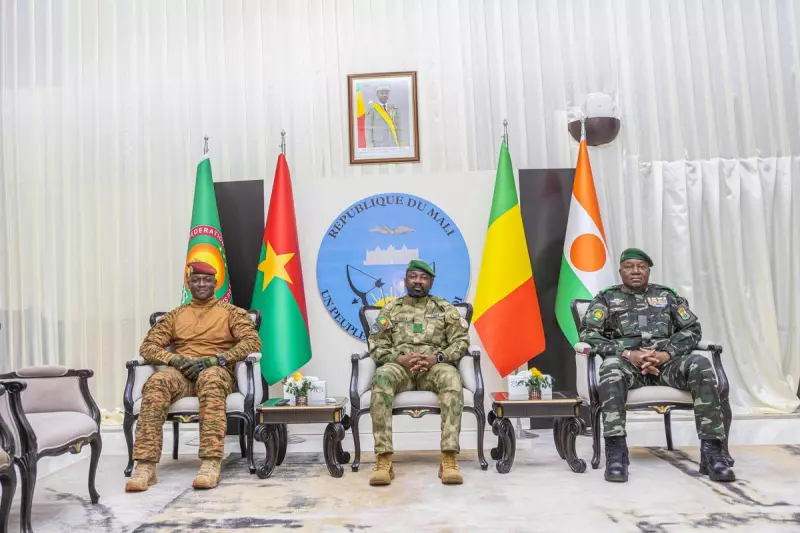
The military leaders of Mali, Burkina Faso, and Niger have declared that the recent formation of a joint military battalion must swiftly lead to large-scale operations against extremist groups plaguing the Sahel region. The announcement was made on Tuesday, 23 December 2025.
A New Phase in Sahel Security Cooperation
Captain Ibrahim Traoré, the leader of Burkina Faso, was named the new head of the Alliance of Sahel States (AES) during a summit on Tuesday. Following his appointment, he stated that the weekend launch of the alliance's joint battalion must be followed by significant military action in the coming days. He provided no specific operational details.
The three nations, all led by military juntas following recent coups, agreed at the summit to strengthen their security and economic ties. The newly operational joint battalion is expected to comprise 5,000 personnel and is tasked directly with combating armed groups linked to al-Qaida and the Islamic State.

Shifting Alliances and Regional Sovereignty
A clear theme of the summit was the assertion of sovereignty and a break from former international partners. Niger’s junta leader, Abdourahamane Tchiani, declared that the alliance had ended all foreign military occupations in their countries, referencing the expulsion of French and American forces.
"No country or interest group will decide for our countries anymore," Tchiani asserted. In a significant geopolitical pivot, all three nations have now turned to Russia as a primary security ally, distancing themselves from Western powers and the Economic Community of West African States (ECOWAS), from which they withdrew this year.
Analysts Assess a Complex Challenge
Experts caution that the security crisis in the Sahel, the vast region south of the Sahara, remains profoundly difficult to resolve. Rida Lyammouri, a Sahel specialist at the Policy Center for the New South, noted the situation is very difficult to defeat regardless of which external actors are involved.
Despite facing fractured international relations and sanctions related to their coups, the second annual AES summit demonstrates deepening collaboration. Ulf Laessing, head of the Sahel program at the Konrad Adenauer Foundation, observed that the alliance retains popularity domestically and is seeking to maintain momentum by expanding cooperation beyond purely military endeavours.
The commitment to imminent large-scale operations marks a critical test for the fledgling alliance as it attempts to confront what has become the world's deadliest epicentre for Islamist extremism.