
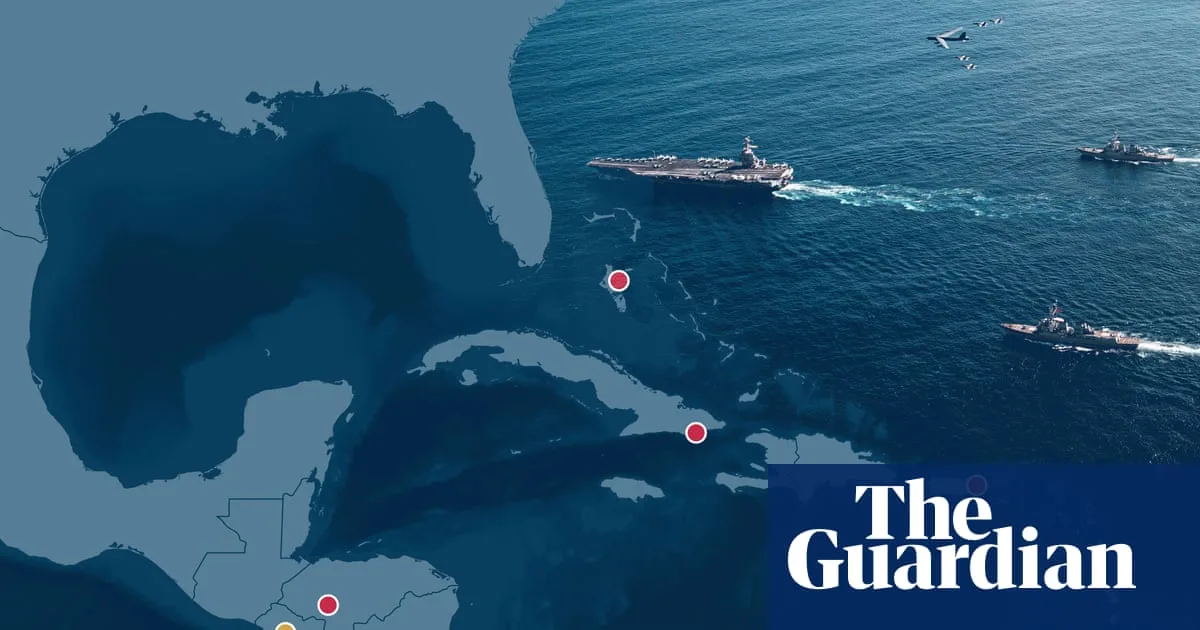
The United States has amassed its largest military presence in the Caribbean since the 1989 invasion of Panama, amid escalating tensions with Venezuela. The buildup includes the deployment of the USS Gerald R Ford, the world's newest and largest aircraft carrier, which arrived in the region on 11 November with over 4,000 sailors and tactical fighter jets.
The US has justified its actions through a 'war on drugs' campaign, accusing Venezuelan President Nicolás Maduro of running a drug-trafficking organization and placing a $50m bounty on his head. However, attacks on vessels allegedly carrying drugs have resulted in 83 deaths, which the United Nations has described as extrajudicial executions. The US has provided no evidence that the targeted boats were carrying drugs.
US military assets are positioned at bases in Puerto Rico, Honduras, Cuba, and Cooperative Security Locations in Aruba and Curaçao, the latter being closest to the Venezuelan coast. In Puerto Rico, satellite images show upgrades at the former Roosevelt Road naval station, including resurfaced taxiways, while US marines have been conducting exercises there since August.
The US state department's designation of the Cartel de los Soles as a terrorist organisation is set to take effect, which experts say could provide legal cover for a US attack. The Venezuelan military has rejected the allegations as a 'vile lie to justify an illegitimate and illegal intervention'.




