The deposed leader of Venezuela, Nicolás Maduro, has arrived in the United States to face criminal charges following a stunning covert military operation authorised by President Donald Trump. The audacious mission, which resulted in casualties, has ignited a major international incident and raised serious legal questions.
A Covert Night-Time Extraction
Maduro and his wife, Cilia Flores, were extracted from their home on a military base in Caracas in a middle-of-the-night raid on Saturday, 3 January 2026. The operation, which Trump said involved turning off "almost all of the lights" in the capital, saw US forces land Maduro at a small New York airport by Saturday evening. Venezuelan Vice President Delcy Rodríguez condemned the act as "imperialist" and reported that some Venezuelan civilians and military personnel were killed, though no US forces lost their lives.
General Dan Caine, Chairman of the Joint Chiefs of Staff, revealed that the operation followed months of meticulous planning and rehearsal, stating the objective was to "ensure we cannot get it wrong." The capture coincided with the anniversary of the 1990 seizure of Panama's Manuel Noriega.

Trump's Vision to 'Run' Venezuela and Control Oil
Hours after the capture, President Trump held a news conference at Mar-a-Lago where he outlined an unprecedented plan. He stated the US would "run the country" to facilitate a safe transition and explicitly linked the action to gaining control of Venezuela's vast oil reserves.
"We're going to run the country until such time as we can do a safe, proper and judicious transition," Trump declared. He added that the US would "fix" the country's oil infrastructure and sell "large amounts" to other nations. The Trump administration has long accused Maduro's government of being a "corrupt, illegitimate" regime fuelled by narco-terrorism.
Political Fallout and Legal Challenges
The dramatic regime change action, the most assertive since the 2003 Iraq invasion, has triggered immediate turmoil. Venezuela's high court named Delcy Rodríguez interim president, though she initially insisted Maduro remained the country's only legitimate leader.
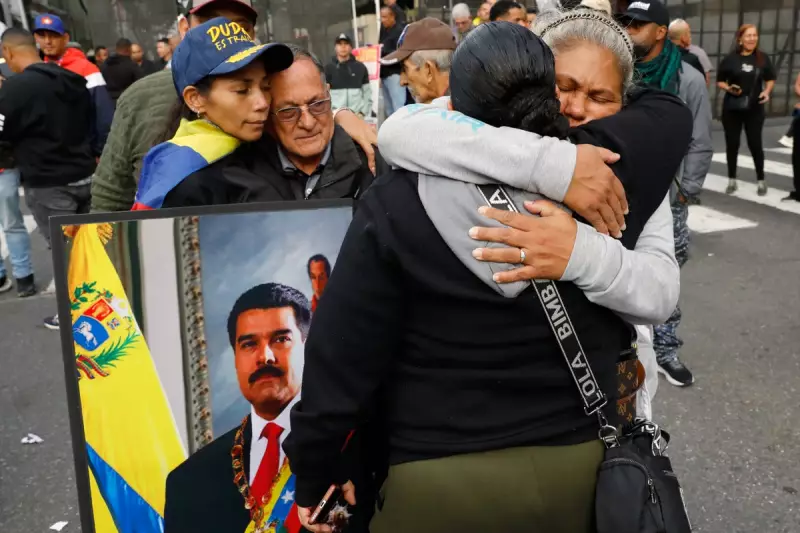
In Caracas, the response was deeply polarised. Pro-Maduro protests filled some streets, with Mayor Carmen Meléndez joining crowds demanding his return. Meanwhile, in Doral, Florida—home to a large Venezuelan diaspora—celebrations erupted with chants of "Liberty!".
Legal experts immediately questioned the operation's lawfulness, conducted without Congressional approval. Connecticut Representative Jim Himes, the top Democrat on the House Intelligence Committee, demanded an immediate briefing on the legal justification. The UN Security Council, acting on a request from Colombia, scheduled an emergency meeting to discuss the US operations.
The Justice Department unsealed a new indictment against Maduro and his wife, painting his administration as a drug-trafficking enterprise that flooded the US with cocaine. This culminates a pressure campaign that included US attacks on suspected drug-running boats and a recent CIA drone strike on Venezuelan soil.