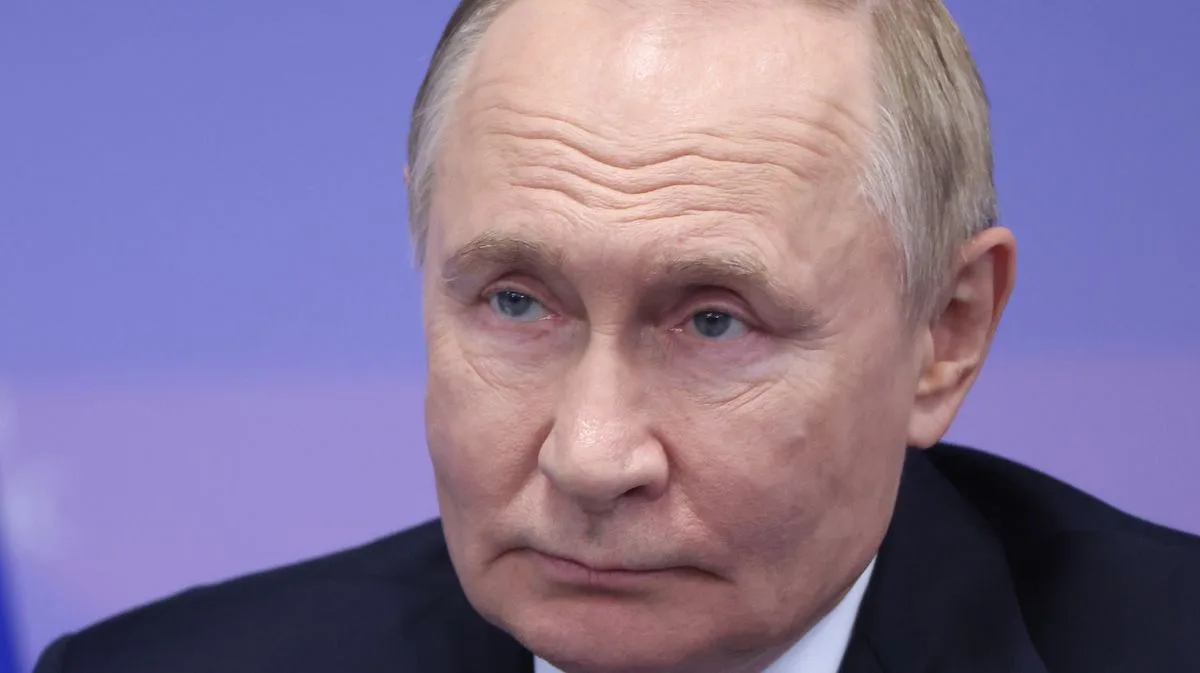
Global tensions have escalated sharply following Russia's deployment of a new nuclear-capable missile system, described by Moscow as "unstoppable." The weapon, which President Vladimir Putin retains control over, is now on combat duty and could reportedly strike London in just eight minutes.
The Oreshnik Missile: A New Threat on Europe's Doorstep
The newly unveiled system, named Oreshnik, has been positioned in Belarus, placing it alarmingly close to the borders of the European Union and NATO. The Belarusian defence ministry confirmed that the missile division has begun combat patrol missions across the country.
The Russian military claims the missile has an operational range of up to 5,000 kilometres (over 3,106 miles) and can be launched from any point along its patrol route. It is designed to carry both conventional and nuclear warheads.
President Putin has stated that conventional versions of the Oreshnik can generate temperatures nearing 4,000°C, almost as hot as the sun's surface. The weapon has been used once before, in a test launch against the Ukrainian city of Dnipro in November 2024, though that trial did not involve a live warhead.
While Belarusian military expert Andrey Bogodel insisted the system is defensive and not intended to attack Britain or Germany, ultimate authority rests with the Kremlin. Belarusian leader Alexander Lukashenko remarked that the missile would "make him strong," adding, "The strong have always been respected everywhere."
Simulating the Unthinkable: What a Nuclear Strike on London Would Mean
As the geopolitical threat level rises, a sobering online tool offers the public a devastating glimpse into the potential consequences of a nuclear attack. The NUKEMAP, created by science historian Alex Wellerstein, allows users to simulate the impact of a nuclear detonation in almost any location worldwide.
For a simulation centred on Canary Wharf in East London, the results are horrifying. Users can select from a range of historical and modern warheads and choose between a surface blast or an airburst, the latter being more likely in a city attack due to its wider destructive radius.
Starting with a 45-kiloton weapon—the largest ever tested by Pakistan—the model estimated approximately 70,820 fatalities and 435,320 injuries in London.
The scenario grew drastically worse with more powerful weapons. Selecting the 300-kiloton TN 80/81 warhead from France's arsenal projected a death toll of 353,280, with injuries exceeding 1.3 million.
The most catastrophic simulation used the 15-megaton "Castle Bravo," the largest US nuclear test. Even set for a less-ideal surface blast, the tool projected nearly 2.4 million killed and over 2.7 million injured.
Echoes of Hiroshima and a Warning for the Future
Warnings about the existential danger of modern nuclear weapons are not new but have gained fresh urgency. In 2021, 95-year-old Hiroshima survivor Chieko Kiriake addressed a hearing, starkly reminding the world of the increased destructive power held today.
"Current nuclear weapons are hundreds of times more powerful than the bombs dropped on Hiroshima and Nagasaki," she said. "If war broke out and nuclear weapons were ever used, the Earth would be destroyed."
Her words resonate as fears of escalation between nuclear-armed states intensify. These concerns have been further amplified by recent US strikes on Iranian nuclear facilities, which prompted Iran's foreign minister to warn of "everlasting consequences."
US President Donald Trump called the attacks "very successful," while British Prime Minister Keir Starmer stated that Iran's nuclear programme posed "a grave threat to international security" and urged a diplomatic solution.
The deployment of the Oreshnik missile system now adds a potent new variable to an already volatile international security landscape. Tools like NUKEMAP serve as a terrifyingly clear reminder of the stakes involved, underlining a grim reality: in any nuclear exchange, there are no true winners, only unimaginable human loss.




