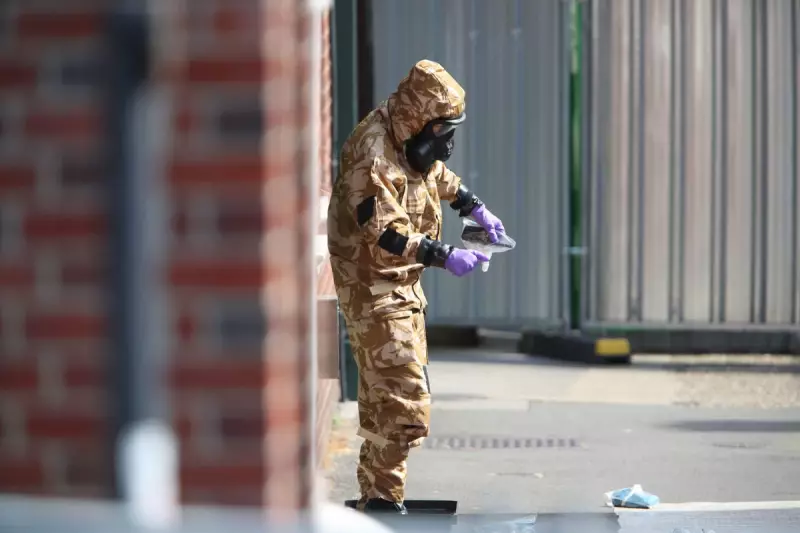
A damning independent inquiry has concluded that Russian President Vladimir Putin bears direct "moral responsibility" for the death of Dawn Sturgess, who was poisoned by the Novichok nerve agent in Wiltshire.
The Fatal Attack and Its Reckless Aftermath
The 44-year-old mother died in July 2018 after coming into contact with the highly toxic chemical weapon, which had been disguised in a discarded perfume bottle in Amesbury. This incident occurred months after a Russian military intelligence squad used the same substance in an attempt to assassinate former spy Sergei Skripal and his daughter Yulia in nearby Salisbury.
In his final report, the inquiry chairman, Lord Hughes of Ombersley, stated the attack on Mr Skripal "must have been authorised at the highest level, by President Putin." He described the actions of the GRU agents and those who authorised them as "astonishingly reckless."

A Public Statement of Russian Power
The 174-page report, which cost £8.3 million, found that GRU agents Alexander Petrov, Ruslan Boshirov, and Sergey Fedotov were acting on official instructions. Lord Hughes dismissed their claims to Russian state media of being tourists visiting Salisbury Cathedral as "not credible."
The inquiry determined that deploying Novichok in a public place was a deliberate "public demonstration of Russian power" intended for both international and domestic audiences. The report emphasised that the subsequent decision to discard the nerve agent in a perfume bottle dramatically increased the risk to the public.
"The risk that others beyond the intended target... might be killed or injured was entirely foreseeable," the report stated, establishing a clear link between the agents' actions and Ms Sturgess's death.
Security Assessments and Medical Response
While the inquiry identified some failings in the management of Sergei Skripal after his 2010 prisoner exchange, it concluded that the assessment he was not at significant risk of assassination was not unreasonable at the time. Lord Hughes noted that the only way to have completely prevented the attack would have been to give him a wholly new identity, a step not deemed necessary given the perceived threat level in 2018.
Regarding the emergency response, the inquiry heard that 87 people were admitted to A&E following the discarding of the Novichok. Lord Hughes was satisfied that Dawn Sturgess received entirely appropriate medical care from ambulance crews and hospital staff. He concluded, however, that no treatment could have saved her life given the severity of the poisoning.
The Russian state has consistently denied any involvement in the Salisbury and Amesbury incidents.