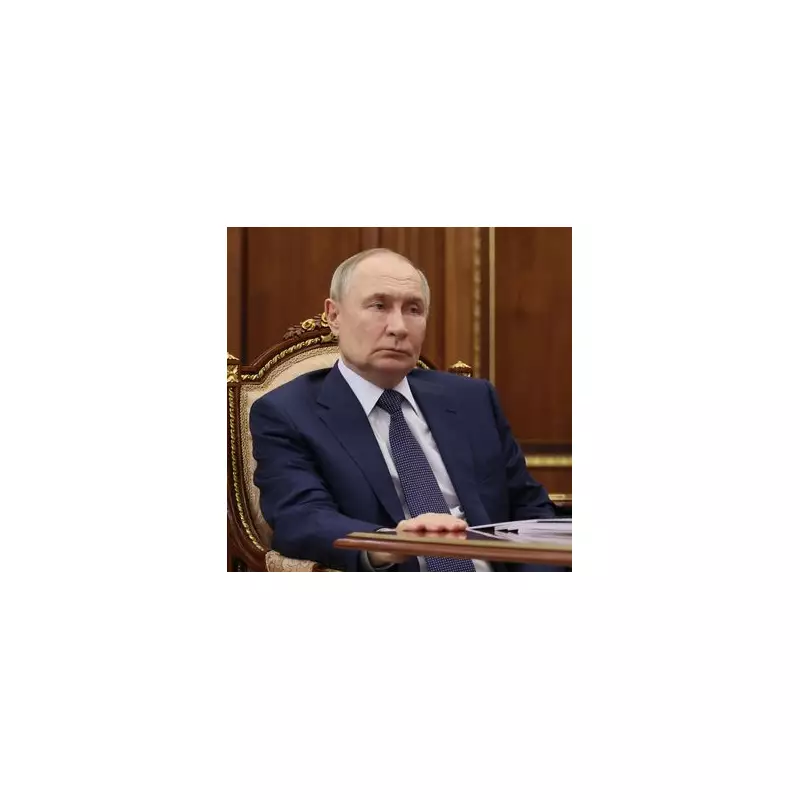
A landmark public inquiry has concluded that Russian President Vladimir Putin is "morally responsible" for the death of Dawn Sturgess, who was killed by a military-grade nerve agent discarded on British streets. The 44-year-old mother-of-three died in July 2018 after being exposed to Novichok, which she mistakenly believed was perfume.
The Inquiry's Damning Verdict
After hearing seven weeks of evidence, the chairman of the inquiry, retired Supreme Court judge Lord Hughes of Ombersley, delivered a scathing verdict. He stated that the evidence pointing to a Russian state attack was "overwhelming" and represented a deliberate show of force. The operation to assassinate former Russian spy Sergei Skripal in Salisbury four months earlier was, he ruled, authorised at the highest level by President Putin.
"I therefore conclude that all those involved in the assassination attempt... and anyone else giving authorisation or knowing assistance in Russia or elsewhere, were morally responsible for Dawn Sturgess' death," Lord Hughes declared. He dismissed claims by the Russian state that the attack was staged by the UK as not holding water.

A Trail of Recklessness and Tragedy
The inquiry detailed how the chain of events led to an innocent woman's death. In March 2018, GRU agents Alexander Petrov and Ruslan Boshirov – later identified as Anatoliy Chepiga and Alexander Mishkin – smeared Novichok on the door handle of Sergei Skripal's home in Salisbury. Sergei and his daughter Yulia survived the attempt after falling critically ill.
The agents then recklessly discarded a Nina Ricci perfume bottle containing the remaining Novichok in a public place. Months later, in June 2018, Charlie Rowley found the bottle in a charity bin and gifted it to his partner, Dawn Sturgess. She sprayed the liquid on her wrist, believing it to be perfume, and fell fatally ill. Mr Rowley was also poisoned but survived after extensive treatment.
Lord Hughes condemned the "astonishing recklessness" of deploying a nerve agent in a busy city centre, stating the risk to the public was "entirely foreseeable." He paid tribute to the paramedics and doctors who treated the victims, noting that Dawn's injuries were "unsurvivable" but that Charlie Rowley's life was saved by their swift and courageous actions.
Exoneration for UK Authorities and Lasting Questions
The inquiry cleared British security services of blame for failing to prevent the attack on Sergei Skripal. Lord Hughes noted that Skripal had declined enhanced security measures, such as CCTV, and that the only way to have prevented such a novel attack would have been to hide him completely – a step not justified by the assessed risk level at the time.
The 174-page report includes a closed section withheld for national security reasons. A global arrest warrant remains active for the three identified GRU agents, but Russia refuses to extradite them. The poisoning prompted the then-Prime Minister Theresa May to expel 23 Russian diplomats, triggering the largest collective expulsion of Russian intelligence officers in history by allied nations.
Dawn Sturgess's parents have said they hope the inquiry's findings will allow their family to fully grieve and will answer critical questions about how such a tragedy could occur on UK soil.