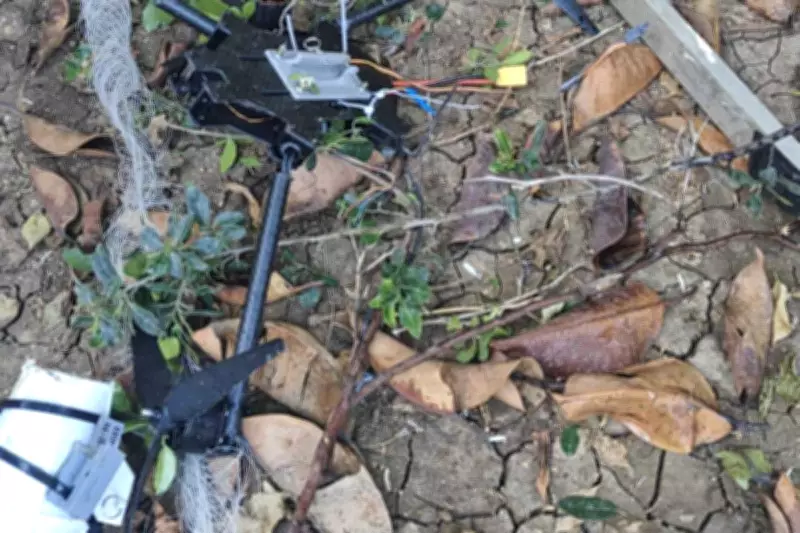
Hezbollah has introduced a new weapon in its conflict with Israel: small drones controlled by fiber-optic cables as thin as dental floss, which evade electronic detection. These drones, already used extensively in the war in Ukraine, are difficult to track and potentially lethal. Unlike conventional drones, they are not susceptible to electronic jamming because a physical cable connects the operator to the drone, making remote interference impossible.
How Fiber-Optic Drones Work
The drones operate via a thin cable that can extend up to 31 miles (50 kilometers), according to Robert Tollast, a drone expert at the Royal United Services Institute in London. While wind or other drones can tangle the cables, skilled operators can fly them low and approach targets stealthily. Experts suggest militaries must either intercept these small, short-range drones or find ways to cut their nearly invisible cables.
Threat to Israeli Forces
An Israeli military official, speaking anonymously, stated that fiber-optic drones represent a relatively new threat during the latest fighting with Hezbollah. Hezbollah has turned to these drones because Israeli air defenses have successfully countered larger rockets and missiles. The official noted that Israel believes the drones are locally made, using off-the-shelf components, explosives, and readily available transparent wire. They pose the greatest risk to troops inside Lebanon, prompting Israel to add nets and cages to military vehicles while seeking technological solutions.

Ran Kochav, former head of Israel's air defense command, admitted that Israel is struggling to defend against these drones. He emphasized that Israel focused heavily on countering rockets and missiles, neglecting drone threats. He urged Israel to learn from Ukraine, where fiber-optic drones are widely used by both Russia and Ukraine.
Usage in Ukraine
In Ukraine, fiber-optic drones have become common, with front-line towns covered in shiny cables resembling spiderwebs. Russia and Ukraine employ various drones at a massive scale, and the fiber-optic variant was developed to bypass electronic jamming, though it lacks the range of radio-controlled or AI-navigated drones.
Hezbollah's Attacks
Hezbollah has released videos of drone attacks on Israeli troops in southern Lebanon via social media and its Al-Manar TV station. One attack killed an Israeli soldier and wounded six others, while another killed an Israeli civilian contractor. The group began using fiber-optic drones in the current round of fighting that started March 2, after years of using other drone types. Israel also operates drones for surveillance and strikes against Hezbollah, though not necessarily with fiber-optic cables.
Civilian Encounter
Zevik Glidai, a 78-year-old resident of Kiryat Shmona, discovered coils of fiber-optic cable around a crashed drone in his backyard on April 13. The drone, carrying nearly 2 kilograms (4.4 pounds) of explosives, failed to detonate. Glidai noted there was no warning siren before the crash, highlighting the difficulty of detecting these drones.