Five Global Flashpoints That Could Ignite Major Conflict in 2026
Five Global Flashpoints Risk War in 2026

Military analysts have issued a stark warning that the world faces a heightened risk of major conflict in 2026, pinpointing five critical flashpoints where rising tensions could boil over.

With Vladimir Putin's war in Ukraine approaching its fourth year in February 2026 and no resolution in sight, concerns are mounting over broader global instability. Experts highlight provocative Russian troop movements on NATO borders and a series of alleged Kremlin-linked sabotage operations across Europe as signs of escalating danger.

Caribbean Confrontation and Baltic Provocations

In the Western Hemisphere, a significant military build-up is underway. Former senior British Army intelligence officer Philip Ingram told The Sun that US President Donald Trump is assembling one of the largest naval forces seen in the Caribbean region for a long time. This deployment, involving warships, fighter jets, and B-52 bombers, is focused on a dispute with Venezuelan leader Nicolás Maduro, whom Trump accuses of running a 'drug cartel' and facilitating illegal migration to the US.

Ingram cautioned that such a substantial build-up suggests a readiness to use force, warning the situation 'could flash up very quickly indeed'.

Meanwhile, in Northern Europe, the Gulf of Finland remains a key target for Russian hybrid operations. This narrow waterway between Finland, Estonia, and Russia has seen severed underwater cables, drone incursions, and military escorts for sanctions-evading 'shadow fleet' oil tankers. Ingram predicts Putin will exploit this strategic zone further in 2026 to divert attention from Ukraine, potentially stepping up sabotage efforts across the continent.

Taiwan Tinderbox and Middle East Chokepoint

Attention is also fixed on Asia, where the Kinmen Islands are seen as a potential testing ground for China. This Taiwanese-administered island cluster, home to 150,000 people, could be easily seized by Chinese forces as a means to gauge international resolve regarding Taiwan. Ingram notes that China, which views Taiwan as a breakaway province, might use such a move in 2026 to assess global reaction, with any perceived weakness potentially paving the way for a larger amphibious assault.

In the Middle East, the Strait of Hormuz represents a critical vulnerability for the global economy. This Iranian coastline chokepoint handles 20 million barrels of oil annually—one-fifth of global consumption. Analysts fear Supreme Leader Ayatollah Ali Khamenei could order the strait's closure in retaliation for strikes by Israel or the West. Ingram described such an act as a potential 'cornered rat' response by Iran, which would have a significant impact on the world economy.

Korean Peninsula Peril

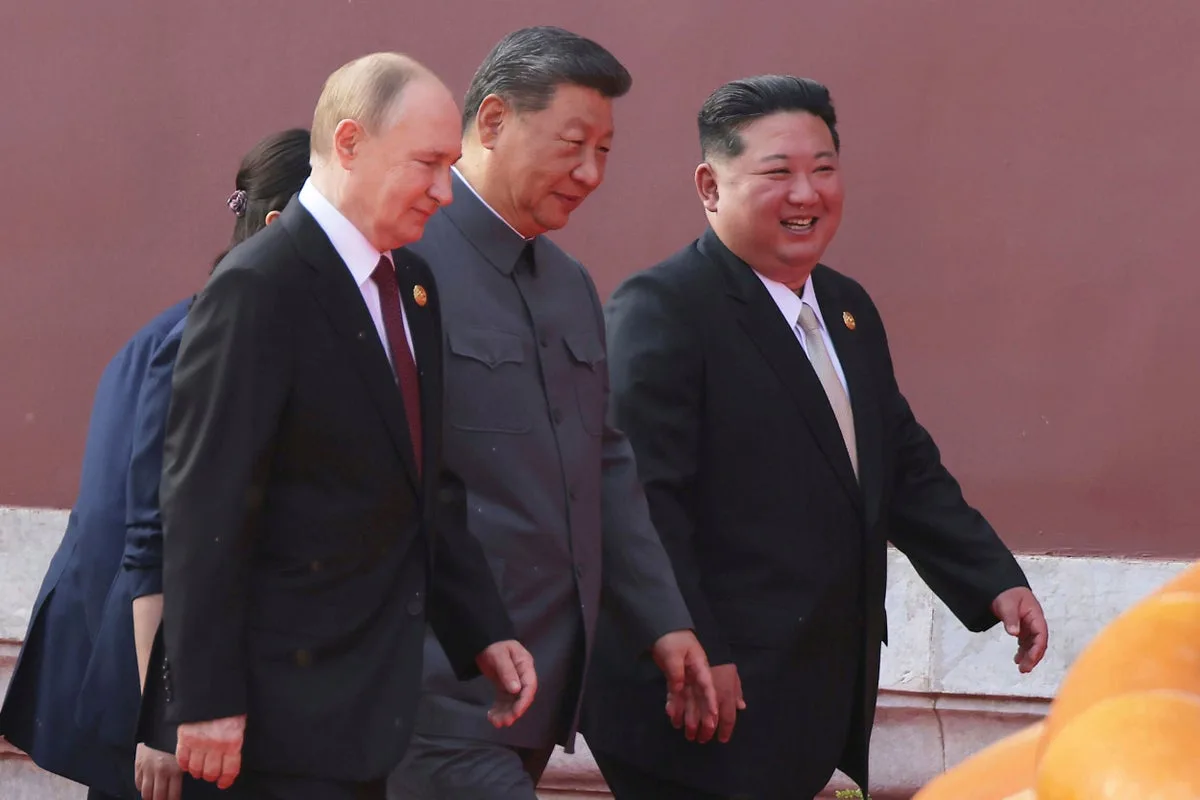
The fifth major flashpoint is the Korean Peninsula. The decades-old truce between North and South Korea is considered fragile, with leader Kim Jong-un feeling emboldened by his relationship with Russia. Pyongyang is reportedly supplying over 70% of Russia's ammunition for the war in Ukraine, gaining political capital and potentially easing its domestic crises in return. This alliance reduces the likelihood of stability, increasing the risk of provocative actions from the North towards Seoul in the coming year.

Ingram's analysis, reflecting a consensus among security experts, suggests that 2026 will be a pivotal year where diplomatic failures or miscalculations at any of these five points—the Caribbean Sea, the Gulf of Finland, the Kinmen Islands, the Strait of Hormuz, and the Korean Peninsula—could trigger a cascade towards wider war.




