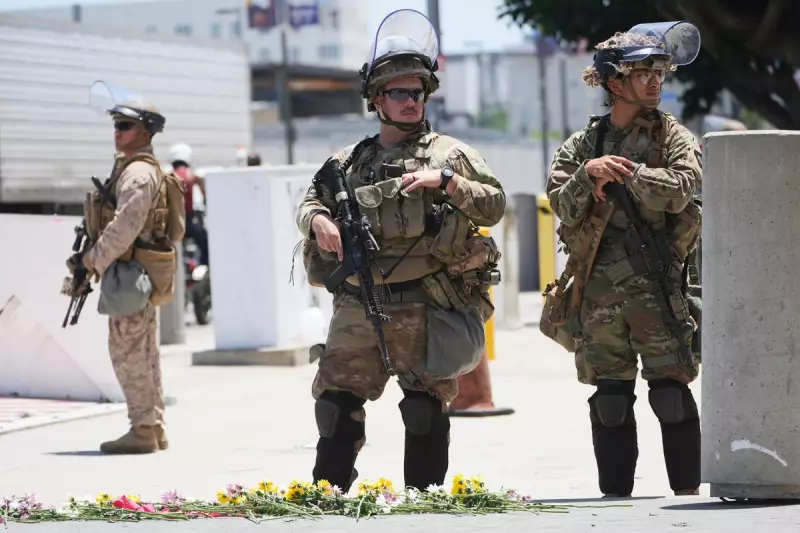
A federal judge in the United States has expressed significant doubt over the Trump administration's continued authority to command California National Guard troops, originally deployed to Los Angeles amidst summer protests.
Judge Breyer's Skeptical Hearing
During a hearing in San Francisco on Friday, 5 December 2025, U.S. District Judge Charles Breyer challenged the government's legal stance. He suggested the situation in Los Angeles had evolved since the initial deployment in June and questioned whether the administration could justify indefinite control of state troops under federal law.
"No crisis lasts forever," Judge Breyer stated. "I think experience teaches us that crises come and crises go. That’s the way it works." He pressed a Justice Department attorney for evidence that California state authorities were unable or unwilling to protect federal personnel and property, noting President Donald Trump had access to tens of thousands of active-duty military personnel in the state.

The Core of the Legal Dispute
The case stems from President Trump's decision to activate over 4,000 California National Guard members in June without the state governor's request—a move not seen in decades. The troops were deployed in response to violent protests against heightened immigration enforcement. Their roles included guarding a federal detention centre and later protecting immigration officers during arrests.
By late October, the number had dwindled to several hundred, with only about 100 remaining in the Los Angeles area. California officials, led by Attorney General Rob Bonta, have asked Judge Breyer for a preliminary injunction to return control of these remaining troops to the state. "The National Guard is not the president's traveling private army," Bonta asserted after the hearing.
Conflicting Legal Arguments
The Justice Department, represented by attorney Eric Hamilton, argued that federal law grants the president power to extend control of state Guard troops as long as he deems it necessary. Hamilton cited ongoing threats, including two incendiary devices thrown into a federal building the previous Monday, and contended the court lacked authority to review an ongoing mission.
California's lawsuit contends the deployment violates the Posse Comitatus Act, which limits military use in domestic affairs. In a significant prior ruling in September, Judge Breyer found the initial deployment illegal. However, an appeals court panel has placed a related restraining order on hold, leaving the matter unresolved.
This legal battle forms part of a broader pattern, where the Trump administration has also attempted to deploy California Guard members to Portland and Chicago, facing fierce resistance from local Democratic leaders and injunctions from other judges.