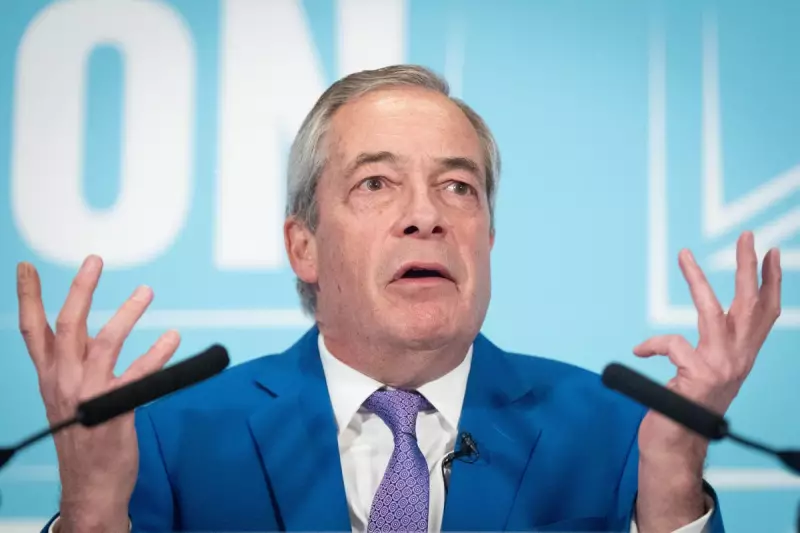
Reform UK leader Nigel Farage has declared he will vote against any proposal to deploy British peacekeeping troops to Ukraine, setting the stage for a significant parliamentary debate on the UK's military role in the region.
Farage's Opposition to the Peacekeeping Plan
Speaking on Wednesday 7 January 2026, Mr Farage outlined his firm opposition to the potential deployment. He argued that the UK lacks the necessary manpower and military equipment to sustain an operation with no clearly defined endpoint. The veteran politician expressed deep scepticism about the proposed 'Coalition of the Willing', which he suggested currently consists of only the United Kingdom and France.
"This would leave our forces exposed for an unlimited period," Farage stated, questioning the strategic wisdom of committing to an open-ended mission. His comments highlight a growing faction of concern regarding deeper military entanglement in Ukraine, even under a peacekeeping banner.

Starmer Confirms Parliamentary Vote on Troop Numbers
Prime Minister Sir Keir Starmer has confirmed that Members of Parliament will be given the opportunity to vote on the final number of troops sent to Ukraine, should a peace deal be reached. This move is intended to ensure democratic oversight of a significant foreign policy and defence decision.
The proposed plan, which has been discussed between Sir Keir and French President Emmanuel Macron, involves British and French forces undertaking two primary roles: training Ukrainian troops and protecting critical weaponry to deter future aggression from Russia. The Prime Minister affirmed that any final troop numbers would be determined by detailed military planning and presented to the House of Commons for a vote, particularly if a legal instrument is required to authorise the deployment.
International Context and Security Guarantees
The European-led initiative has received signals of support from the United States, which is understood to be preparing security guarantees for the effort. This international dimension is crucial, as it seeks to underpin a future peace settlement with a credible deterrent force.
The debate promises to be a defining moment for the Starmer government, pitting the internationalist vision of a 'Coalition of the Willing' against concerns over military overstretch and mission creep voiced by figures like Nigel Farage. The outcome of the parliamentary vote, when it comes, will significantly shape the UK's post-conflict role in European security.