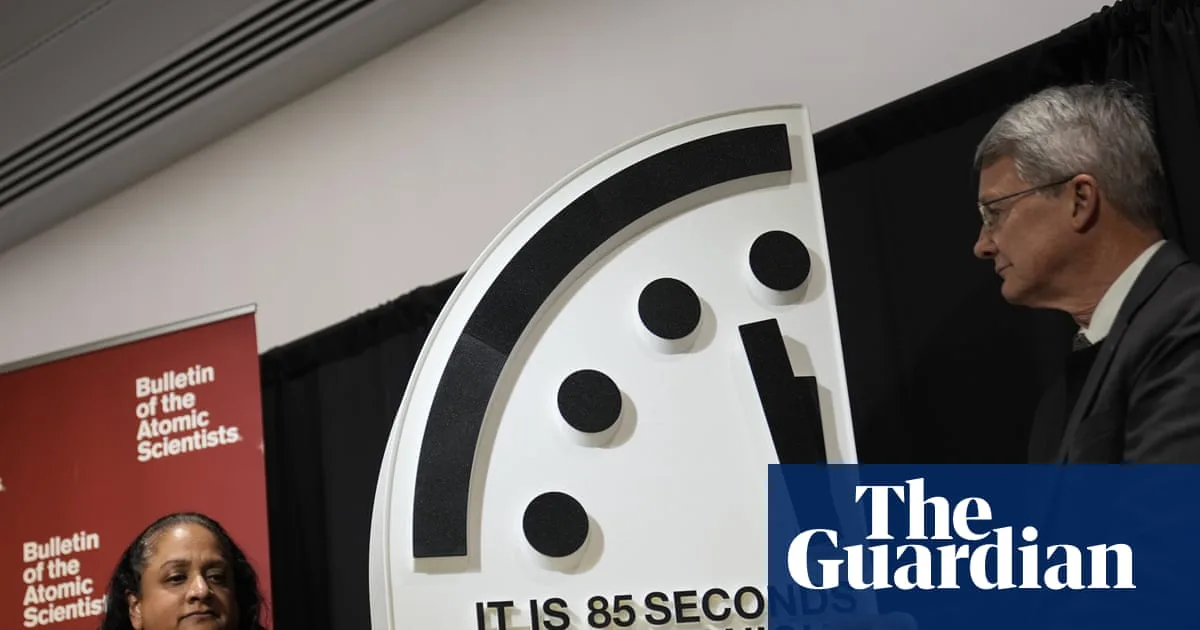
Doomsday Clock at 89 Seconds to Midnight: Humanity's Closest Brush with Catastrophe
Doomsday Clock at 89 Seconds to Midnight in 2025

The symbolic Doomsday Clock, a stark barometer of humanity's proximity to self-annihilation, has been set at a mere 89 seconds to midnight for 2025. This marks the closest the clock's hands have ever been to the hour of global catastrophe since its creation in 1947.

A Chilling Symbol of Unprecedented Peril

Maintained by the Bulletin of the Atomic Scientists, a group founded by researchers from the Manhattan Project, the clock is adjusted annually based on existential risks. On January 28, 2025, the Bulletin announced the clock would stay at its current, alarming position. Rachel Bronson, the organisation's CEO, offered a grim clarification: "When the clock is at midnight, that means there's been some sort of nuclear exchange or catastrophic climate change that's wiped out humanity. We never really want to get there and we won't know it when we do."

The Bulletin has issued a stark warning that the world is navigating "a time of unprecedented danger." This peril is driven exceedingly by the nuclear situation stemming from Russia's ongoing war in Ukraine. Kremlin spokesman Dmitry Peskov has previously pointed the finger at NATO and the United States for escalating tensions, stating it obliges Russia to be "particularly attentive, vigilant and responsive."

The Dual Threats: Nuclear Shadows and Climate Crisis

While geopolitical strife and the spectre of nuclear conflict are primary concerns, the accelerating climate breakdown forms a core pillar of the threat assessment. The Bulletin began formally incorporating climate change into its calculations in 2007. Scientist Sivan Kartha of the Stockholm Environmental Institute highlighted a dire trend, noting that global carbon dioxide emissions from fossil fuels continue to reach record highs following a post-pandemic rebound.

"With emissions still rising, weather extremes continue, and were even more clearly attributable to climate change," Kartha stated, underscoring the tangible and worsening impacts of the environmental crisis.

A Call to Action, Not a Prophecy of Despair

Despite the ominous setting, Bulletin members emphasise that the Doomsday Clock is not a hopeless forecast but a powerful mobilising tool. Professor Robert Rosner likened it to a "canary in a coal mine," designed to alert the world to grave dangers and spur collaborative action. History offers a beacon of hope: the clock reached its safest point, 17 minutes to midnight, in 1991 following the end of the Cold War and the signing of the Strategic Arms Reduction Treaty between the US and Russia.

The Bulletin's powerful statement from that era resonates today: "The illusion that tens of thousands of nuclear weapons are a guarantor of national security has been stripped away." The current 89-second setting is a urgent reminder that reversing the clock's march towards midnight remains humanity's most critical collective task.




