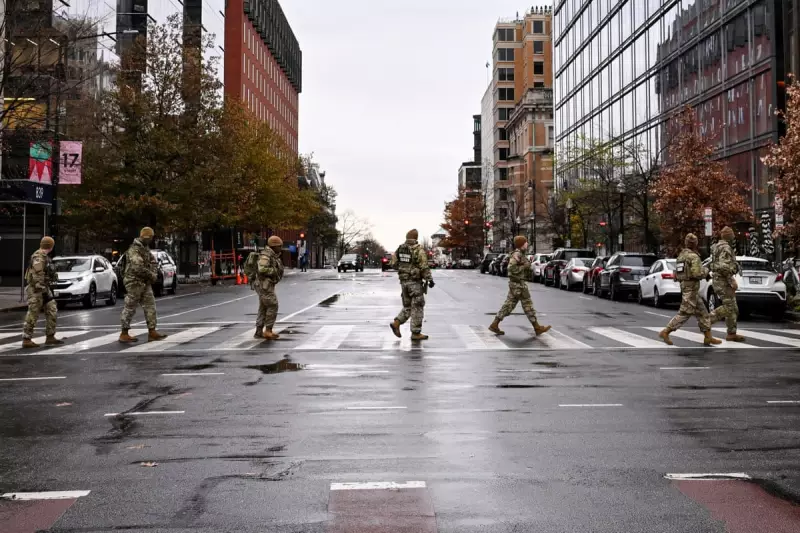
A federal appeals court has delivered a significant interim victory to former President Donald Trump, permitting him to maintain a controversial deployment of National Guard troops in Washington DC.
Court Order Halts Removal of Troops
On Thursday, the US Court of Appeals for the District of Columbia Circuit issued a written order that effectively paused a lower court's injunction. That injunction, issued by US District Judge Jia Cobb on 20 November, had ruled the troop presence was likely unlawful and mandated their removal by 11 December.
The appellate court's decision is not a final judgment on the legality of the deployment. However, it allows the deployment, which began in August, to continue for now. The legal challenge was brought by DC Attorney General Brian Schwalb, a Democrat, who accused the Trump administration of unlawfully usurping local control.

Deployment Intensified After Guard Shooting
The presence of over 2,000 National Guard soldiers in the capital, drawn from states including the District of Columbia, Louisiana, and West Virginia, was initially part of President Trump's contentious immigration and crime crackdown targeting Democratic-led cities.
The situation escalated dramatically after a 26 November shooting near the White House that targeted two members of the West Virginia National Guard. One of the soldiers later died from her injuries. Following what officials described as a "targeted" attack, Trump ordered an additional 500 troops to Washington rather than beginning a withdrawal.
A 29-year-old Afghan national is facing charges for the shooting, an event Trump used to amplify his anti-immigration rhetoric and call for a halt to immigration from what he termed "third-world countries."
Broader Legal and Political Conflict
The core of the lawsuit hinges on the Posse Comitatus Act and related laws, which generally prohibit federal troops from performing domestic police work. DC officials argue the president has overstepped by taking over the mayor's policing role.
Trump's administration has dismissed the case as a political stunt, asserting the president's right to deploy troops to the capital without local approval. Similar deployments to cities like Chicago, Los Angeles, and Portland have also sparked lawsuits from Democratic leaders, who view them as militarised political punishment.
While trial courts have largely ruled against the deployments, the ultimate legality may be decided by the US Supreme Court, which is expected to soon weigh in on the case concerning Chicago's National Guard deployment.