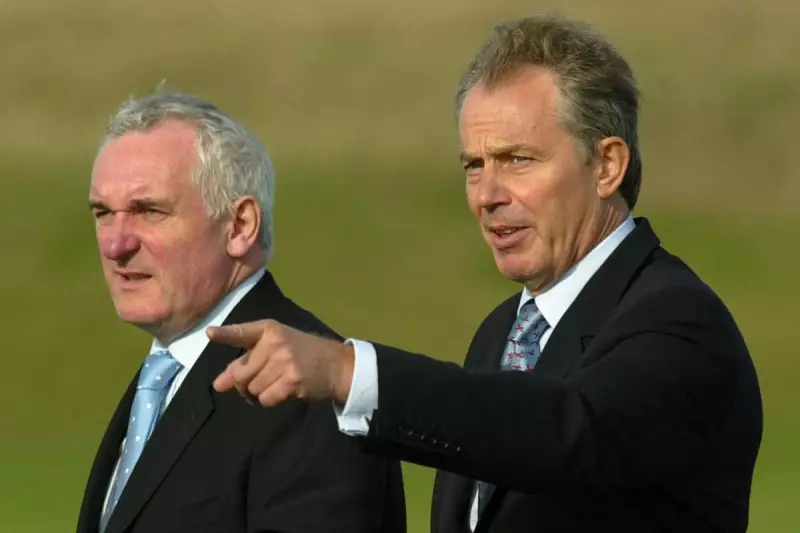
Freshly declassified government papers have exposed a significant diplomatic refusal, revealing that former Prime Minister Tony Blair declined a direct request from Ireland to share intelligence on potential terrorist threats to the Sellafield nuclear facility. The request came in the tense aftermath of the devastating 2004 Madrid train bombings.
The Irish Warning of a "Transnational Catastrophe"
In March 2004, Islamist extremists coordinated bomb attacks on Madrid's commuter rail network, killing 193 people. The atrocity sent shockwaves across Europe, prompting urgent security reassessments. Shortly after, the then Irish Taoiseach (prime minister), Bertie Ahern, wrote to Tony Blair, expressing grave concerns.
Mr Ahern argued that the Madrid attack underscored the "ruthlessness and determination" of global terrorist networks. He warned that targets capable of causing "transnational catastrophes" deserved special attention, explicitly citing the Sellafield nuclear processing plant in Cumbria. Ahern acknowledged the need to protect sensitive information but insisted secure arrangements for sharing intelligence could be devised.

MI5's Firm Veto and UK's Stance
Despite the Irish leader's plea, the UK government, guided by its security services, maintained a hard line. The newly released files show that MI5, the Security Service, firmly rejected the proposal. Officials within the Department of Trade and Industry, then responsible for nuclear sites, conveyed MI5's position to Number 10.
An official in then Secretary of State Patricia Hewitt's private office, Shantha Shan, noted the letters showed "Irish determination not to let go of the Sellafield issue." The core reason for refusal was stark: "there could be no guarantees about who will have access to it" if terrorist-related intelligence was shared with Dublin, regardless of any safeguards put in place.
Diplomatic Reassurances and Lasting Discontent
In response, Tony Blair sought to offer a compromise. He assured Bertie Ahern that if the UK government received intelligence of a specific and real threat to Sellafield, it would seek to share that assessment "as fully and as quickly as possible." However, this was heavily caveated, being subject to constraints imposed by the originators of the intelligence.
Ultimately, Ireland had to settle for a promise that the British ambassador would brief Irish officials if any threat emerged. This did not satisfy Mr Ahern, who complained that while he understood the need to protect sources, "the protection of the lives and health of our citizens should have priority."
The documents also shed light on the broader political context. British Ambassador Sir Ivor Roberts suggested that the success of the Good Friday Agreement had changed the UK-Ireland relationship, meaning it was no longer viewed "exclusively through the Northern Ireland prism." This allowed issues like Sellafield to come to the fore. He reported that Irish opposition parties and NGOs had pressured the government into a more aggressive stance, leading to a "proliferation of legal cases" and stepped-up rhetoric against the UK.