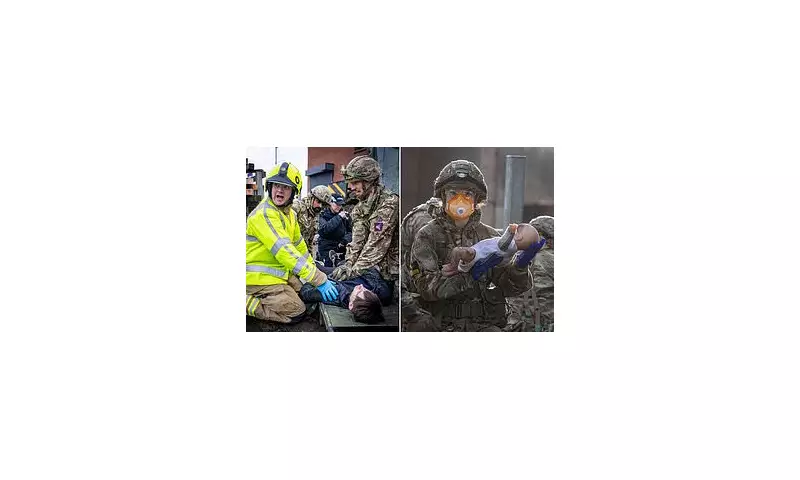
British Forces Conduct Critical Medical Training Exercises
The British Army has been intensively preparing for potential attack scenarios on home soil, with soldiers honing vital life-saving skills through realistic military drills. In a comprehensive exercise at the Scottish Fire and Rescue Service National Training Centre in Cambuslang on January 17, personnel practiced extracting and treating simulated casualties under demanding conditions.
Realistic Simulation of Emergency Scenarios
During the training operation, injured individuals – portrayed by both real people and advanced medical dummies – required careful extraction and immediate medical attention. One particularly poignant drill involved the rescue of a simulated baby casualty, creating what participants described as a haunting dress rehearsal for potential military action against Britain. These exercises represent some of the most sophisticated preparedness training conducted by UK forces in recent years.
Members of the Glasgow-based 144 (Parachute) Medical Squadron led the operation, working in close coordination with the Scottish Fire and Rescue Service and the Scottish Multi-Agency Resilience Training and Exercise Unit. A Ministry of Defence spokesperson emphasised the unit's critical role, stating: 'They provide vital dismounted first-line medical and secondary healthcare support to both soldiers and civilians all over the world, as part of the Global Rapid Reaction Force.'

Geopolitical Context of Heightened Tensions
These military preparations unfold against a backdrop of escalating international tensions, particularly concerning Russia's protracted war in Ukraine which shows no signs of resolution. Recent diplomatic efforts saw envoys from Ukraine, Russia, and the United States convene for trilateral talks in Abu Dhabi – the first such meeting since Russia's full-scale invasion in 2022. However, optimism remains limited as Moscow maintains its unwavering demand for complete control of the Donbas territory in eastern Ukraine.
Simultaneously, Britain has been developing bold strategies to counter Russian aggression, including plans to seize additional Russian oil tankers from the sanctions-busting 'shadow fleet'. According to recent reports, profits from these seizures – potentially running into hundreds of millions of pounds – would be redirected to support Ukraine's defence efforts against President Vladimir Putin's forces.
International Dimensions and Strategic Calculations
The UK's approach carries significant risks, with defence experts warning that Russia might retaliate by seizing British-flagged vessels or escalating economic and legal warfare against Western nations. Moscow has already characterised the potential use of Russian assets to fund Ukraine as 'outright theft' and a 'special kind of casus belli' – justification for war. Nevertheless, the Ministry of Defence maintains that such seizures fall within internationally agreed sanctions frameworks and represent proportionate responses to Russian aggression.
Meanwhile, transatlantic relations face additional complexity with US President Donald Trump's controversial statements regarding Greenland. Although the President has recently moderated his position – backing away from earlier tariff threats against European allies and ruling out seizing Danish territory by force – tensions persist regarding security arrangements and international cooperation frameworks.
Political Responses and Future Challenges
Prime Minister Keir Starmer has acknowledged the temporary easing of tensions regarding Greenland, describing President Trump's climbdown as a 'good thing'. However, the Prime Minister cautioned that significant challenges lie ahead, emphasising the need to find 'a better way' of guaranteeing security both in Europe and globally. Starmer stressed that navigating these complex international waters requires pragmatism while steadfastly adhering to British values and principles.

As British forces continue their preparedness training and the government navigates multifaceted geopolitical challenges, these developments underscore the increasingly complex security landscape facing the United Kingdom. The integration of military medical exercises with broader strategic considerations reflects a comprehensive approach to national security in an uncertain global environment.