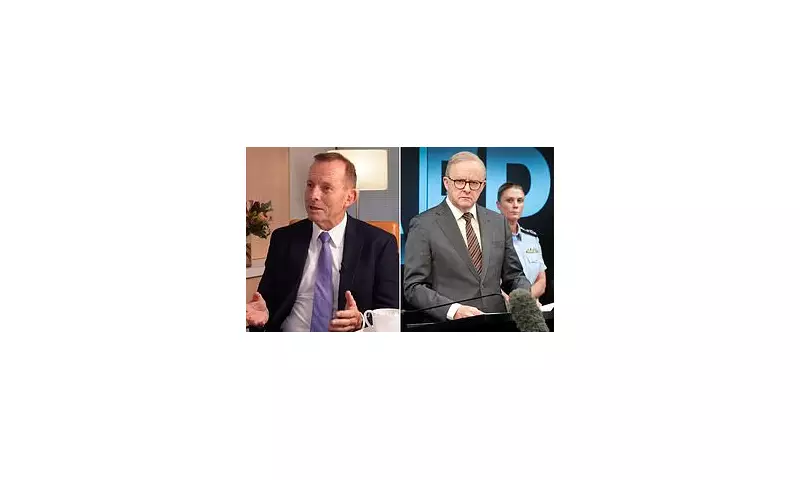
Australia is facing a profound 'national crisis' that leaves it dangerously exposed to strategic threats, according to a blistering assessment from former Prime Minister Tony Abbott.
A Scathing Verdict on National Direction
In a candid appearance on former deputy prime minister John Anderson's podcast, Abbott delivered a dire warning. He asserted that the nation's current trajectory is flawed across multiple critical fronts, leaving its future in jeopardy.
'Economically, we're in decline. Socially, we're more divided than we've been for years. Strategically, we're in dire peril,' Abbott stated bluntly. He lamented a widespread public obliviousness to these gathering storms and a corresponding lack of action to counter them.

The ex-PM pinpointed three urgent priorities for government: bolstering national security, ensuring justice, and rebuilding economic strength. He accused contemporary policymakers of engaging in what he termed 'intergenerational theft', arguing that Australia is borrowing from unborn children while birth rates fall, thereby shackling future generations with an unfair tax burden.
Defence Shortfalls and Social Fragmentation
Abbott reserved particularly sharp criticism for the Albanese Government's defence strategy. He slammed the decision to redirect $80 billion from short-term military capabilities towards long-term AUKUS projects, labelling the move 'grossly and seriously inadequate'.
'You can't claim these are dangerous times and then preside over an actual decline in our capabilities,' he argued. He described the government's current approach as suffering from 'analysis paralysis', which is actively harming the nation's preparedness.
On social cohesion, Abbott contended that unity must precede diversity. 'We've got to be one country, one people,' he said, adding that migrants arrived seeking a better life, which imposes a duty to preserve the foundational Anglo-Celtic culture and Judeo-Christian ethos of Australian society.
Calls for Immediate Action and Increased Spending
Abbott urged for decisive action instead of another protracted policy review process. His immediate shopping list for defence includes offensive and defensive missile systems, more ships and planes, and an increase in personnel, noting the armed forces are currently 5,000 personnel below establishment.
He specifically called for two new squadrons of marinised F-35 jets and converting landing helicopter docks into light aircraft carriers. He also advocated fast-tracking the procurement of new light frigates.
While the Albanese Government plans to increase the defence budget by an additional $50.3 billion over the next decade, aiming for spending equating to 2.3% of GDP by the early 2030s, many experts deem this insufficient. Abbott's warnings align with calls from the United States for Australia to set a defence spending target of 3% of GDP to properly counter regional threats.
Abbott concluded with a stark final thought: 'We need a plan for a stronger economy, a more cohesive society, and greater security. Right now, we have none of that.' His intervention frames the coming decade as a critical period for Australian sovereignty and prosperity.