

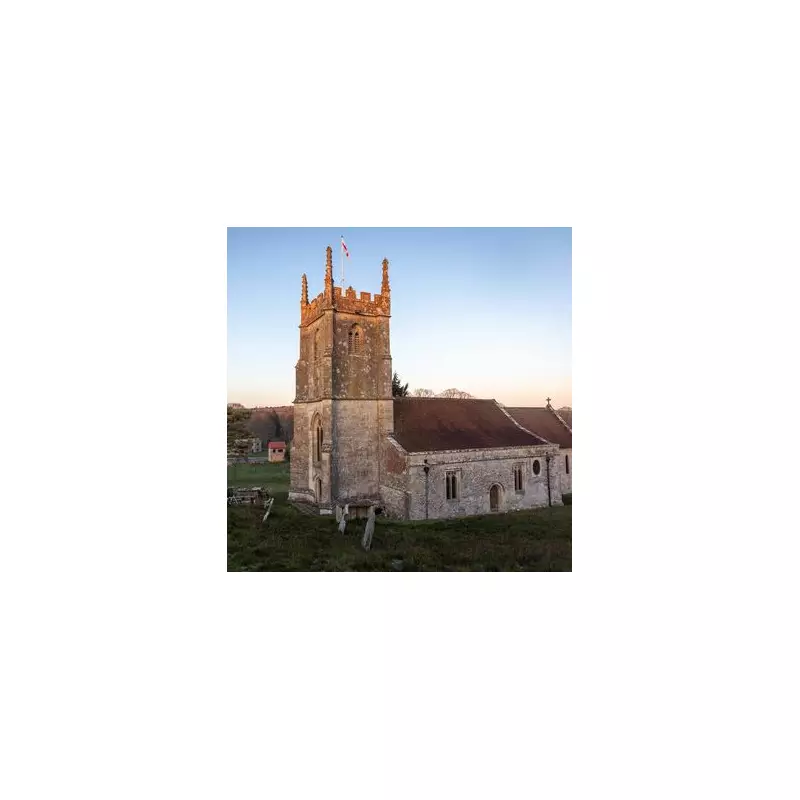
A ghost hunter exploring a British village that has been sealed off from the world since the Second World War was left deeply unsettled by her experience. The village of Imber on Salisbury Plain in Wiltshire was taken over by the US Army in 1943 and never returned to its inhabitants, creating a lasting ghost town within a live military zone.
The Wartime Eviction That Created a Ghost Town
In a pivotal move to prepare for the D-Day landings, the US Army requisitioned Imber in 1943, giving the resident families a mere 47 days' notice to leave their homes. Villagers reportedly believed the move was temporary and that they would return after the conflict. However, the area, along with surrounding farmland previously bought by what is now the Ministry of Defence, was permanently transformed into the Salisbury Plain Training Area, the UK's largest military training ground.
Neil Skelton, a custodian of the site, explained the fate of the homes to the BBC. "There are very few of the original houses left because when they evacuated in 1943 they were mostly cob and thatch. Of course once the thatch went, the water got in and the cob fell to the ground," he said. Most structures are now hollow shells or modern rebuilds used for military simulations.

A Chilling Modern-Day Investigation
YouTube ghost hunter Emma Watts, who runs the channel Watts Life, recently visited Imber during one of its rare public openings to seek evidence of paranormal activity. She described an immediate sense of isolation, noting the complete absence of mobile phone signal. "I'm standing in Imber village, a haunted and abandoned village sealed off from the rest of the world. The village was abandoned but the dead refused to leave," she stated in her video.
During her exploration, Emma entered a derelict building she deemed perfect for an investigation. Inside, she reported hearing unexplained noises that she believes were either someone trying to spook her or potential spirit activity. "I think the noises were potentially spirits and not a person. Unless they're just keeping dead quiet and listening in to what I'm doing, maybe," she later reflected.
The Lingering Echoes of History
Imber's history stretches back centuries, with records dating to 967 AD and its inclusion in the 1086 Domesday Book, where it was recorded as having seven households. Today, the Grade I-listed St Giles Church and the shell of the old pub are among the oldest surviving structures, with the church opening to visitors by dedicated bus just once a year.
While the loss of the community is poignant, nature has begun to reclaim the space. Neil Skelton observes a silver lining, noting it can be "lovely" to see wildlife thriving. "You've just got the owls, badgers, birds and foxes for company," he added. The village stands as a stark, forgotten monument to the sweeping sacrifices demanded by global conflict, its empty lanes and ruined cottages now a training ground for soldiers and a haunting destination for the curious.






