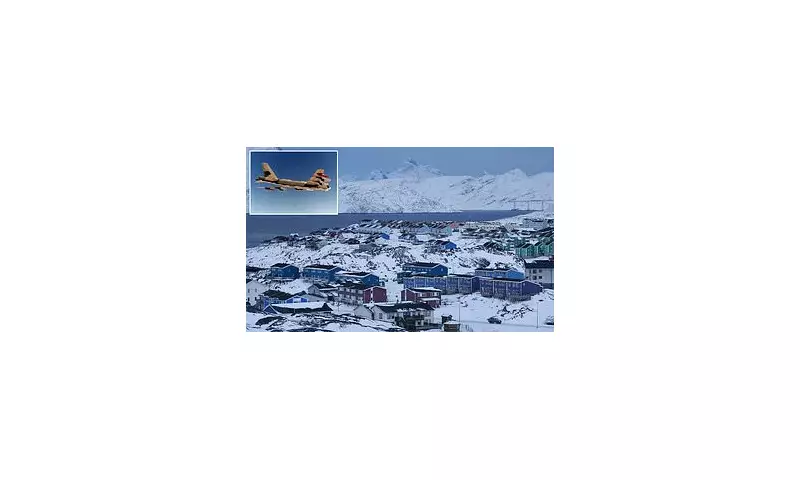
The Thule Incident: A Cold War Nuclear Accident That Shook Arctic Ice and Diplomatic Relations
What began as a routine patrol mission over the frozen Arctic swiftly escalated into one of the Cold War's most significant nuclear accidents, exposing secret military operations and severely straining international alliances. On January 21, 1968, a United States Air Force B-52G Stratofortress bomber departed from Plattsburgh Air Force Base in New York, embarking on a covert mission that would end in catastrophe on the icy terrain of Greenland.
A Fateful Mission Under Operation Chrome Dome
The aircraft was part of the top-secret Strategic Air Command program known as Hard Head, operating under the broader Operation Chrome Dome. This initiative was designed to maintain a constant airborne alert, keeping nuclear-capable bombers aloft at all times to monitor for potential Soviet threats. The specific objective of this flight was to circle at 35,000 feet above Thule Air Base in Greenland, vigilantly watching the Ballistic Missile Early Warning System for any signs of communication blackout that might indicate a system failure or the onset of a nuclear attack.
Onboard the bomber were seven crew members, led by Captain John Haug. The aircraft's forward bomb bay contained four B28FI thermonuclear weapons, each measuring approximately 12 feet in length and weighing around 2,300 pounds. According to military reports, each weapon possessed sufficient destructive force to level a major city, underscoring the grave stakes of the mission.

The Catastrophic Chain of Events
During the lengthy, cold six-hour flight from New York, a critical error set the stage for disaster. Major Alfred D'Amario, seeking to warm the cabin, placed foam cushions near a heating vent and opened an engine bleed valve to draw hot air inside. Tragically, the bomber's systems failed to adequately cool the superheated air, causing the cushions to ignite. Navigator Curtis Criss detected a smell of burning rubber and discovered flames erupting from behind a metal box in the lower compartment.
Despite Criss's immediate efforts, deploying two fire extinguishers in a desperate attempt to quell the blaze, the flames continued to spread uncontrollably. At 3:22 pm local time, approximately 90 miles south of Thule, Captain Haug declared an emergency and requested immediate permission to land. Just five minutes later, with black smoke filling the cockpit and electrical systems destroyed, he gave the order for the crew to evacuate.
The Crash and Its Immediate Aftermath
Six crew members successfully ejected from the stricken aircraft as it flew directly above the runway lights of Thule Air Base. However, co-pilot Leonard Svitenko, who did not have an ejection seat, attempted to escape through a lower hatch. In the process, he struck his head and was unable to survive the fall; his body was later recovered north of the Greenland base. At 3:39 pm, the pilotless bomber plunged into the ice, triggering the conventional explosions of its four thermonuclear weapons upon impact.
While the bombs' sophisticated safety systems prevented a full-scale nuclear detonation, the conventional explosions scattered radioactive debris—including plutonium, uranium, americium, and tritium—across miles of frozen landscape. Jeffrey Carswell, a shipping clerk for a Danish contractor stationed at Thule, recalled the moment vividly: “The massive building shook as if an earthquake had hit.” The immediate aftermath saw the United States Air Force activate its Disaster Control Team within hours, responding to urgent demands from Denmark to remove all material from the crash site.
Diplomatic Fallout and the Violation of Nuclear-Free Policy
The accident inflicted profound damage on US-Danish relations, primarily because Denmark had enforced a stringent nuclear-free policy since 1957, explicitly banning nuclear weapons on its soil and within its territories, which included Greenland. The Thule crash brutally exposed that the United States had been routinely flying nuclear-armed bombers over Greenland for years, in direct contravention of this publicly stated ban. Danish officials initially characterised the flight as an isolated emergency, but later declassified records would reveal that these secret missions had received quiet governmental approval despite public denials.

In the immediate wake of the disaster, US officials initially refused Danish demands to clean up the wreckage. It was only after a Danish scientist issued a stark warning about the future viability of Thule Air Base being at stake that the United States reluctantly agreed to undertake the massive cleanup operation.
The Monumental Cleanup Effort
What followed was an unprecedented and arduous cleanup campaign, described by one general as an ironic endeavour where recovering debris from one of humanity's most advanced weapons required almost primitive methods. Crews raced to the crash site, carving ice roads across the frozen bay and erecting makeshift buildings and decontamination stations. Airmen swept the area shoulder to shoulder, collecting everything from large, twisted aircraft parts to minute radioactive fragments.
Workers meticulously scraped away inches of contaminated ice, while ships transported more than half a million gallons of radioactive waste back to the United States. Alarmingly, much of this hazardous material was handled without adequate protective gear. The operation, which concluded on September 13, 1968, at a cost of $9.4 million (equivalent to roughly $90 million today), succeeded in removing an estimated 90 percent of the plutonium from the site. However, scientists remained deeply concerned that radioactive fuel could rise to the surface as the ice thawed, potentially drifting along Greenland's coastline.
Unraveling Truths and the Thulegate Scandal
As the physical wreckage was cleared, political and military controversies began to spill out. Shortly after the crash, US authorities stated that all four bombs had detonated. Yet, three weeks later, investigators determined this claim was false, as components from only three of the weapons had been positively identified. A classified report from July 1968 concluded that while most components from three bombs were recovered—including nearly all of their uranium—the fusion stage from a fourth weapon, responsible for a hydrogen bomb's massive blast, was never found.
The full truth of governmental complicity and the scale of the secret flights remained concealed for decades. It was not until a 1995 investigation triggered a major political scandal, known as Thulegate, that secret government authorisations were fully revealed, sparking widespread public outrage in Denmark. The Thule incident stands as a stark reminder of the hidden perils and diplomatic fractures of the Cold War, an event where a routine patrol mission over the Arctic ice transformed into a nuclear accident that reverberated for generations.