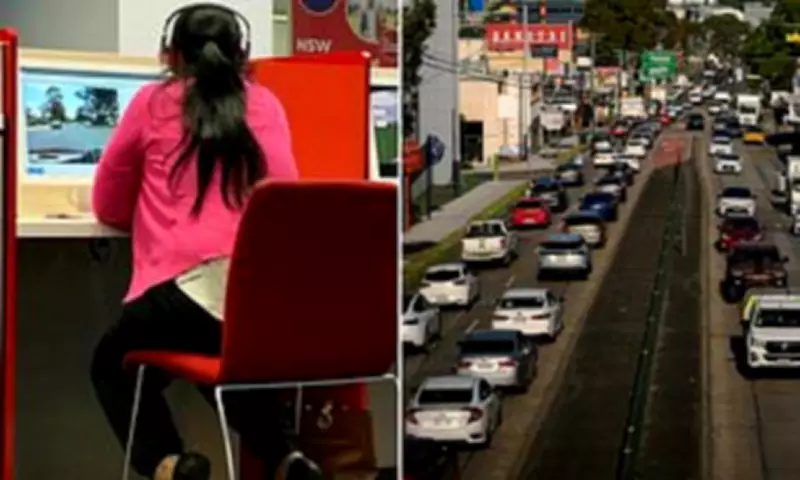
NSW Driver Knowledge Test Expanded to Eight Languages, Igniting Fierce Debate
The expansion of the Driver Knowledge Test (DKT) to eight languages in New South Wales has left Australians deeply divided over road safety and integration policies. Aspiring motorists in Australia's most populous state must first pass this 45-question theory test on road rules and safety to obtain a learner's licence, a requirement that has now become the centre of a heated national conversation.
Comprehensive Language Expansion Details
Since 2024, the DKT has been available online, allowing applicants to take the test from home or any location with internet access, with no additional fee required for retakes after an initial failure. Previously available in English, Simplified Chinese, Arabic, Spanish, and Vietnamese, the test will now include Korean starting next month, followed by Thai, Farsi (Persian), and Traditional Chinese later this year.
The 100-page official road user handbook will also be translated into all eight languages, providing comprehensive study materials for non-English speaking applicants. Authorities selected these languages based on household language data within NSW and recent migration patterns, aiming to make the licensing process more accessible to diverse communities.

Controversial Reactions and Safety Concerns
2GB presenter James Willis strongly criticised the expansion, arguing that basic English comprehension should be mandatory for anyone driving on Australian roads. "At the risk of sounding controversial, I would have thought it was pretty important for someone driving on Sydney roads to at least understand basic English," Willis stated. "The signs are in English, the tunnel directions are in English. English is on all the alerts and hazard signs, it's also written on every street sign."
Many Australians echoed these concerns online, questioning how non-English speaking drivers would handle emergency situations. "What happens when they have to follow verbal instructions given to them by the police and traffic controllers?" one commenter asked. Another added, "So, are we going to change every sign on every road, parking etc because if they cannot understand the test in English? How are they going to read the signs in English?"
Some critics dismissed the policy change as absurd, with one remarking, "April Fool's Day was over a week ago," while others defended the move as practical and inclusive, noting that multi-language tests have existed for decades in various Australian states.
Comparative State and International Approaches
The debate extends beyond NSW borders, with other Australian states adopting different approaches. Victoria offers the DKT in 13 languages, while South Australia provides it in five languages. Other states maintain English-only tests but offer pre-booked interpreter services for applicants.
Internationally, Florida recently moved in the opposite direction, with Governor Ron DeSantis' administration mandating that all driver licence knowledge and skills tests be conducted exclusively in English. This policy change occurred despite Florida having the third-largest foreign-born population in the United States, behind only California and Texas.
Willis praised Florida's approach as "common sense" and suggested Australia should follow suit. "Florida is on the money and we should be doing the same here," he argued. "Letting someone read the road rules and do the test in Spanish or Chinese isn't going to help them when they get behind the wheel for the first time."
The NSW Department of Customer Service has been contacted for comment regarding the policy implementation and safety considerations. As migration continues to shape Australian demographics, this language accessibility versus road safety debate highlights broader questions about integration, public safety, and equitable access to essential services in multicultural societies.