

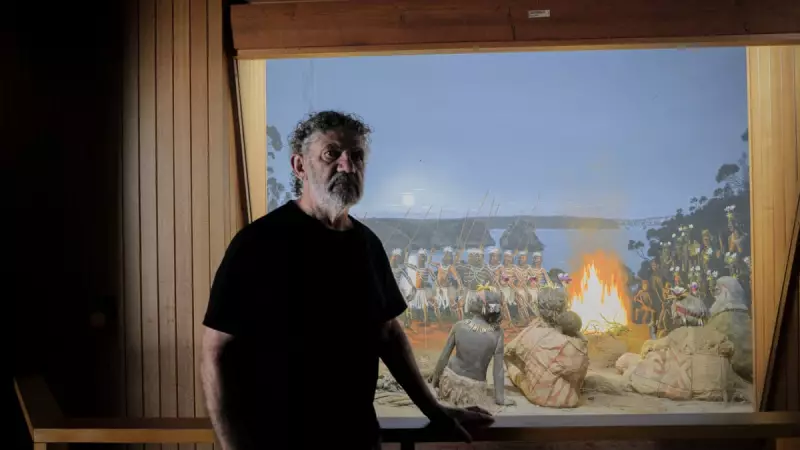
Senior Bangerang custodian Kevin Atkinson has voiced strong criticism against a recent council decision that he believes is effectively removing Indigenous history from public view. The Federation Council in regional New South Wales voted to cease flying the Aboriginal flag inside council chambers, opting instead to exclusively display the Australian flag on all municipal flagpoles.
Unity Versus Recognition Debate
Corowa mayor Cheryl Cook has defended the council's position, stating that the proposal aims to unite the town as a single, cohesive community under one sovereign emblem. She emphasised that the Australian flag serves as the primary symbol of unity for all residents, regardless of background. However, traditional owners from the Bangerang and Wiradjuri communities argue this decision represents a concerning erasure of their historical presence and cultural significance in the region.
Historical Context and Community Reaction
Corowa holds particular historical significance as the birthplace of federation, hosting the 1893 conference that paved the way for Australia's formation as a commonwealth. Yet this stretch of the Murray River also represents important Aboriginal history, with Lake Moodemere Aboriginal reserve once providing refuge for Bangerang people before its closure nearly a century ago.

Local residents expressed mixed reactions when approached for comment. While most people questioned the council's priorities, focusing instead on ageing infrastructure concerns, only one individual among over thirty-five surveyed supported the flag proposal. A local woman named Danielle remarked that everyone deserves representation and that the Aboriginal flag particularly warrants display alongside the national emblem.
Political Backdrop and Voting Patterns
The council's decision follows the October 2023 referendum on an Indigenous voice to parliament, where the electorate of Farrer - which includes Corowa - recorded a 75% no vote. Bangerang and Wiradjuri woman Joanne Atkinson described the flag decision as a ripple effect from the failed referendum, suggesting that recognition of diverse communities shouldn't come at the expense of Indigenous peoples.
Councillor David Harrison, who voted against the draft proposal, expressed concern about the town's growing reputation following both the flag decision and a recent incident where masked individuals marched under a neo-Nazi banner through the town centre. He emphasised the need to draw a line against such developments.
Protocol Changes and Cultural Practices
The flag decision forms part of broader proposed changes to Aboriginal and Torres Strait Islander protocols. The draft document also suggests restricting welcome to country ceremonies for council events unless specifically approved by resolution, instead relying on acknowledgments of country that don't require traditional owner participation.
Mayor Cook explained these changes aim to ensure transparency and fiscal responsibility in allocating ratepayer funds, balancing ceremonial costs against broader infrastructure and service obligations. She maintained that council continues to respect traditional owners' rights to practice cultural obligations independently.
Traditional Owners Respond
Ethan Williams, a Wiradjuri man and chairperson for the Southern West Yiradyuri Clans Land, Water and Sky Country Aboriginal Corporation, has written to Mayor Cook expressing deep concern and opposition to the proposed changes. He emphasised traditional owners' inherent rights and obligations to care for country and ensure cultural preservation for future generations.
Williams stated that speaking up when symbols and decisions affect how First Nations peoples are seen, respected and included in civic life remains crucial to maintaining cultural strength.
Next Steps and Community Consultation
The draft protocol document was placed on public exhibition for submissions until 24 December 2025. The council has committed to considering all public feedback before holding a final vote on the proposal in March 2026. Despite the controversy, council maintains that flying the Aboriginal and Torres Strait Islander flags will continue during Naidoc and Reconciliation weeks on available flagpoles.

Kevin Atkinson summarised the perspective of many traditional owners, stating that mutual respect between Aboriginal people and council authorities represents the only way forward together, rather than separate groups moving in different directions. He emphasised that Indigenous history remains present throughout the region, particularly along the Murray River where numerous camping grounds once existed.





