

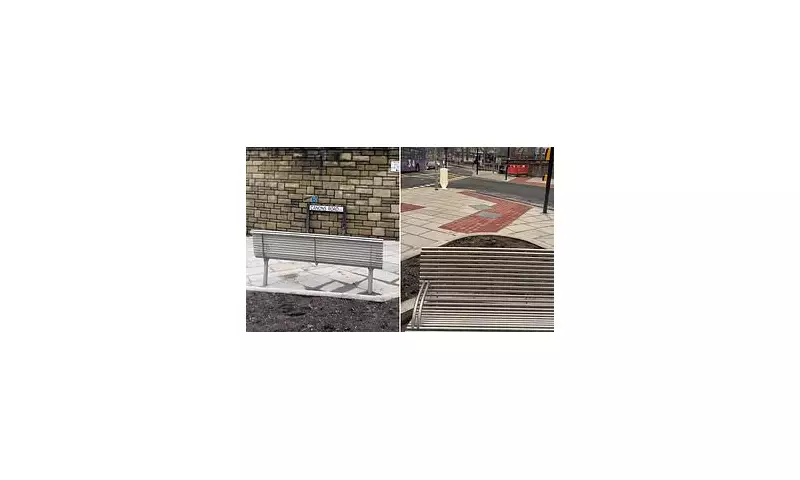
A local authority in Bristol has been forced to review a segment of its ambitious £1 million city centre renovation project, following public outcry over a newly installed bench positioned to face a brick wall.
A Resting Place With No View
The bench, intended as a resting place for elderly and disabled pedestrians navigating a steep hill, has become an unexpected focal point of criticism. Instead of offering a vista of the historic city, it directly faces the blank wall and windows of the adjacent Marriott Hotel. The seating is part of a wider scheme to refurbish traffic lights and enhance the pedestrian experience in Bristol.
Its appearance came as a surprise to many residents, as Councillor Ed Plowden, Chair of the Transport and Connectivity Committee, had not mentioned it when discussing the project in February last year. The issue was highlighted by local Green councillor, Sibusiso Tshabalala.

Council Defends and Reconsiders
In response, Councillor Plowden explained the rationale, stating the primary purpose was to provide respite for those climbing the hill, rather than a seat with a view. He added that the spot would benefit from future shade from a tree to be planted in a raised planter behind the bench.
"Creating shaded areas and resting places for people walking is a vital part of our urban planning to help Bristol adapt to the impacts of climate change," Plowden said. However, he confirmed the positioning would be kept under review as standard before the scheme is finally signed off.
Public Reaction and Expert Opinion
The bench's placement has sparked a lively debate on social media and among urban design professionals. One Facebook user, Jubed Alam Khan, questioned the logic, while Paul Troy Cherry quipped it was "like someone putting a toilet roll on facing the wall."
Not all feedback was negative, with some residents noting it was simply a functional bench for resting. However, Ben Stephenson, a placemaking consultant at Bristol Urban Forum, told the BBC it was "a curious decision."
"Doing this while staring at a brick wall is definitely less attractive," Stephenson remarked. "It would be better turned around to face views of our wonderful city."
The site holds historical significance, as it was once home to the St Augustine-the-Less Church, which was demolished in 1962. This incident follows similar public bewilderment in Trowbridge, Wiltshire, last year over unusual street furniture funded by the Future High Street Fund.






