

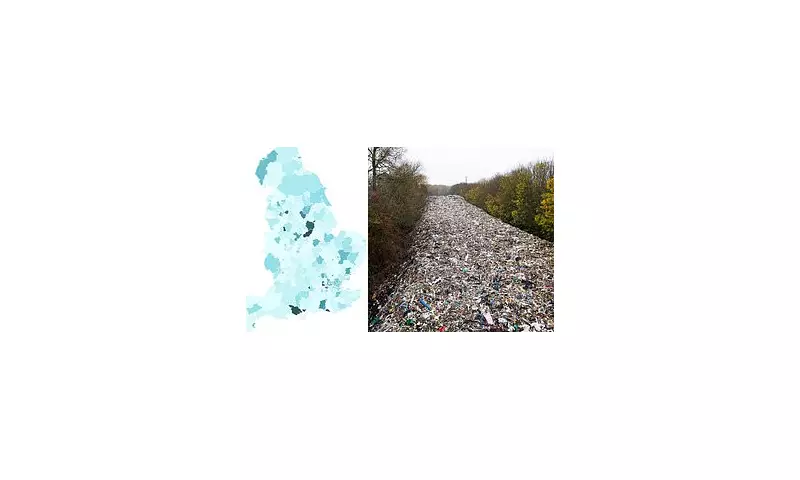
An alarming picture of England's fly-tipping epidemic has been exposed, with dozens of local authorities failing to secure a single prosecution or issue a fixed penalty notice last year, despite recording over 110,000 incidents between them.
The Scale of Enforcement Failure
Analysis of Department for Environment, Food & Rural Affairs (Defra) statistics reveals that 41 out of 295 councils in England pursued no criminal prosecutions and handed out zero fixed penalty notices (FPNs) in 2023/24. These same authorities collectively logged a staggering 110,400 incidents of illegal waste dumping.
The most prominent offender was the London Borough of Hounslow. It recorded the nation's sixth-highest number of fly-tips at 27,241, yet achieved no convictions or FPNs. This glaring disparity between offence rates and enforcement action has prompted experts to demand a complete overhaul of the investigation and prosecution system.

Nationally, the figures paint a grim portrait. With 1,152,000 incidents reported last year, authorities managed only 1,600 prosecutions—a pitiful success rate of just 0.14%. The number of FPNs issued actually fell by 5%, from 67,000 to 63,000, even as fly-tipping rates hit a 14-year high, rising 6% year-on-year.
Consequences and Organised Crime Links
The scourge of fly-tipping blights communities, with criminal gangs and rogue builders dumping everything from household junk and broken appliances to hazardous asbestos, chemical waste, and even dead animals. This illegal activity attracts vermin, devalues property, and poses serious health risks.
Despite maximum penalties of a £50,000 fine and six months in prison, such sentences are vanishingly rare. Of the 1,562 successful prosecutions last year, only 28 resulted in a custodial sentence. Local authorities undertook 528,000 enforcement actions—including warnings, investigations, and fines—but these rarely escalate to court.
Sarah Bradley, an environmental offences expert who works with the National Fly-Tipping Prevention Group, attributes the patchy enforcement to funding and priority. "Councils don't have a statutory duty to investigate fly-tipping," she explained, noting that statutory responsibilities always take precedence. Furthermore, investigation costs often exceed the fines recovered, making enforcement financially unattractive for cash-strapped councils.
Bradley also pointed to a lack of political will, with some council leaderships preferring to be seen as "supportive" rather than punitive. The absence of consistent national guidance for councils compounds the problem, though this may be addressed in the upcoming Crime and Policing Bill.
A National Scandal and Systemic Weakness
The crisis gained national attention last autumn when one of Britain's 'biggest ever' fly-tips was discovered in a field next to the A34 in Oxfordshire. The 500ft-long, 20ft-high mountain of waste, described as an "environmental catastrophe," took months to be shut down despite locals alerting multiple authorities, including Cherwell District Council and the Environment Agency (EA), from June onwards.
This case underscores how fly-tipping has become a lucrative, low-risk enterprise for organised crime. Gangs can charge up to £2,500 per lorry load to illegally dump waste, avoiding landfill taxes that now stand at £126 per tonne. Police have dubbed it "the new narcotics," with profits often funnelled into other crimes like fraud and drug trafficking.
Yet, these gangs face a fragmented and under-resourced opposition. The EA, responsible for large-scale incidents, has been criticised for being slow and ineffective. A House of Lords committee, chaired by Baroness Sheehan, was "shocked" by the scale of waste crime and lambasted the EA's response, citing the notorious Hoads Wood site in Kent where dumping continued for years before action was taken.
Clearing such mega-sites is astronomically expensive; the Oxfordshire tip may cost £25 million, while Hoads Wood is estimated at over £15 million—burdens ultimately falling on taxpayers.

Sarah Bradley argues for a systemic overhaul, proposing regional teams of specially trained investigators and better judicial training to treat fly-tipping as the serious offence it is. She advocates for a regulatory model similar to the Scrap Metal Dealers Act 2013, which successfully tightened controls on that industry.
In response to the crisis, a Defra spokesperson stated: "We will not tolerate waste criminals... In April, the government launched a crackdown on cowboy waste operators, including crushing fly-tipper’s vans."
Councillor Pritam Grewal, Hounslow's cabinet member for community safety, defended the council's record, noting they had increased FPNs to the maximum £1,000 from April this year and issued 1,445 notices since. "Fly-tipping is a complex issue... Tackling it requires an ongoing approach combining education, enforcement and behaviour change," he said.
However, with enforcement rates plummeting as incidents soar, communities across England continue to pay the price for a system that appears to be failing at every level.





