
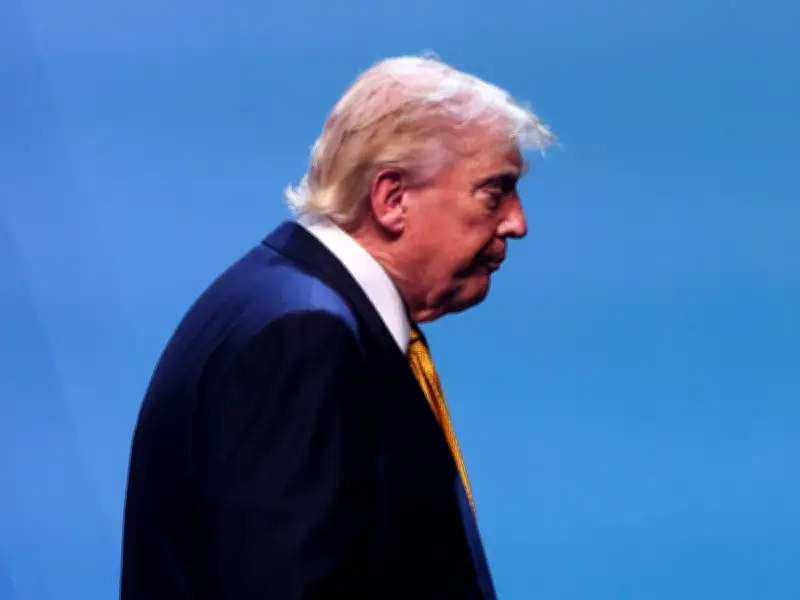
Senior US officials in the Trump administration have reportedly confessed that a nuclear deal with Iran is "growing increasingly unlikely." The Wall Street Journal reported on Friday that officials made the "rare acknowledgement" that the US president's core objectives to curbing Iran's nuclear capabilities may not be achievable.
Ceasefire Collapses
Since the conflict broke out on February 28 this year, Donald Trump has insisted Tehran must "never" be allowed to build on its nuclear program. This formed one of the many sticking points in back-and-forth peace negotiations between the two countries, which eventually ground to a standstill. The subsequent ceasefire agreement also fell through this week, dimming any hopes the conflict might be brought to an end. President Trump declared the precarious truce was cancelled on Tuesday, with fresh strikes hitting Tehran the following day in retaliation to Iran's missile attacks on three gas and oil vessels in the Strait of Hormuz at the start of the week.
Strait of Hormuz Tensions
The global shipping canal has been another contentious issue, with the safe reopening of the Strait another key factor in negotiations. According to the Wall Street Journal, officials said they are expecting Iran to release a statement declaring it will stop firing at ships crossing the waterway and leave it open. One official reportedly suggested there would be "serious consequences" if Iran fails to make the promise by Saturday, though the Journal reported others "didn't suggest there was a firm deadline."
It comes as Trump told reporters Iran will "never build a nuclear weapon under our deal, but I don't know if we're going to have a deal." His options are seemingly closing in, as the Journal notes Trump could decide to resume "all-out war" in the mission to stop Iran's nuclear weapon program, or to sign a deal that falls short of his demands. Alternatively, the US could abandon the conflict entirely, though a huge question mark would linger over the future operation of the Strait.
Negotiation Sticking Points
Officials told the Journal that a nuclear deal wouldn't be possible unless Iran digs up and hands over its enriched uranium. The interim peace agreement, signed in June, saw Iran promise to ensure the safe passing of ships across the Strait. An Iranian official reportedly said that it was a "mistake" to fire at commercial ships this week and negotiations ought to continue. Under the deal, both sides have 60 days to reach a final agreement on the nuclear issue, though it could be extended. Iran has made no explicit pledge to scale back or suspend its nuclear program, but did agree to reaching a satisfactory solution on its existing stockpile of highly enriched uranium.




