
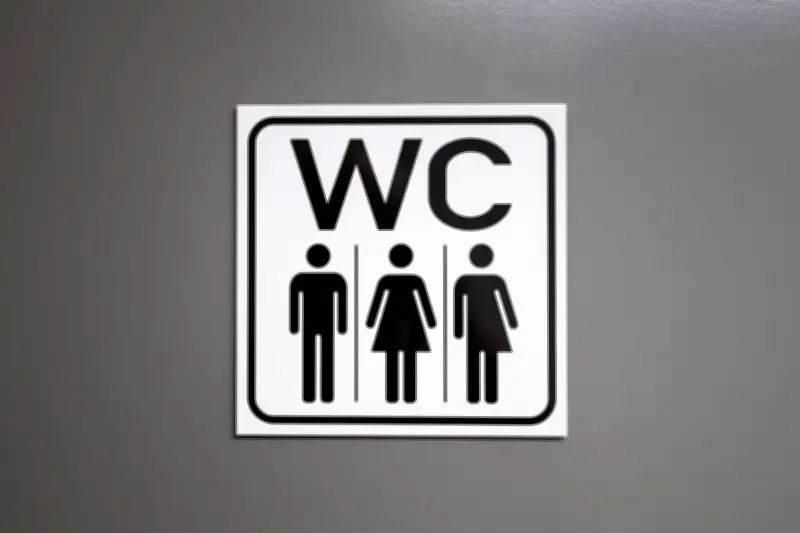
Nearly 13,000 toilets and more than 5,000 changing-rooms could require refurbishment at gyms, hospitals, and leisure centres across Britain under new guidance on single-sex spaces, with costs potentially running into millions of pounds. At least 18,000 signs may also need to be changed, according to figures obtained by the Press Association.
Public-sector bodies, such as local councils, face unadjusted cleaning costs of £20.6 million and construction costs of £14.2 million per year for the new facilities, though these sums could rise significantly after adjustments for optimism bias. Thursday marks the end of the 40-day scrutiny period since the updated guidance was laid in Parliament, during which it could have been rejected, though it may still be weeks before the code formally comes into force.
Code Based on Supreme Court Ruling
The code of practice, covering England, Scotland, and Wales and published in May, confirms that for a service to be classed as single-sex under the Equality Act, it must be used on the basis of biological sex, as per the Supreme Court ruling in April 2025. This means single-sex toilets, changing-rooms, hospital wards, and refuges must be used according to a person’s birth sex, not their gender identity. The code notes that unisex services, such as self-contained lockable cubicles, could ensure provision for all, and it would be “very unlikely to be proportionate to put a trans person in a position where there is no service that they are allowed to use.”
The guidance, updated for the first time in over a decade, was published eight months after being handed over from the Equality and Human Rights Commission (EHRC), facing criticism for the delay. The Government insisted it was “taking the time to get this right.”
Financial Impact and Affected Facilities
The updated guidance will affect service providers such as restaurants, leisure centres, and hairdressers; public functions like council services; and associations such as local sports clubs with at least 25 members. A financial impact assessment published alongside the code in May estimated a total 10-year cost of £703.1 million for implementing required changes, but provided limited details. New data from a Freedom of Information request to the EHRC reveals a fuller breakdown: an estimated 12,895 toilets, 5,526 changing-rooms, and 18,422 signs could be affected.
Of the toilets, 10,563 are in privately-run facilities, 1,154 in the public sector, and 1,178 in voluntary organisations. Changing-rooms include 4,527 in private facilities, 494 in public spaces, and 505 in the voluntary sector. Most signs (15,091) fall into the private category, with 1,648 and 1,683 in public and private sectors respectively.
Cost Breakdown and Adjustments
All costings have been adjusted for “optimism bias,” the tendency for planners to initially pick the most optimistic budget and duration. The central estimate of £703.1 million was first set at £547.7 million before adjustment. Unadjusted cleaning costs are £20.6 million for the public sector, £21.0 million for the voluntary sector, and £188.6 million for the private sector, totalling £230.2 million. After adjustments, this rises to £299.2 million. Unadjusted construction costs are £14.2 million for the public sector, £14.9 million for the voluntary sector, and £133.2 million for the private sector, totalling £162.3 million, rising to £211.0 million after adjustments. The £703.1 million also covers staff training and updating internal policies.
The impact assessment stated that costs arise from obligations imposed by the Equality Act, not the code itself.
Reactions from Campaigners and Officials
EHRC chairwoman Mary-Ann Stephenson acknowledged a financial impact for some businesses but suggested that “in a lot of situations the cost is not going to be very high.” In a PA interview in May, she said: “Most service providers already have male and female toilets, and will also have, for example, a unisex accessible toilet. If you’re a small provider, the code gives the example of a small community centre, that might be enough. A larger provider might need to do more. Sometimes it’s a case of just thinking about the signage on the door and some very small providers may only have one toilet that’s unisex already, so they won’t need to do anything.”
Some campaigners, including NION (Not In Our Name) Women, who said they represent “the many organisations who believe in practical, trans-inclusive services,” raised concerns. In an open letter, they stated: “We reject the false choice between protecting women and treating trans people with dignity, and believe women’s rights are best advanced when we stand in solidarity with our trans siblings.”
For Women Scotland (FWS), who claimed victory in the Supreme Court ruling, hailed the guidance as a “significant milestone in ensuring women’s rights are upheld and protected.” A FWS spokeswoman said: “It’s important to remember that the code does not represent a change in the law, just practical help for implementing it. If businesses have been complying with the law, there shouldn’t be a need for major changes.”
A Government spokesperson said: “Many businesses will already be largely compliant with the code so there will be no cost at all. For those that do need to make changes, these are likely to be small, such as changing signs on existing facilities. This is about giving organisations the guidance they need, not changing the law or creating new rules. The draft code is clear that a provider’s size and the facilities they have available will be factors in how they follow the law.”




