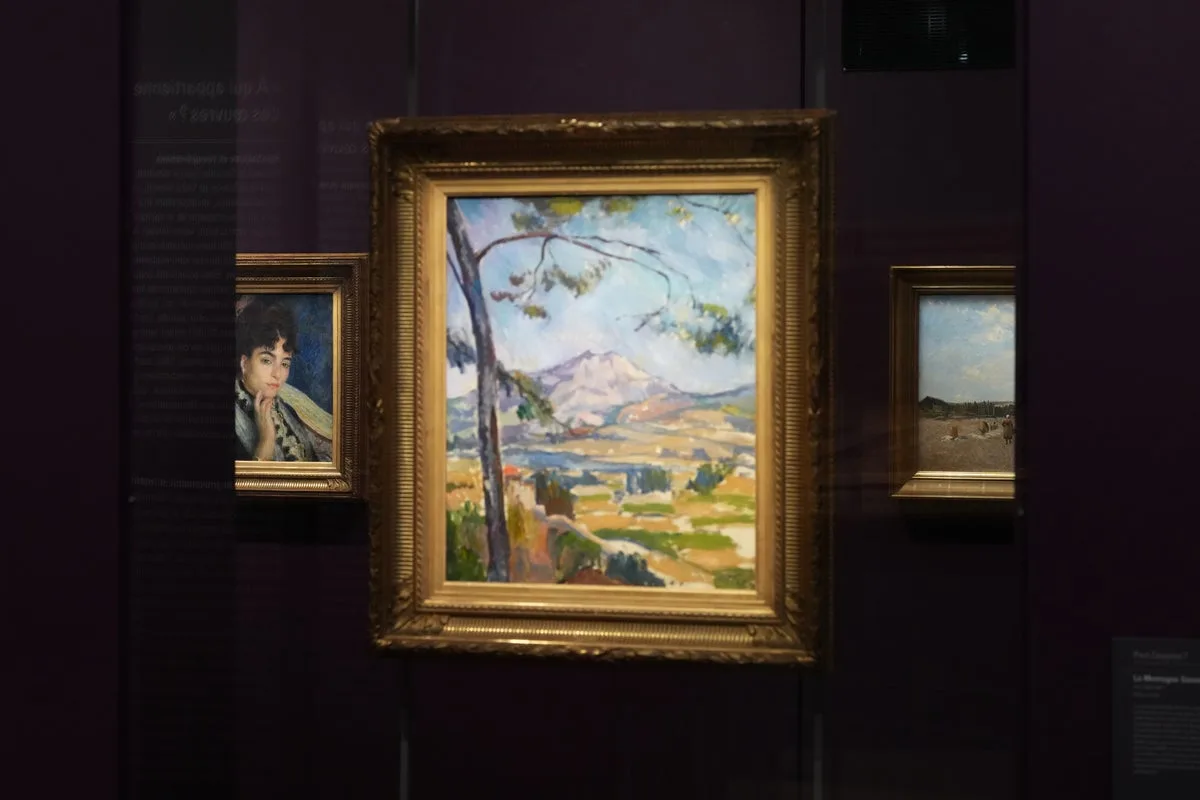
France opens gallery for Nazi-looted art in Paris museum

France has opened a new gallery at the Musée d'Orsay in Paris dedicated to orphaned masterpieces plundered by the Nazis during World War II. The room, the first of its kind in the museum's history, displays 13 artworks that were never claimed by their rightful owners. Among them is an 1891 painting by Belgian artist Alfred Stevens, depicting a girl in a bonnet and her younger brother staring across the Normandy coast. The artwork was acquired in Paris in 1942 for Adolf Hitler, intended for his planned museum in Linz, Austria, but later reassigned to his mountain home in Bavaria. After the war, Allied recovery teams—the Monuments Men—found the painting, but no heir ever came forward.

Understanding the MNR Collection

The Stevens painting is one of 2,200 such artworks in France known as MNR (Musées Nationaux Récupération, or National Museums Recovery). These pieces were retrieved from Germany and Austria after 1945 and entrusted to French national museums in the early 1950s. The state does not own them but holds them in trust for potential heirs. The Musée d'Orsay alone holds 225 such pieces. The new gallery allows visitors to see the backs of the paintings, where stamps, labels, and inventory marks reveal how each piece moved from private homes into Nazi hands.

France's Long-Delayed Reckoning

France has been slow to confront its role in the Nazi-era looting. During the Vichy regime, which cooperated with the Nazis, French authorities helped deport 80,000 Jews and presided over a Paris art market that profited from stolen property. In 1995, President Jacques Chirac acknowledged French state responsibility for the Vél d'Hiv roundup. A national inquiry into artwork plundering began in 1997. Of the 100,000 cultural objects looted from France, about 60,000 were recovered, and 45,000 returned to owners. The remaining 15,000 had no identified owner, and 2,200 were selected as MNR pieces. Between 1954 and 1993, only four were returned, but since Chirac's apology, the pace has increased. The Orsay has returned 15 pieces since 1994, including works by Alfred Sisley and Auguste Renoir in 2024.

Wide Pickt banner — collaborative shopping lists app for Telegram, phone mockup with grocery list

The Market That Fed the Plunder

Paris was Western Europe's richest art hub in the early 20th century. After the Nazi occupation, the Hôtel Drouot auction house reopened in autumn 1940 and operated briskly. French dealers acted as conduits for German buyers and Hitler's agents. Ines Rotermund-Reynard, the Orsay's head of provenance research, noted that almost every German museum sent buyers to Paris, drawing on a market thick with looted and forced-sale property. Hitler's deputy, Hermann Göring, visited Paris 21 times during the occupation to take works from Jewish collectors. Rotermund-Reynard emphasized that the looting is inseparable from the Holocaust: "All of this is part of the history of the Shoah."

Antisemitism in France Today

Antisemitic acts in France, home to Europe's largest Jewish community, reached 1,320 in 2025, near-record levels following a surge after the Oct. 7, 2023, Hamas attack on Israel. The gallery was not built specifically to fight antisemitism, said François Blanchetière, the Orsay's chief sculpture curator and co-curator. However, he stressed that the consequences of the Holocaust must be repaired: "There is no statute of limitations on these crimes."

The gallery aims to educate visitors and encourage provenance research. A new research unit, staffed by six Franco-German researchers, is dedicated to tracing the rightful heirs of the orphaned works. For visitors like Daniel Lévy, a software engineer from Strasbourg, seeing the labels on the backs of paintings has personal resonance: "My grandmother lost some of her family in the camps. Some of these paintings were probably hanging in homes like hers."

Pickt after-article banner — collaborative shopping lists app with family illustration




