
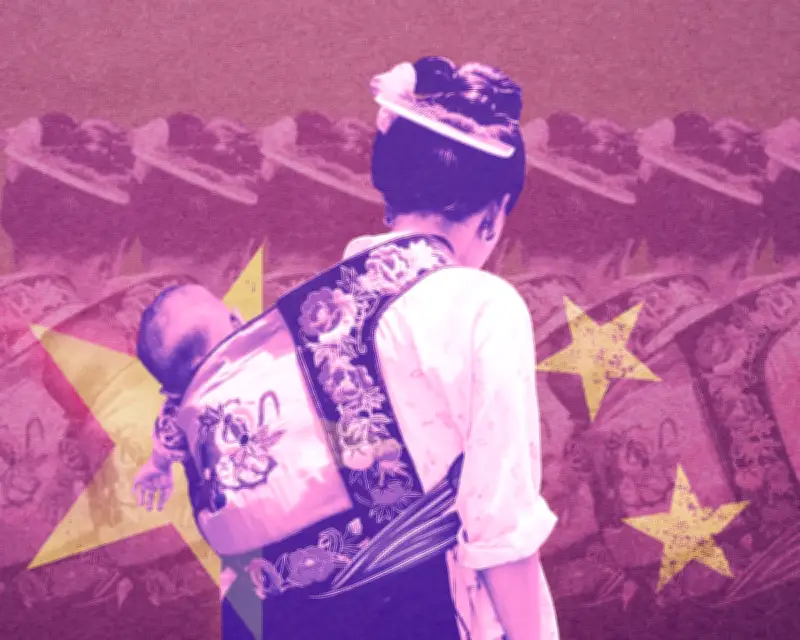
Women in China are increasingly rejecting state pressure to have more children, as the government struggles to reverse a falling birth rate. The pushback comes amid the painful legacy of the one-child policy, which for decades enforced brutal restrictions on family size.
State Control Over Women's Bodies
Since the founding of the People's Republic in 1949, women's bodies have been a matter of state concern. In the 1950s, labor was organized according to menstrual cycles. Then came the one-child policy, enforced with severe measures including forced abortions and sterilizations.
Now, with birth rates at record lows, the government is pressuring women to have more children. But many are resisting, as they have more autonomy than in the past.
The 'Childless 100 Days'
Between 1980 and 2016, the state banned most couples from having more than one child. The policy was abandoned a decade ago, but its scars remain. In Shen county, Shandong province, the 'childless 100 days' in 1991 saw officials enforce a ban on births for 100 days, leading to forced abortions and sterilizations.
Ms. Li, now in her 60s, was sterilized after giving birth during that period. She recalls infants dying from forced inductions. Another woman was forced to abort at eight months. Local officials were known as 'the slaughterer of the lambs.'
Changing Attitudes Toward Family
Today, women like Wang Yixuan, a 26-year-old traditional Chinese medicine practitioner, say they don't feel obligated to have children. A recent study found nearly 50% of women aged 18-24 don't want children, up from 6% in 2012.
Filmmaker Guligo Jia notes that women now have more control over their bodies and can decide on abortion or childbirth. However, the cost of child-rearing and the legacy of the one-child policy have reshaped family expectations, reducing the desire for larger families.
Yun Zhou, a social demographer, says the one-child policy created a sense that reproductive rights are not inalienable. The consequences are visible in playgrounds across China, where the new generation of only children are now raising their own families.




