

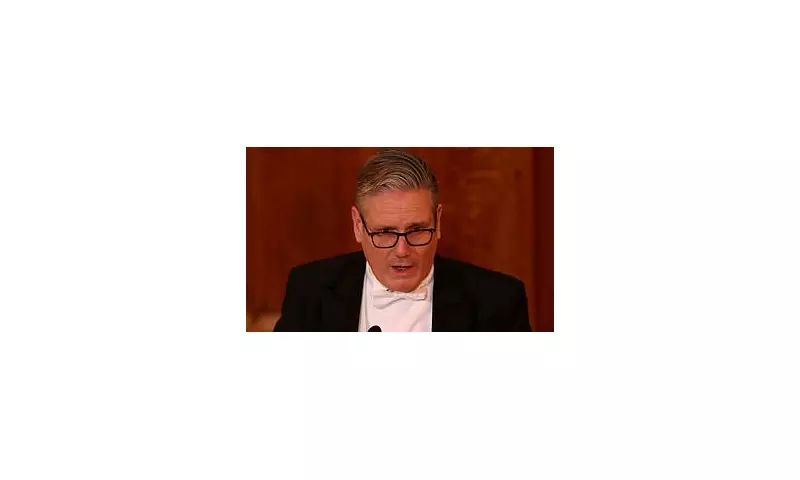
Prime Minister Sir Keir Starmer has delivered his strongest indication yet of a desire to unwind the UK's departure from the European Union, using a major foreign policy address to condemn the "wild promises" made during the Brexit campaign.
A Stark Warning on Brexit's Legacy
Speaking at the prestigious Lady Mayor's Banquet at Guildhall in central London on Monday night, the Prime Minister argued that Britain is still "dealing with the consequences" of severing ties with Brussels. He stated that the 2016 referendum was a fair democratic expression, but fiercely criticised how it was "sold and delivered."
Sir Keir asserted that the idea Brexit would solve the nation's problems had been "clearly proved wrong," and pointed to ongoing economic damage and a degradation of political trust as direct results.

Brexit as a 'Reckless' Template
The Labour leader turned his fire on Conservative and Reform UK politicians, accusing them of now making the "same spurious argument" in advocating for the UK to leave the European Convention on Human Rights (ECHR). He warned that walking away from international frameworks with similar "wild promises" would not solve the country's challenges.
"To consider Brexit a template for our future foreign policy is utterly reckless," Sir Keir declared, marking a clear ideological break from the previous government's approach. This speech builds on his earlier comments the same day, where he stated the existing Brexit deal had "significantly hurt our economy" and argued for closer alignment with the EU, acknowledging this would require "trade-offs."
Thawing Relations and Economic Advice
The Prime Minister's comments follow his "reset" of relations with the European Commission earlier this year, negotiated with President Ursula von der Leyen to establish closer trade ties. However, his latest rhetoric suggests an ambition to move further.
This direction appears to have support in Downing Street. It was recently reported that Sir Keir's chief economic adviser, Minouche Shafik, proposed the UK rejoin the EU's customs union shortly after taking up her role in September to spur economic growth, though the suggestion was reportedly rejected at the time.
In a separate part of his wide-ranging Guildhall speech, the Prime Minister also defended his government's pragmatic engagement with China, rejecting a "binary choice" between a "golden age" and an "ice age" in relations. He stated that failing to engage with Beijing would be "a dereliction of duty," while insisting security protections remained non-negotiable.
The response from Brexit advocates was swift. Reform UK deputy leader Richard Tice countered, stating: "The UK voted to escape the EU bureaucracy and their burdensome regulations. We should be diverging, not aligning."






