

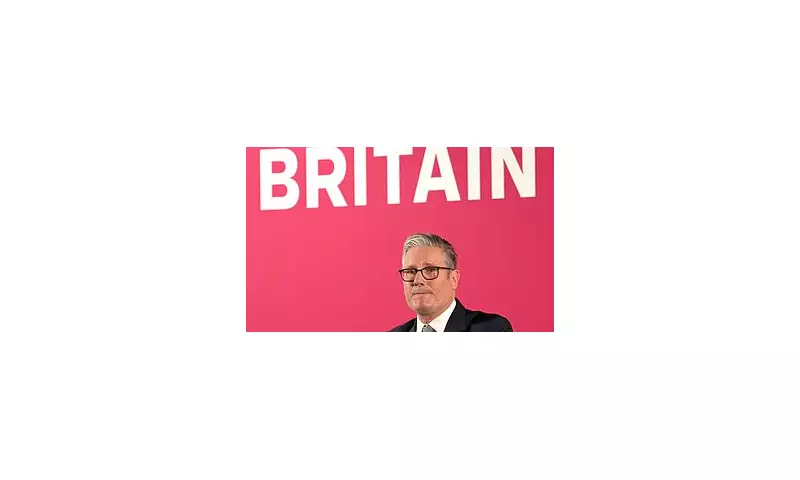
Prime Minister Sir Keir Starmer has issued a stark warning that Brexit has inflicted significant damage on the British economy, as he set out his vision for a closer future relationship with the European Union.
Confronting the Brexit Reality
In a major speech delivered in London, the Prime Minister stated the country must 'face the reality' of its economic performance outside the EU bloc. He directly linked the manner of the UK's departure in 2019, combined with years of Conservative austerity, to the nation's profound productivity problems.
Sir Keir was unequivocal about the impact of the existing Brexit deal. 'Let me be crystal clear,' he said, 'there is no credible economic vision for Britain that does not position us as an open, trading economy. So we must all now confront the reality that the Brexit deal we have significantly hurt our economy.'

The Path to Economic Renewal
The Prime Minister argued that for genuine economic renewal, the UK must persistently work to reduce trade frictions. This, he insisted, involves moving towards a closer relationship with the EU, a process that requires mature acceptance of necessary trade-offs.
His comments followed reports that his chief economic adviser, Minouche Shafik, had suggested rejoining the EU's customs union during a meeting in September to spur growth. This proposal was reportedly rejected as it crossed one of the government's EU red lines.
Sir Keir pointed to the government's proactive deal-making with the US, India, and the EU as evidence of its commitment to building international relationships. 'We will continue to reject drift, to confront reality and take control of our future,' he pledged.
Setback on Defence Cooperation
However, the push for deeper European ties suffered a notable setback just last week. Talks for the UK to join the EU's flagship £130 billion defence fund collapsed.
Negotiations for participation in the EU's Security Action for Europe (Safe) rearmament fund foundered over financial contributions. Reports indicated the UK balked at French demands to pay up to £5 billion to be part of the scheme.
Minister for European Union Relations, Nick Thomas-Symonds, described the outcome as 'disappointing', emphasising the UK's focus on securing 'value for money'. The Cabinet Office clarified that British firms could still participate on third-country terms.
This defence fund failure came shortly after Sir Keir and European Commission President Ursula von der Leyen reaffirmed the need to swiftly implement the existing post-Brexit reset deal earlier this month, highlighting the ongoing complexities in the UK-EU relationship.






