
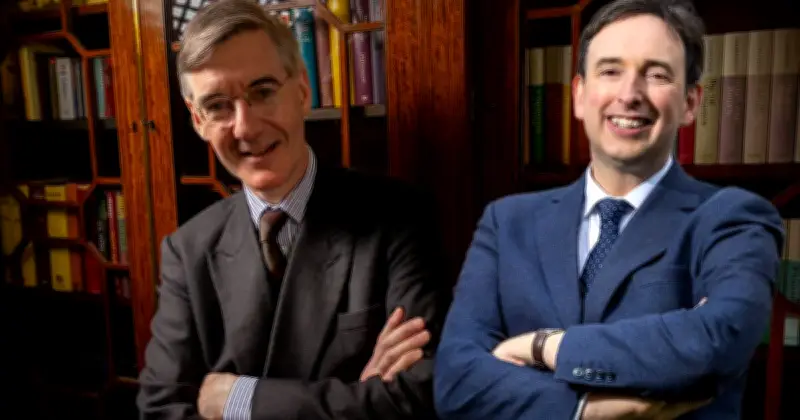
Sir Jacob Rees-Mogg has revealed that Brexiteers made a critical mistake after the 2016 referendum: they stopped campaigning, while Remainers intensified their efforts. In an exclusive interview, the former cabinet minister warned that the country came "perilously close" to losing Brexit as the political establishment fought to keep Britain tied to the EU.
A Decade On: Reflecting on the Vote
Speaking from his London home near Parliament, Sir Jacob admitted he was wrong to assume Remainers would accept the result. "I thought that once the vote had happened the Remainers would accept the result," he said. Instead, they were "furious" and launched a sustained campaign to undermine Brexit.
The father of six noted that during the campaign, Remainers viewed Brexiteers as "amiable eccentrics" and were out of touch with public sentiment. "They only met people of their own kind at their Islington dinner parties," he remarked. "They had no idea that out in the rest of the country there was this huge groundswell of opinion for Brexit."
The Battle to Secure Brexit
Sir Jacob recalled that the continued pressure for a second referendum made him back Theresa May's deal on the third "meaningful vote" to prevent a Remainer from taking over. He credited Boris Johnson's 2019 landslide victory for finally securing Brexit, which occurred on January 31, 2020.
He argued that democracy, not economics, was the key issue that swayed voters. "The big issue was democracy rather than the economics," he said, praising the roles of Boris Johnson, Nigel Farage, and Michael Gove in the campaign.
Labour's Use of Brexit Freedoms
Sir Jacob criticized Labour Chancellor Rachel Reeves for using post-Brexit sovereignty to impose policies like VAT on school fees, which he called "nasty class warfare." However, he defended Labour's right to do so, stating, "That is a Labour Government using a Brexit freedom to do something it believes to be important."
He accused Reeves of having a "gigantic" beam in her eye and blamed her for devastating economic growth through tax increases. He also took aim at the Bank of England for its "utter failure" on monetary policy.
The Rise of Reform UK and Unity on the Right
Sir Jacob acknowledged the rise of Reform UK, attributing it to the failure of traditional parties to support "left behind" Britons. He argued that the Conservative Party and Reform UK must unite for the 2029 election. "I think it's absolutely essential that we come together," he said.
He expressed admiration for Nigel Farage, suggesting he deserves a seat in the House of Lords or even a dukedom. However, Sir Jacob remains loyal to the Conservative Party under Kemi Badenoch, praising her leadership while distancing himself from defector Robert Jenrick's departure.
Looking to the Future
Sir Jacob hopes to return to the Commons and believes the 2029 election could be as transformative as Margaret Thatcher's 1979 victory. He envisions a "restoration of the country with an economic revolution."
Reflecting on his legacy, he hopes his children will see Brexit as a triumph over foreign rule. "I think they will think it was absolutely extraordinary that anybody ever thought it was a good idea to be ruled by foreign countries," he concluded.




