
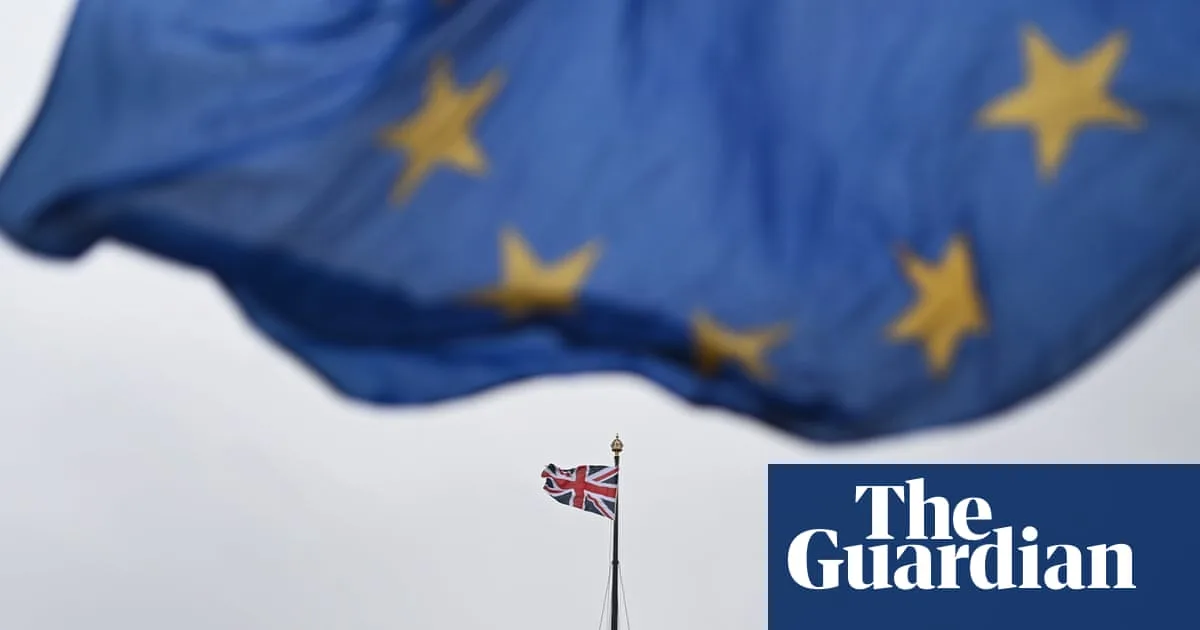
The European Union has confirmed that the United Kingdom will need to make financial contributions to the EU budget if it wants closer ties, including access to the single market for electricity. Ireland's Europe minister, Thomas Byrne, stated that EU member states have decided this is a necessary condition, describing it as 'politically realistic'.
The demand emerged after EU member states agreed last week that the UK should pay to join the European electricity market. This would be on top of existing legacy payments from its EU membership. Additionally, negotiations are deadlocked over an entry fee of up to €6 billion (£5.3 billion) for UK companies to benefit from a €150 billion EU defence programme.
Byrne expressed hope that a veterinary agreement to ease food and animal checks at the border could be reached during Ireland's EU Council presidency in the second half of 2026. He called such a deal a 'gamechanger'. The EU has already agreed a mandate for the European Commission to negotiate this.
At a May summit, Prime Minister Keir Starmer and European Commission President Ursula von der Leyen agreed to explore UK participation in the EU's internal electricity market. However, the text did not specify payment, though a large majority of member states now insist on it. Countries including Belgium and Germany have warned against allowing the UK to 'cherrypick' single market benefits without following common rules.
Commission officials described the UK as a 'complicated and challenging counterpart', stressing the need for 'nerves of steel and unity' in negotiations. Financial considerations are the central challenge. Tensions have already emerged over the UK's potential participation in the EU's Security Action for Europe (Safe) fund, with an entry fee of up to €6 billion proposed, far exceeding the administrative fee the UK anticipated.
A UK government spokesperson said Britain is committed to a constructive relationship but will only agree deals that provide value. Barry Andrews, an Irish delegate on the EU-UK assembly, criticised the slow progress since May, urging faster agreement given the geopolitical situation.




