
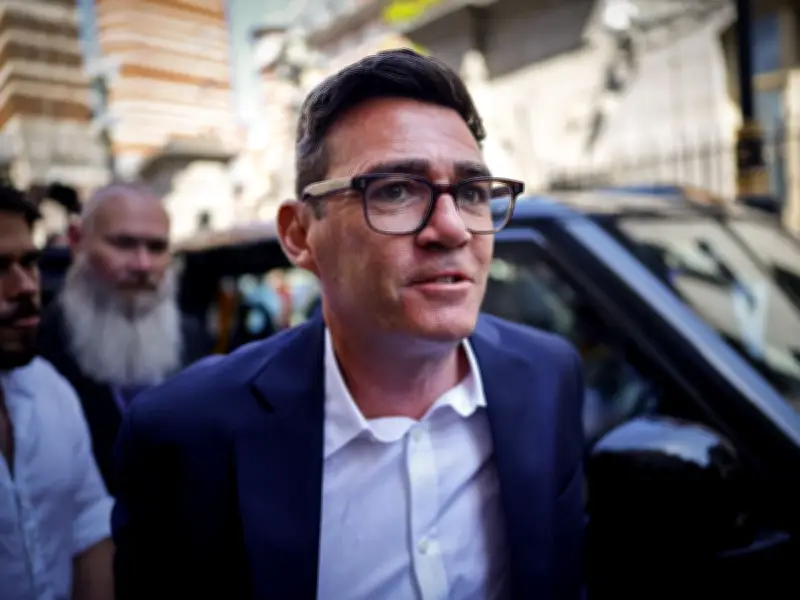
Andy Burnham's acceptance speech as the new Labour leader was a masterclass in optics, vibes, and rhetoric. Delivered at a special party conference, it carried a punch that resonated with a public weary of a top-down political class seemingly incapable of delivering positive change. By calling time on a failed 'political culture' and 'economic model,' the Prime Minister-to-be signaled a readiness to overturn a decades-long consensus. Promising to 'bring back hope' and restore power to local communities, Burnham became the first Labour leader since Tony Blair to be relentlessly positive. The sight of a Northerner—the first since Harold Wilson—about to enter Downing Street was another powerful television moment.
The Comedown: Rhetoric Meets Reality
But if Friday was a high for Burnham, Monday will bring the comedown, where rhetoric clashes with reality. Like his ousted predecessor Keir Starmer, Burnham faces a set of daunting challenges that will define his premiership. The Makerfield MP dreams of cities, towns, and local communities reclaiming power under a vigorous devolution agenda. However, his planned summer tour will quickly apprise him of a different priority shared by millions across the UK: the cost of living crisis.
Nationalist Pressures on the Union
Scotland, Wales, and Northern Ireland all have First Ministers with visions of their countries outside the UK. John Swinney, Rhun ap Iorwerth, and Michelle O'Neill are skilled political operators who will likely ambush Burnham with coordinated demands, accusing him of ignoring the will of the people. Burnham will soon find himself as the custodian of the Union at a moment surrounded by nationalist administrations of different stripes.
Economic Headwinds and the Cost of Living
A bigger challenge is ensuring he does not get blown away by fierce economic headwinds. The Starmer administration made some economic progress, but not on unemployment or inflation. Punters feel the pain at supermarkets and petrol stations, sick of being skint. Labour entered government in 2024 on a promise to tackle the cost of living crisis, but voters think they have failed. Burnham faces the difficult task of making people better off with no money to do so. Cutting income tax or reversing the hated national insurance rise would be popular, but worsening economic conditions make such pledges near impossible to fund. Even pushing through an agenda of public ownership for key utilities would take ages to trickle down into material benefits for consumers.
International Nightmares: Ukraine and Iran
Burnham's domestic difficulties cannot be separated from the nightmares he faces internationally. Wars in Ukraine and Iran have hit people across the UK in their pockets. The US is key to resolving both conflicts, but President Trump does not seem like a partner for peace. Trump wants to abandon Ukraine to Russia while bombing Iran into submission—Burnham takes the opposite view. His personal relationship with Trump will test his political skills. Starmer and the volatile US President got on well until Trump believed the outgoing Labour PM defied him on Iran. Trump's dismissive reference to Burnham as the 'extremely liberal' mayor of a 'town' points to a difficult relationship.
Combating the Political Right at Home
A related challenge is how to combat the political Right in his own country. Nigel Farage is currently in a bad place, given his riches are under investigation and he could lose his Clacton seat to a man pretending to be a bin. But Reform remains a huge threat to Labour and could still win the general election. Burnham has indicated he will not mimic Reform and the government he leads will be 'distinctively' Labour. He also knows the country has moved rightwards on immigration and a failure to stop the boats would be electoral poison.
Learning from Starmer's Failures
Although Burnham paid tribute to Starmer, he will know that the Arsenal fan's failed premiership provides a template on how not to govern. People across the nations and regions are desperate for change and for the economic pain to end. They are sick of having to pick up the tab for politicians' failures and want more money. Burnham should also look at the Starmer government as a case study of what happens when the political Right runs amok. Starmer was a decent person whose political shortcomings were exposed on the biggest stage. Out-of-control social media and right-wing broadcasters portrayed him as an evil man who covered up rape gangs. The machine can chew and spit out a Prime Minister in months, and Burnham must be on guard.
A Narrow Window of Opportunity
Allies believe the new Labour leader has to make a positive impression within weeks if he is to stand a chance. Deliverable policies on the cost of living crisis and giving power back to communities would be a start, they believe. If a 'Burnham bounce' takes Labour to 30% in the polls, he may seek his own personal mandate. Labour's new leader said today his party has a 'last chance' to change the country. The window of opportunity is frustratingly small.




