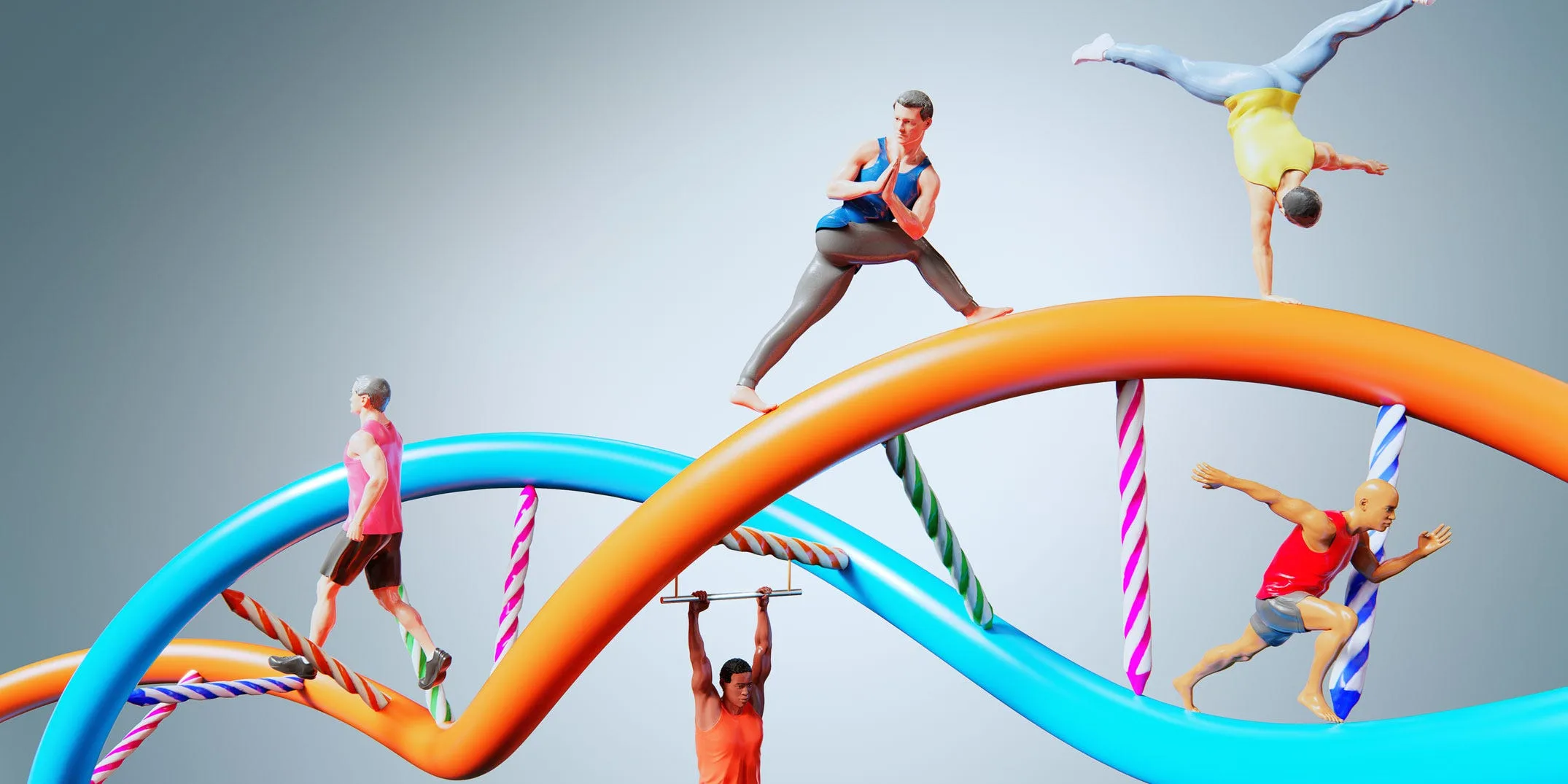
From Silicon Valley investors to the new wave of longevity tech start-ups, a growing body sees ageing as something to be tracked and hacked, with your ‘stats’ as much within your control as your gym PBs. But how easy is it for the average man to better his biological age? Men's Health reviews the latest science.
Want to put the brakes on brain-ageing? A University of California, Riverside study found those who practised three skills simultaneously – say, learning a language, mastering gymnastics and taking a career-boosting online tutorial – had cognitive abilities decades below their actual age. Download the Udemy app, with over 100,000 video courses, and upgrade your commute.
If you neglected to pack trainers today, don’t sweat: in a University of North Florida study, participants who ran barefoot for 15 minutes improved their powers of recall by 16% in subsequent tests, while shoe-clad sprinters saw no improvement. Researchers credit the additional ‘proprioceptive demands’. Jogging backwards has been shown to have a similar effect.
Want to wind back your biological clock without lifting a finger? Tag a sauna session on to your next workout. The University of Eastern Finland tracked more than 2,300 middle-aged men and found that those who used a sauna two or more times a week lived longer, while further studies have linked it to slower brain ageing, too.
Shrinking your calorie intake can do more than trim excess timber. ‘It’s one of the most promising methods of slowing ageing,’ says Varun Dwaraka, bioinformatician at anti-ageing tech company TruDiagnostic, who points to its benefits to blood sugar regulation and ‘vascular density’ in the brain. Experiment with one of these protocols: eat your meals during daylight hours, particularly during winter; schedule a five-day fasting-mimicking diet; or quit meat for a few days a week.
Cardio alone won’t cut it. ‘Maintaining strength is arguably the most important thing you can do to ensure high quality of life in middle-age and beyond,’ says Professor Matt Kaeberlein, an expert in ageing at UW Medicine. In fact, one study in The Journals Of Gerontology found that older men with greater muscle strength were 50% less likely to die prematurely. ‘Focus on compound movements and lift three or four times each week,’ says Professor Kaeberlein.