Rita Ora's Transformed Approach to Fitness: Embracing Movement Over Metrics
British chart-topping artist Rita Ora has spent over a decade living life at full throttle, with a career defined by global tours, television appearances, and relentless momentum. Now, at 35, the singer has fundamentally recalibrated her relationship with exercise, moving away from intense cardio and rigid fitness targets toward a more intuitive, sustainable approach.
From Performance Demands to Personal Wellbeing
Early in her career, fitness served a purely functional purpose for Ora. "Exercise did ignite a fire in me when I was out of breath at my shows," she recalls, explaining how workouts initially helped her sustain the physical demands of touring and live performances. What began as a practical necessity has evolved into a cornerstone of her mental health and daily routine.
"My friends are always like, wow, you have a day off and you just fill it up with workouts and appointments," says the I Will Never Let You Down singer. "But honestly, it's part of my self-care routine." For Ora, movement has become a crucial tool for regulating her nervous system, creating positive momentum in her day rather than serving as another pressure point.

Rejecting Rigid Fitness Culture
Ora's perspective challenges modern wellness culture's emphasis on structured, expensive, and aspirational fitness regimes. "I honestly never saw working out as something that has to do with money," she states, reflecting on her upbringing in west London after being born in Kosovo. Her parents instilled the importance of physical activity from a young age, with park games and football matches forming her early exercise foundation.
This background informs her current philosophy: "There are a lot of ways around a routine that doesn't necessarily involve big classes or flashy studios. It's simply about movement at the end of the day." Ora emphasizes that fitness shouldn't be viewed as a luxury accessible only to those who can afford premium gym memberships or boutique studio sessions.
The Practicalities of Consistency on the Go
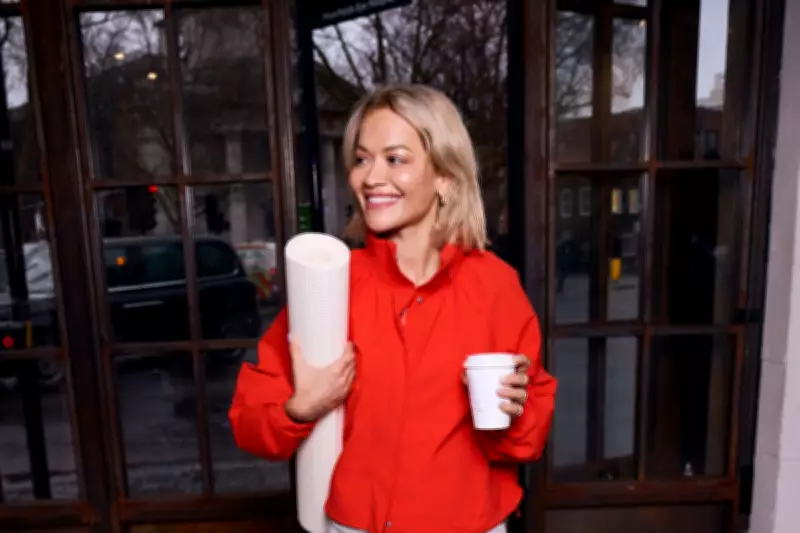
With a schedule constantly disrupted by travel and time zones, Ora has learned to adapt her fitness routine to realistic circumstances. "Sometimes I don't have an hour," she admits. "I'll do 20 minutes in a hotel room. Bands, glutes, mat work. I just do something." She particularly favors Pilates for its portability and minimal equipment requirements.
Her approach prioritizes consistency without self-punishment. "I don't put that much pressure on myself, because I don't think it's healthy," Ora explains. This mindset extends to listening to her body's signals: "If my body feels tired, I wouldn't push it insanely. I do listen to my body a lot. I think it's important."
Strength Over Cardio: An Age-Appropriate Shift
Ora's exercise preferences have matured alongside her career. "My 20s were all about hitting it crazy hard for 45 minutes," she reflects, "but I wasn't seeing a lot of results. I think it just comes with time." Now she's swapped intense cardio sessions for strength training, appreciating the controlled pace and measurable progress.
"I like that you don't have to rush in a strength class," she says. "You just have to hit those four rounds. You can take a minute rest – sometimes I take a two-minute rest – but I hit the rounds." This methodical approach contrasts sharply with her earlier fitness patterns and aligns with her current emphasis on sustainability over intensity.
Redefining Success: Movement Over Metrics
Perhaps most refreshingly, Ora openly acknowledges her limitations with certain forms of exercise. "I'm still not incredible at cardio," she confesses. "I get so tired. I can't just do a 10k run and not stop. That's just not what my body does and I'm OK with it."

Her advice to those intimidated by fitness culture reflects this pragmatic acceptance: "You don't need to hit 10,000 steps. You just need to move. If it's 20 minutes walking in the park, that's incredible. Walking is so good for you." This represents a significant departure from the numerical targets that dominate contemporary fitness discourse.
After years in the demanding spotlight of the entertainment industry, Ora's relationship with exercise has settled into what she describes as "a lifestyle" rather than a performance metric. Her journey demonstrates how fitness philosophies can – and perhaps should – evolve alongside personal growth, prioritizing wellbeing over arbitrary targets and embracing what truly sustains both body and mind.