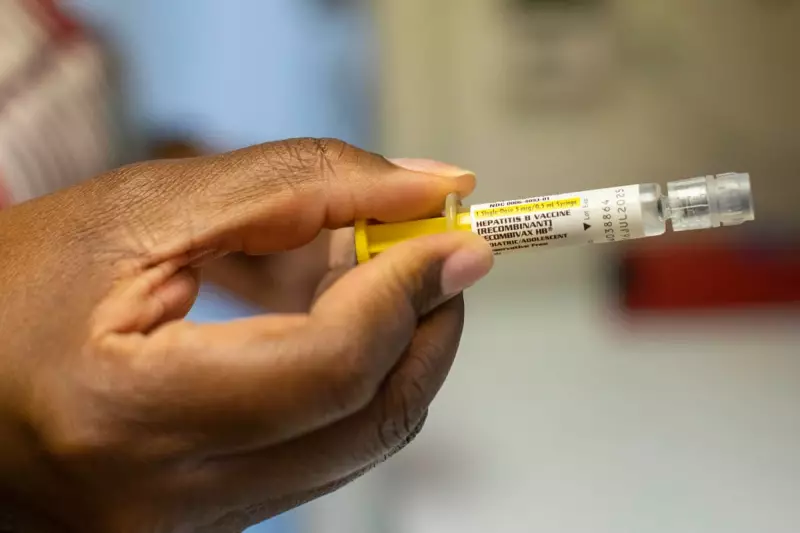
A controversial $1.6 million study on hepatitis B vaccination in newborns, funded by the Trump administration and set to take place in Guinea-Bissau, has been condemned by leading global health experts as "highly unethical" and "extremely risky". The move follows sweeping changes to US childhood immunisation policy under Health Secretary Robert F Kennedy Jr, which have sent shockwaves through the international public health community.
A 'Neocolonialist' Study in a Fragile Health System
The five-year study, scheduled to begin in early 2026, will be conducted by the Bandim Health Project, led by researchers Peter Aaby and Christine Stabell Benn at the University of Southern Denmark. In this randomised, controlled trial, some babies will receive the hepatitis B vaccine at birth while others will not, with researchers comparing early-life mortality, illness, and development between the groups.
This approach has ignited fierce criticism. Guinea-Bissau has one of the highest hepatitis B rates in the world, with nearly one in five adults living with the virus. The World Health Organization (WHO) recommends the birth dose for all newborns, and the country itself plans to recommend it universally by 2027. Withholding a proven, life-saving intervention from a vulnerable group in a high-prevalence setting constitutes a major breach of scientific ethics.

"It reeks of a neocolonialist attitude," said Professor Gavin Yamey of the Duke Global Health Institute. He and others question why such a trial is being conducted in a nation with a fragile health system instead of in a lower-risk country like Denmark or the US, where the same ethical questions could be studied without endangering children's lives.
Questionable Research and a Political Agenda
The study is deeply intertwined with the anti-vaccine ideology of Robert F Kennedy Jr. Earlier this year, Kennedy's administration changed the CDC's longstanding recommendation that all US newborns receive the hepatitis B vaccine, framing it as an "individual" decision despite decades of safety data. He also cut US funding to Gavi, the Vaccine Alliance, citing a now-debunked 2018 study from the same Danish researchers involved in the new Guinea-Bissau trial.
That 2018 paper claimed the DTP vaccine increased female mortality in Guinea-Bissau, but a 2022 follow-up by some of the same authors found no such link, essentially nullifying the original findings. This questionable research history has raised significant red flags about the new hepatitis B study's integrity.
"He has a fixed, immutable belief that vaccines cause harm," said Dr. Paul Offit, director of the Vaccine Education Center in Philadelphia. "He will do everything he can to try and prove that." Experts fear the new trial is designed not to assess efficacy—which is already well-established—but to find spurious "overall health effects" that could be manipulated to justify the US policy shift.
Global Repercussions and a Breach of Trust
The ethical and scientific flaws of the study are compounded by its potential to devastate public trust. Professor Martin McKee of the London School of Hygiene & Tropical Medicine warned the announcement has "set alarm bells ringing in the global health community".
Conducting a trial where some infants are denied a crucial vaccine in a high-endemic area risks expanding global mistrust in both American leadership and science itself. This is particularly acute given the US has simultaneously slashed broader global health aid. "It seems to say we don't value your lives enough to continue to provide support overall, but we won't hesitate to experiment with your population," said Professor Elizabeth Jacobs, a founding member of Defend Public Health.
The consequences of hepatitis B are severe, especially for children. A baby infected in their first year has a 90% chance of developing cirrhosis or liver cancer. In the US, universal birth dose recommendations virtually eliminated the disease in children under ten. In sub-Saharan Africa, however, only about 17% of babies receive the birth dose, leaving millions vulnerable.

"The priority should be to increase vaccination with the birth dose... and protect more babies from the risk posed by this virus," said Professor Andrew Pollard of the Oxford Vaccine Group. Instead, this controversial study threatens to undermine that urgent goal, placing children in harm's way for what experts see as a politically motivated endeavour searching for evidence to support a dangerous ideology.