

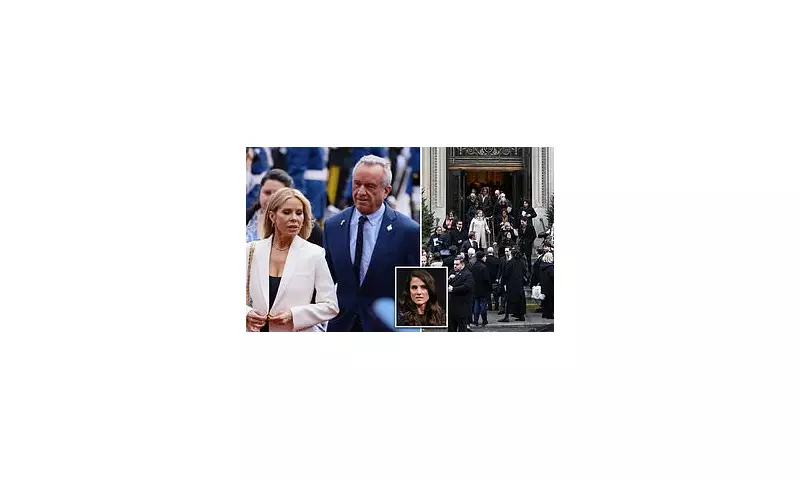
In a move that has ignited controversy and deepened a bitter family rift, US Health Secretary Robert F. Kennedy Jr. used the day of his cousin's funeral to launch a sweeping reduction of childhood vaccine recommendations she had championed.
A Day of Grief and Political Action
Robert F. Kennedy Jr. was notably absent from the funeral of his cousin, Tatiana Schlossberg, on Monday. Reports indicate the environmental journalist and granddaughter of President John F. Kennedy was laid to rest without an invitation being extended to the Health Secretary, in what a source described as an effort to 'shield' her children from public scrutiny.
On that same day, Kennedy advanced a core policy of his tenure, approving an unprecedented overhaul that cuts the number of vaccines the Centers for Disease Control and Prevention (CDC) broadly recommends for all children. The action was approved by Acting CDC Director Jim O'Neill without the agency's standard external expert review.

The Family Feud and a Scathing Critique
The schism was laid bare publicly before Tatiana Schlossberg's tragic death from acute myeloid leukaemia at age 35. In a column for The New Yorker, she labelled Kennedy a family 'embarrassment' and expressed profound anxiety over his powerful position and sceptical stance on vaccines.
'I was concerned that I wouldn't be able to get mine again, leaving me to spend the rest of my life immunocompromised, along with millions of cancer survivors, small children, and the elderly,' she wrote. Schlossberg also detailed her fears about funding cuts for cancer research and clinical trials under his influence.
She revealed that a drug critical to her early treatment, misoprostol, was now under FDA review for its use in medical abortions 'at Bobby's urging', causing her to 'freeze' at the thought of it becoming less accessible.
Immediate Changes and Medical Backlash
The new guidance, effective immediately, means the CDC will no longer universally recommend vaccines against flu, rotavirus, hepatitis A, hepatitis B, certain meningitis strains, and RSV for all children. Instead, they are only advised for high-risk groups or through 'shared decision-making' with a doctor.
While Trump administration officials stated insurance would still cover the vaccines and access would remain, leading medical groups have condemned the decision. They warn it will create confusion for parents, undermine public health, and could lead to a rise in preventable diseases.
'This decision protects children, respects families, and rebuilds trust in public health,' Kennedy stated on Monday. Vaccines for measles, whooping cough, polio, tetanus, chickenpox, and HPV remain on the recommended-for-everyone list, though the HPV guidance was reduced from two or three doses to one for most children.
This move follows a pattern of actions by Kennedy, including no longer recommending COVID-19 vaccines for healthy children and pregnant women in May, firing a 17-member CDC vaccine advisory committee in June, and directing the CDC to abandon its position that vaccines do not cause autism in November.
The controversy unfolds against a backdrop of slipping US vaccination rates and rising cases of diseases like measles, highlighting the stark divide between Kennedy's policies and the public health legacy of his late cousin.






