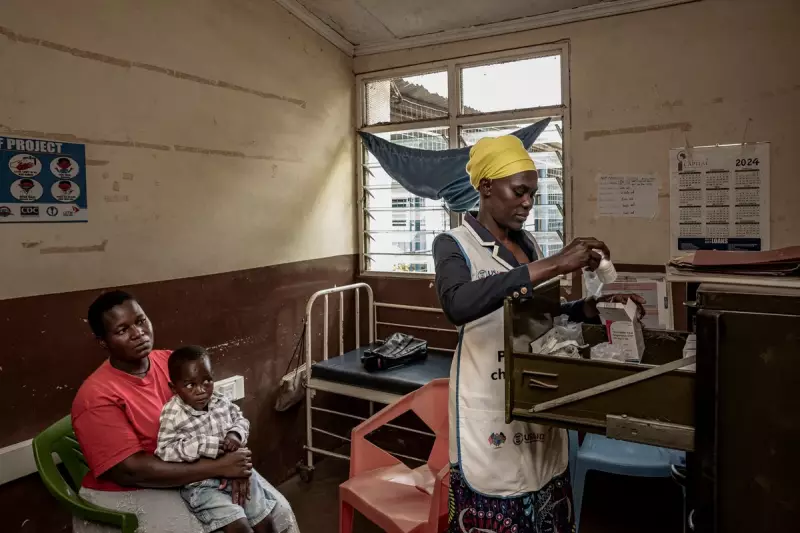
The arrival of the closest thing the world has to an HIV vaccine has been overshadowed by a stark warning: the current global rollout plan will reach less than a tenth of the people needed to alter the trajectory of the AIDS pandemic.
A Devastating Shortfall in Prevention
New analysis reveals that a major agreement between pharmaceutical giant Gilead and international funders aims to provide the long-acting injectable drug lenacapavir to two million people over three years, equating to roughly 666,000 annually. However, research by Dr Andrew Hill from the University of Liverpool indicates this will prevent a maximum of 165,000 infections.
"Just isn't enough," Dr Hill stated bluntly. His work suggests that to truly begin ending HIV transmission, 10 million people a year need to receive the jab, a move that could avert half a million infections annually.

Funding Cuts and a Race Against Time
This critical shortfall comes amid what the UN describes as a 'devastating' collapse in global HIV prevention services. Deep funding cuts, notably during Donald Trump's US presidency, have severely hampered efforts worldwide. Dr Hill argues this makes the effective distribution of lenacapavir even more urgent.
"Just to offset the damage that's being caused by these cuts, we believe 10 million is a minimum figure and ideally it should be a lot higher than that," he said. He is urging wealthy nations, including the UK, to contribute to a proposed $400 million fund to scale up access without diverting money from other essential programmes like testing.
While a course of lenacapavir costs about $28,000 in the US, Gilead has pledged to supply it at no profit to low-income countries via funders like Pepfar and the Global Fund. Dr Hill's prior research was instrumental in driving the cost down to around $40 per person per year.
Unprecedented Access, But Gaps Remain
There has been a significant, albeit limited, breakthrough in equity. Anne Aslett, CEO of the Elton John AIDS Foundation, highlighted that doses for 500 people recently arrived in Eswatini—where nearly a quarter of the population lives with HIV—concurrently with its US launch. "This has never happened before," she noted, contrasting it with the decade-long delay for antiretrovirals in Southern Africa during the earlier crisis.
She described long-acting injectables like lenacapavir as "as close to a vaccine as we've ever had," with the potential to revolutionise prevention, especially for vulnerable populations such as girls, young women, LGBT+ communities, and sex workers. However, she warned of "massive gaps" as US funding cuts have excluded these very groups from remaining prevention services.
"If they're excluded from things like lenacapavir, then you're not going to contain the epidemic," Ms Aslett emphasised. Her foundation is now investing in innovative delivery methods, including drone deliveries of drugs and test kits, which are proving more sophisticated in some sub-Saharan African nations than in the UK.
A Call for UK Leadership and Investment
Mike Podmore, CEO of STOPAIDS, framed UK contributions as an investment, not just charity. He pointed out that the UN's Unitaid, for instance, has funnelled approximately £250 million back into UK universities and life sciences over a decade. This research on drug accessibility benefits both global and domestic patients.
"There isn't this distinction... because access to these new tools is available to everybody," he said, linking the global rollout directly to the UK's own goal of ending new HIV transmissions by 2030. "The rollout of lenacapavir here... will have a really important impact and role here in the UK just as it will abroad."
Gilead has characterised its two-million-dose plan by 2028 as an "initial step" to bridge access until generic manufacturers it has licensed can scale up production. A spokesperson said the company is "prioritising countries with the greatest need and working toward long-term solutions that can reach millions more."