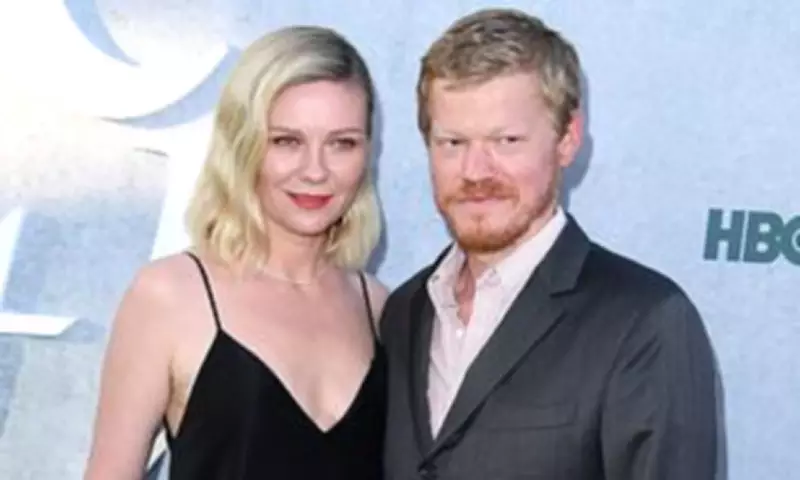
Scientific Study Uncovers Women's Preference for Partners Resembling Their Brothers
From Hollywood stars Kirsten Dunst and Jesse Plemons to global icons Justin and Hailey Bieber, numerous celebrity couples display such striking resemblances they could easily be mistaken for siblings. A groundbreaking new study has now revealed this phenomenon is far from coincidental, uncovering fascinating patterns in human mate selection.
Groundbreaking Research Methodology
Scientists from the prestigious Korea Advanced Institute of Science and Technology conducted extensive research to understand what people genuinely seek when evaluating potential romantic partners. The comprehensive study analysed interactions between more than 40,000 individuals using a major online dating platform, examining a staggering 506,014 separate engagements between users aged 18 to 47.
Utilising advanced artificial intelligence tools, researchers meticulously measured how similar participants were in both facial characteristics and personality traits. This sophisticated approach allowed for unprecedented insights into the subconscious preferences that guide our romantic choices.

Clear Gender Differences in Facial Preference
The findings revealed significant gender-based distinctions in attraction patterns. Women demonstrated a clear preference for men whose facial features closely resembled their own, while men showed the opposite tendency, favouring women with dissimilar facial characteristics.
Researchers explained this divergence through evolutionary psychology principles. "This result is consistent with the evolutionary logic of inbreeding avoidance," they noted in their study, published in the respected journal Computers in Human Behavior. "Attraction to dissimilar faces may be an evolved mechanism to avoid genetic costs and increase the genetic diversity of offspring."
The Role of Familiarity and Trust
While the precise reasons behind women's preference for similar-looking partners remain partially unexplained, researchers point to established psychological theories. The parental investment theory suggests women naturally prioritise cues of trustworthiness and familiarity when selecting partners, as these qualities help mitigate risks associated with long-term commitment.
"[This] suggests women tend to prioritize cues of trustworthiness and familiarity to mitigate the risks associated with partner selection, for which facial resemblance may serve as a heuristic," the research team elaborated, indicating that similarity might function as a subconscious shortcut to identifying reliable partners.
Personality Similarity and Status Dynamics
Beyond physical appearance, the study examined how personality alignment influences attraction, with socio-economic status emerging as a crucial factor. When personalities matched, women rated high-status men even more positively, while men showed reduced interest in high-status women with similar personalities.
This pattern suggests a status imbalance in traditional relationship dynamics. "Given that the traditional male gender role is associated with resource provision, a partner's higher SES may signal a deviation from this script," researchers explained. "In such contexts, the relevance of intimacy-building traits like personality similarity appears to be diminished."
Cultural Phenomenon and Celebrity Examples
The tendency to choose similar-looking partners represents a well-documented cultural phenomenon, with dedicated social media accounts like @siblingsordating attracting over one million followers by challenging users to distinguish between romantic couples and biological siblings.
Celebrity examples abound beyond the initial cases, including actress Kristen Stewart and her fiancée Dylan Meyer, who share remarkably similar features, and Friends star Courteney Cox with her partner Johnny McDaid, noted for their matching face shapes and piercing blue eyes.

Historical Context and Debunked Theories
Previous research has explored similar territory, including a 2012 French study that found more than a third of men were most attracted to images of women digitally altered to resemble their own features. This suggests an innate human tendency toward familiarity in attraction.
While some theories have suggested couples grow to resemble each other over time, recent research from Stanford University has challenged this notion. Their 2020 study, published in Scientific Reports, found no evidence that partners' faces converge with age, concluding that spouses typically share similar features from the beginning of their relationships.
The comprehensive Korean study provides compelling evidence that our romantic preferences are deeply influenced by evolutionary psychology and social conditioning, offering new understanding of why we're drawn to partners who mirror our own appearance.