
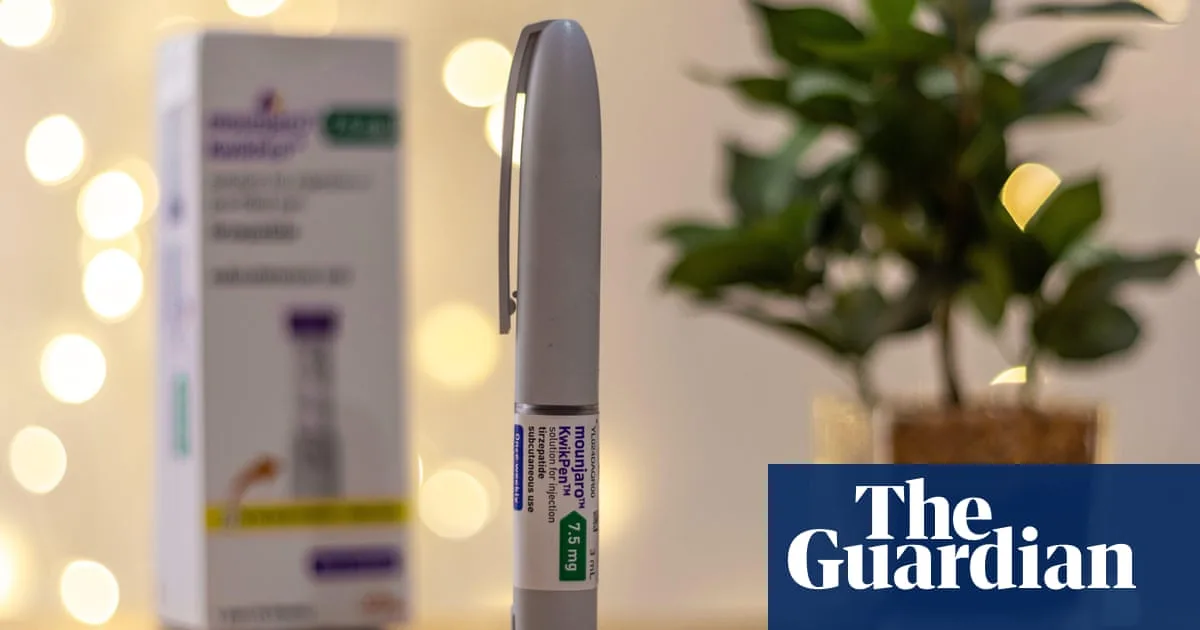
People with diabetes taking medications found in weight-loss jabs have a reduced risk of 42 conditions, research has found, paving the way for such drugs being used to treat a host of health problems. The most comprehensive study of its kind showed that psychotic disorders, infections and dementia were among conditions found to be less likely to occur when using GLP-1RAs, which are found in the medications Saxenda, Wegovy and Mounjaro.
The researchers compared health outcomes for people with diabetes who received usual care with those also given drugs such as liraglutide, semaglutide and tirzepatide. While the team revealed the risk of many conditions was lower for the latter group, the risk of other conditions, including arthritic disorders, was increased. The scientists say that the benefits are not just restricted to people with diabetes, suggesting they could also be found in other people using the jabs, such as those who take them to fight obesity.
Writing in the journal Nature Medicine, the team report how they analysed records from the US Department of Veterans Affairs databases to explore associations between GLP-1RAs and 175 health outcomes. The data included 215,970 individuals with diabetes who received these drugs in addition to usual care, as well as 1,203,097 individuals with diabetes who only received usual care. Participants were tracked for a median of about 3.5 years with the average body mass index above the threshold for obesity.
The results reveal that, compared with usual care, GLP-1RAs were associated with a lower risk of 42 health outcomes, from clotting disorders to chronic kidney disease. More specifically, the risk was reduced by 13% for opioid-use disorders; 19% for bulimia; 18% for schizophrenia and other psychotic disorders; 10% for suicidal ideation, attempt or intentional self-harm; 12% for Alzheimer’s disease; and 12% for bacterial infections. However the team found GLP-1RAs were associated with a greater risk of 19 conditions compared with usual care, including abdominal pain, nausea and vomiting, low blood pressure and kidney stones.
While some associations were expected, others such as the lower risk of infection were more puzzling. Dr Ziyad Al-Aly, a co-author of the research from Washington University in St Louis, said: “We wanted, literally, to map the landscape of benefits and risks.” He added that some of the positive associations might be linked to weight loss, while it was also important to consider the risks. The health associations linked to GLP-1RAs were also compared with those for hundreds of thousands of individuals receiving other types of anti-diabetic medication, with similar findings.




