

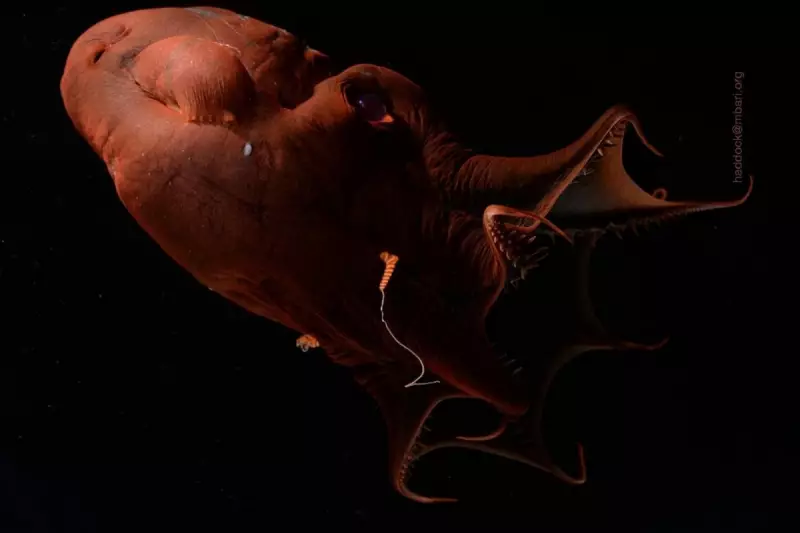
For the first time, scientists have successfully sequenced the complete genome of the elusive deep-sea vampire squid, a breakthrough that sheds new light on the evolutionary origins of octopuses and other cephalopods.
A Genomic Giant from the Deep
The research, led by scientists from Japan's National Institute of Technology, Wakayama College, has decoded the genetic blueprint of Vampyroteuthis infernalis, literally translating to "vampire squid from hell." This deep-sea dweller, known for its dark body, large red or blue eyes, and cloak-like webbing, possesses the largest cephalopod genome ever sequenced. It contains over 11 billion DNA base molecules, which is twice the size of the biggest known squid genome and four times larger than the human genome.
Despite its fearsome name, the creature does not consume blood. It feeds peacefully on organic debris floating in the ocean depths. Its scientific importance, however, is monumental. The vampire squid is a "living fossil," retaining genetic characteristics of an ancient ancestor, which provides a unique window into a pivotal chapter of evolutionary history.

Bridging Two Lineages
The analysis reveals that the vampire squid occupies a crucial intermediate evolutionary position. Modern cephalopods split into two main lineages over 300 million years ago: the eight-armed Octopodiformes (including octopuses and the vampire squid) and the ten-armed Decapodiformes (such as squids and cuttlefish).
Although classified as an octopus, the vampire squid's genome shares key features with squids and cuttlefish. "The vampire squid sits right at the interface between octopuses and squids," explained Professor Oleg Simakov, senior author of the study published in the journal iScience. "Its genome reveals deep evolutionary secrets on how two strikingly different lineages could emerge from a shared ancestor."
By comparing its genome to other cephalopods like the pelagic octopus, researchers traced the direction of DNA changes over vast evolutionary timescales. This allowed them to reconstruct the genetic history of these complex creatures.
Rewriting the Ancestral Story
The findings challenge previous assumptions, indicating that the common ancestor of both octopuses and squids was more squid-like than previously believed. At a critical point in deep time, this ancestor underwent a large-scale genomic reorganisation, a event that scientists now believe contributed directly to the remarkable diversity seen in modern cephalopods.
"Although it is classified as an octopus, the vampire squid retains a genetic heritage that predates both lineages," said study co-author Emese Tóth from the University of Vienna. "It gives us a direct look into the earliest stages of cephalopod evolution."
This landmark sequencing not only solves a long-standing puzzle in marine biology but also demonstrates how studying enigmatic, deep-sea species can unlock fundamental truths about the history of life on Earth.






