
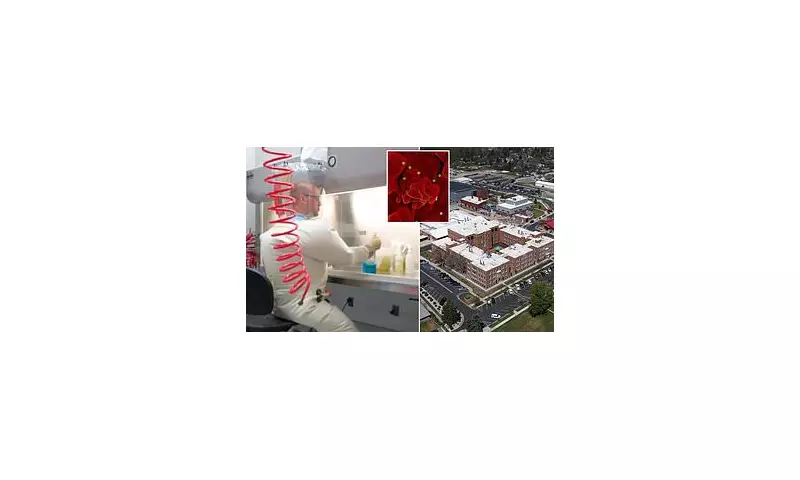
Emergency Protocols Activated at US High-Security Lab Following Suspected Virus Exposure
Emergency procedures were swiftly implemented at a United States high-security research facility following a suspected exposure to a deadly hemorrhagic fever virus, officials have confirmed. The incident occurred at Rocky Mountain Laboratories (RML), a maximum-containment facility in Hamilton, Montana, operated by the National Institutes of Health (NIH) on November 3, 2025.
Maximum Containment Facility and Specialised Operations
RML operates at biosafety level 4, representing the highest possible containment classification for handling the world's most dangerous pathogens. The facility is staffed around the clock by specially trained scientists, technical personnel, and security teams dedicated to managing lethal biological agents. The laboratory's primary focus includes infectious disease research, immunological studies, and high-containment investigations into emerging global health threats.
The incident came to public attention this week through the watchdog organisation White Coat Waste, which uncovered a biological laboratory report indicating that 'one of these pathogens was accidentally released, lost or stolen.' A press secretary from the US Department of Health and Human Services subsequently informed media outlets that the emergency response was triggered by a potential exposure to the Crimean-Congo hemorrhagic fever (CCHF) virus.
Nature of the Suspected Exposure Incident
The suspected breach involved the virus potentially compromising an employee's personal protective equipment during laboratory operations. Crimean-Congo hemorrhagic fever represents a severe, tick-borne viral illness that initially presents with flu-like symptoms but can rapidly progress to life-threatening hemorrhages and multiple organ failure. The disease carries a significant fatality rate, particularly in severe clinical cases.
'The employee was immediately isolated and monitored under appropriate care at a specialised medical facility before it was confirmed that no actual exposure or transmission had occurred,' the press secretary stated emphatically. Officials further emphasised that 'at no time was there any risk to the public or to other staff' throughout the incident response period.
Documentation and Regulatory Reporting Requirements
White Coat Waste, a bipartisan organisation campaigning against what it describes as cruel and unnecessary animal experimentation, uncovered official minutes from a meeting with the Institutional Biosafety Committee at NIH's RML dated November 20, 2025. These publicly accessible minutes, posted on the NIH Office of Research Services Division of Occupational Health and Safety page for biosafety committee records, contain a brief notation regarding a 'Form 3 reported to Federal Select Agent Program on 11/13/2025' under the heading 'Biological Incidents to Report.'
Form 3, officially designated as APHIS/CDC Form 3, represents mandatory government documentation that any registered laboratory must submit immediately upon discovering a theft, loss, or release of regulated biological agents. Laboratories must complete this form comprehensively within seven days of identifying such incidents. A 'release' within regulatory definitions can encompass accidental spills, leaks, or any circumstance where laboratory personnel might have experienced exposure outside designated containment areas.
Historical Context and Ongoing Research Activities
A June 2025 NIH-supported report confirmed that RML had been conducting animal experiments involving CCHF virus as part of vaccine development research, highlighting the inherently high-risk nature of work performed at the facility. This recent incident follows previous revelations by White Coat Waste in 2023 that RML had been experimenting with SARS-like viruses approximately one year before the COVID-19 pandemic emerged.
Although that specific research programme has since been terminated, current projects at the laboratory continue to involve other deadly pathogens with pandemic potential. These include experimental studies involving Ebola virus administration in pigs and COVID-19 infection protocols in monkeys, alongside investigations into hemorrhagic fever responses characterised by symptoms including vomiting blood, internal bleeding, and hemorrhaging from eyes, nose, and mouth.
Previous documentation released by White Coat Waste revealed that in 2018, NIH researchers at RML infected bats with a 'SARS-like' virus as part of a collaborative effort with the Wuhan Institute of Virology – the Chinese laboratory at the centre of ongoing COVID-19 origin controversies. These documents indicated that US taxpayer funding supported coronavirus experimentation with materials from the Chinese facility more than a year before the global pandemic outbreak.
Symptom Profile and Treatment Limitations
Symptoms of Crimean-Congo hemorrhagic fever typically manifest within three days following a bite from an infected tick. Initial clinical presentations include fever, muscle aches, dizziness, and ocular discomfort. The World Health Organization notes that nausea, vomiting, abdominal pain, and mood alterations represent common early indicators of disease progression.
Within approximately one week, patients may develop accelerated heart rate, hemorrhagic skin rashes, and bleeding from small capillaries – particularly noticeable around ocular regions. As the disease advances, vital organs including the liver begin to fail. Treatment options remain severely limited, though medical practitioners have observed some therapeutic success with the antiviral medication ribavirin, originally developed for hepatitis C management.
The Federal Select Agent Program maintains regulatory oversight of such facilities and requires laboratories to report incidents through approved electronic systems or alternative authorised methods. These reporting obligations apply even to minor or low-risk occurrences, with not every Form 3 submission indicating a major accident or public health threat – many represent routine compliance matters resolved promptly through established protocols.




